Sex, Drugs, and Public Health

November 14, 2013

Apprentice to Murder

Filed under: Uncategorized — cbmosher @ 6:33 am


From the second story porch, you lean against the railing. Below you, a broad lawn falls off into a valley where a pond hides.  Beyond, even without a ‘scope, you can see the town we evacuated, and the great lake which sprawls to the horizon.

From the porch, my enemy can’t hide.

It’s the perfect vantage for a sniper.

Our Team moved up here to the country to be pretend farmers.  All the kids of real farmers had guns, but not me.

“I want a gun,” I told the King and Empress.

“Not in this house,” the Empress seethed.  “Never.”

“Not right now son,” the King attempted to echo her decision.

Then there was some groveling and whimpering that began with, “but all the other kids…” which I won’t go into.  Too embarrassing.

I looked at gun magazines.  Field and Stream and others.  I fell in love with the lever action 30-30 by Marlin.  Yeah, love.  I learned a lot about all the others – single shot 22’s; clip magazine 30-06’s; shotguns.  But none were as beautiful, as heroic, as the 30-30.

The natural home of the 30-30 was a leather scabbard tied to a saddle.  It was the rifle of heroes. Like John Wayne. Or Chuck Conners, “the Rifleman.”

I joined the NRA.  Junior member.  They sent lots of neat stuff in the mail.  Magazines, free targets for practice, a code of safety or ethics or something which I discarded.  The Empress saw everything that came in the mail.

Eventually they gave me a gun.  A B-B gun.  The classical Daisy lever action.  It was just a toy replica of the Marlin 30-30, but it actually shot projectiles.  So I said, “Thank you.”

You had to unscrew a cap that covered the muzzle (no real gun has a cap on the muzzle) and pour B-B’s down the barrel.  Then re-screw the cap.

You’d hear the B-B’s rolling around inside whenever you moved the gun.  Embarrassing.

When you cranked the lever, it loaded one B-B into the chamber and tensed a spring.  Ready to shoot. A 30-30 would have emitted the commanding click of steel from cocking its lever.  The Daisy sounded like tin rattling.

I used the paper targets the NRA sent to us Junior members.

I’d lower the rifle, and the B-B’s would rattle like marbles down a pipe. The weight of them rolling would destabilize my sighting; the noise would scare away the enemy.  Well, not the paper targets.  They were pretty much stuck no matter what.  But it definitely would have scared a real, live enemy. 

It was still embarrassing.

After I went through a half dozen boxes of 100 B-B’s, I got to be a good shot.  I saved my pennies, and bought an accessory – a ‘scope.

It was plastic, but looked pretty good and you could actually almost see something through it.  I sighted it in and went through another box of B-B’s.

When the bull’s eyes of my targets were all shot out I packaged them  up and mailed them in to the NRA.

They sent me a “Marksman” certificate.  Real fancy, with a gold seal.  For free.  Those NRA folks sure are nice.  And generous.  They gave me all this stuff and got nothing in return.

“I want a real gun,” I told my parents.  “I’m old enough now.”

“Oh?” shot the Empress.  “And who decided at what age you can have a real gun?  You?”

“The NRA,” I played my trump card.  “I can show you.”

“No real guns in this house,” she seethed.  “And don’t you dare ask your father when he gets home.”

“Well, you are getting older,” the King answered my request when he got home.  “Check with your mother.”

“She said ‘no’.”

“Oh.  Well.  Time for dinner.  Let’s go eat.”

I was silent over the roast beef and potatoes for a while.  Then, in a lull in the conversation among all the others, I blurted, “You know, soon I’ll be old enough to buy a rifle without your permission.  And I don’t see any reason to just get a 22.  I think I’ll go right to a high-powered rifle.  I have enough money.”

The King looked at me, smiled, and took a deep breath, ready to say something.

Apoplexy swept the face of the Empress.  But she aimed all her boiling oil toward the King.

He caught his breath, held it, then released it slowly, in a sigh.

“Well, son.  That time’s still a ways off.  Enjoy the B-B gun…” he glanced at the Empress, “then we’ll see.”

It was time to shoot something different.

I lined the enemy up in a row.  As if before the firing squad.  I peered through the ‘scope.  Took a deep breath.  Released half of it, held my breath, and squeezed.

The 30-30 would have kicked and roared.  The Daisy twanged and pinged.

One of the enemy teetered, and almost fell.  That was all.  I put down the gun to survey the damage.

I found, upon inspection, a tiny chip of paint missing on the aluminum can where my B-B had hit it.

I grabbed the Daisy, cranked the lever again, and stalked three paces closer.  Deadly aim on enemy #2.

Ping.

My inspection revealed a dent.

I retreated back to my magazines.  As always, I paid homage to the Marlin 30-30 until my eyes were wet.  Then I poured through them all looking, looking.

A small ad, one I’d overlooked many times, advertised a different B-B gun.  Not a Daisy.  I almost dismissed it, but my eye caught the phrase  “22 caliber.”

It was manufactured by a company called ‘Benjamin’.  Auspicious or inauspicious?  I set that aside and read on:

‘pump action… high velocity… 177 caliber or 22 caliber… B-B’s, lead pellets or darts.’

It was the ‘22 caliber’ part that held my attention.

It was the ‘22 caliber’ part I made a point of not mentioning during my bid.

“It’s just another B-B gun, only not a Daisy.  It’s either this Benjamin, or I get a high-powered rifle when I turn 16.”

There was silence. There were looks exchanged. There was a deep sigh, and finally, a shrug.

Like any Sportsman, I was excited to open the box.  Long, rectangular.  I felt its weight.  Like 3 or 4 Daisys.  I lifted the top flap, and gazed at it.

Wooden stock.  Real wood!

Gleaming blue barrel.  Like a 22!

A bolt at the breech.  Bolt action!

I tore into the pamphlet to see how I could buy some 22’s and put them into what the King and Empress thought was just a harmless B-B gun.

The words triggered disappointment.  I had to have purchased the more expensive 22 caliber rifle (I just had the 177 caliber).  And even if I had, it would only shoot a slightly larger B-B.

A 22 caliber B-B.

The ad had deceived me.

No wonder Sportsmen sometime become Snipers.

I took it out for a trial.  Pull back the bolt.  Place a B-B in the opening at the end of the bolt.  Close it.  Then pump the handle to build up pressure in the air chamber.  I pumped three times, like they said to.

I picked up one of my dented enemies and positioned it. “Stand there,” I ordered it, “take it like a man.” 

I sighted.  Deep breath; half exhale; hold; squeeze.

Blang!

The stock recoiled into my shoulder.  Never got that from Daisy.

The can went flying.

When I picked up the corpse, there was a hole in it.  A hole!  Right through the aluminum!

I had a new love.

The pamphlet didn’t say this, but I figured: if they recommend three pumps and it can do THAT, just imagine – – – .

At seven pumps, the B-B penetrated both sides of the can.

At ten, the recoil was righteous.

I bought my B-B’s by the case.

Then I tried some lead pellets.  The power of the Benjamin flattened the lead pellets into mush.  Like real bullets.

And accuracy.  I shot out the bulls-eyes from three times the distance of the Daisy.

I shot the mailbox from twenty paces.

I shot petals from the Empress’s flowers in her rock garden.  Until a ricochet from one of the rocks hit a thermopane window, leaving a small hole in the glass. The Benjamin was yanked from my hands and thrown up onto the refrigerator.

“You just wait ‘til your father gets home,” she seethed.

I fretted, then worried, then feared the arrival of the King, whose castle I had damaged.  The window was large, four feet by three feet. Surely quite expensive. It used to have vacuum between its panes.

He arrived.  I hid in corners.  Dinner was served.  I was called to join.  I stared at my plate.  Finally, she brought it up.

“Your son has something to tell you.”

“Oh yeah?  What is it?  Want some more roast beef?”

“I (mumble mumble).”

“What was that?”

“The window.”

He turned to look at it.

“You see the hole he made?” she aimed his attention.  “He did it with his gun.  All the vacuum is gone.  The window ruined.”

He turned his attention to me.  I couldn’t keep my eyes on him.

“Don’t worry.  It’s insured.  What about the beef?” he said, fork poised over roast.

I struck quickly.  “CanIhavemygunback?”

The Benjamin was ransomed for promises of future behavior.  The Empress was not happy.

It was time to confront a real enemy.

Down in the valley, by the pond, the frog chirped and hopped.  Chirped and hopped.  Chirped and died.

A bird flitted within the birch tree.  I looked up, and my eyes found moving leaves.  Then they found the shadow of a bird’s body.  I aimed.

Blang!

The Benjamin’s bullet hit the branch where it sat.  The enemy escaped into the sky.

But it was close.

I didn’t even need a ‘scope with the Benjamin.

I had become a sniper.

When the Empress left for shopping, I took the Benjamin onto the porch.  I surveyed the scene beyond the railing.  My Benjamin and I held sway over all I could see to the shores of the great lake.  Only the green squiggle of Canada on the far shore was too remote to be part of our domain.

I heard a sound.

Without moving, which would reveal my presence, my eyes turned toward it.  It came from the birch.

A robin.  Right at my level, now that my sniper’s perch was on the elevated porch.  I took aim.  Inhaled.  Kept my eye locked on the enemy.  Half exhaled.  Held it.  Squeezed.

Blang!

For the first heartbeat or two, nothing changed.  Then the robin dropped.  This time it was the enemy that bounced off a limb, not my bullet.

It plopped to the ground, upside down, crimson belly up.

Exhilaration exploded in my chest.  I rushed down to see the corpse.

The bird’s belly, smeared with the color of blood, was a large splotch of evidence against the grass.  I nudged it with my gun.  It didn’t move a thing.  Dead.  Stone cold dead.

Just one shot, I tried to congratulate myself.

All it was doing was singing, something inside me said.

I stared at the big red splotch.  I have to hide the evidence, I thought.  Even the King won’t like this.

I looked up toward the porch and railing.  Just to have the enemy’s view.

Easy shot.

I bent down to remove the evidence. 

It was lighter than a couple of B-B’s.

I walked into the field beside the grass, Benjamin in one hand, heavy with steel and wood, devoid of conscience; bird in the other, so delicate I was afraid I’d break its leg if I held it too tightly between my thumb and index fingers.

I threw it into the tall weeds.

All it was doing was singing.

I continued to shoot the Benjamin.  NRA targets died by the dozens. But that was the last living thing I killed.

I’m a retired sniper.


   This flashback, from before Public Health days, reflects on the greater story of an emerging Public Health issue.


November 10, 2013

The Mud Bath

Filed under: Uncategorized — cbmosher @ 6:08 am

If you have a caricature of the hard-working, middle-aged Northern European woman in your brain, drag it out now.


She greets me with a flurry of no-nonsense, no- smiling Estonian or Russian or something when I open the door. She urges me to hurry into the mud room, even tho I am five minutes early.


Her blonde hair is chopped short to keep it out of her way, and her 200-plus pound body is a mix of muscle and fat adequate to do 12 hours of work a day and still keep her warm thru the Baltic winter.


She holds a pail of steaming, sulpherous mud over the table and impatiently keeps up her jabbering with occasional increases in volume and gestures in the air with her free hand.


“No Estonian,” I shoot into a brief lapse when she inhales. “English.”


She shakes her head decisively while smearing mud over the table and continuing her pantomimed harangue for me to get undressed. I catch a few words only: “English, no,” she shakes her head. “Finnish – – – German – – – Estonian – – – Russian – – – ” and her incessant talking flows from her like mud plopping from a bucket.


Naked, I climb onto the table, squishing into the mud, serenaded the entire time by her river of impatient verbiage.


She gobs it on me, spreads it up and down, her hands, like her voice, never pausing. Down to my toes; up to my neck; and everywhere between.


I believe I hear the timbre of her voice change from giving me orders to reassuring me as she wraps plastic and blankets around me, forming a mud cocoon. Then she flashes all ten fingers twice, and disappears.


The silence of her absence uncovers the New Age music that the resort pipes in to suffuse the rooms. Same stuff as back home. I close my eyes, try to ignore the supherous odors oozing from my wrapped body, and empty my mind to meditate. Or sleep.


But it only lasts a few seconds. An intermittent squeaking disturbs the rhythm of my escaping toxins and emptying mind.


A leaking pipe somewhere? Air bubbling thru the steam pipes?


Soon I can concentrate on nothing but the strange sound.


The squeak becomes a squawk.


Then, a clacking.


Gulls, I finally realize. The sound of sea birds, meant to be soothing, but screeching down my eardrums like fingernails on a blackboard.


Then the mud therapy lady begins a cacophony of towel ripping, door closing, water running sounds on the other side of the privacy curtain, and the gulls with their pastel music sink beneath the quicksand of her activity again.


In she storms, all work like, and comes over to the only part of me showing. With her meaty  hand, she softly brushes my hair back from my forehead and smiles at me. Smiles right thru a barrage of incomprehensible Estonian or Russian or Finnish. She holds up five fingers and disappears behind the plastic curtain again. That flimsy metaphor of the now-defunct Iron one.


Like an enchilada heated in the microwave, I watch her approach with a little apprehension when it is time. The only thing missing from the scene is the innocent “ding” of a timer. She signals me to sit up, slides some plastic sandals on my mud-slick feet, and points to an open shower. 


I am enjoying the re-birth of my skin beneath the showerhead when she walks into the shower stall, jabbering. My naked body turns to see what her hands might be telling me.


She slaps the back of her neck, then points. I aim the showerhead and, sure enuf, mud-clumped water oozes down my back, off my buttocks, down the drain.


Toweled, dressed, but still smelling of surpher, I head out the door, determined to give her one more smile, whether she likes it or not.


She smiles in return, and almost reaches out to touch my shoulder – the prelude to an Estonian hug. But her professionalism won’t allow it. Touching me, even in that fleeting social way, is too uncomfortable for her.


Image 


Addendum:  on the outskirts of this resort town, Haapsalu, is an elaborate train station of painted wooden beams with what is alleged to be the longest covered platform in Imperial Russia (230 meters long). A century-old steam locomotive with Cyrillic lettering on its side remind me that the Czar himself came to Haapsalu for the therapy of the Mud.


 Image


Who, I wonder, was allowed to see the Czar naked and smear him with mud?

November 4, 2013

The Sauna

Filed under: Uncategorized — cbmosher @ 6:00 am

Flashback: Tiina in 2006 as we drove thru a Seattle snowstorm:

T: Have you ever had a sauna?

me: Yep

T: What temperature?

me: I don’t recall – maybe 120 degrees

T: Oh, that’s nothing! Why, in Estonia, we – – –

So now I’m in Estonia. The itinerary for the Reunion reads:

16:00 hours  Women’s Sauna

17:00  Men’s Sauna

18:00  Dinner

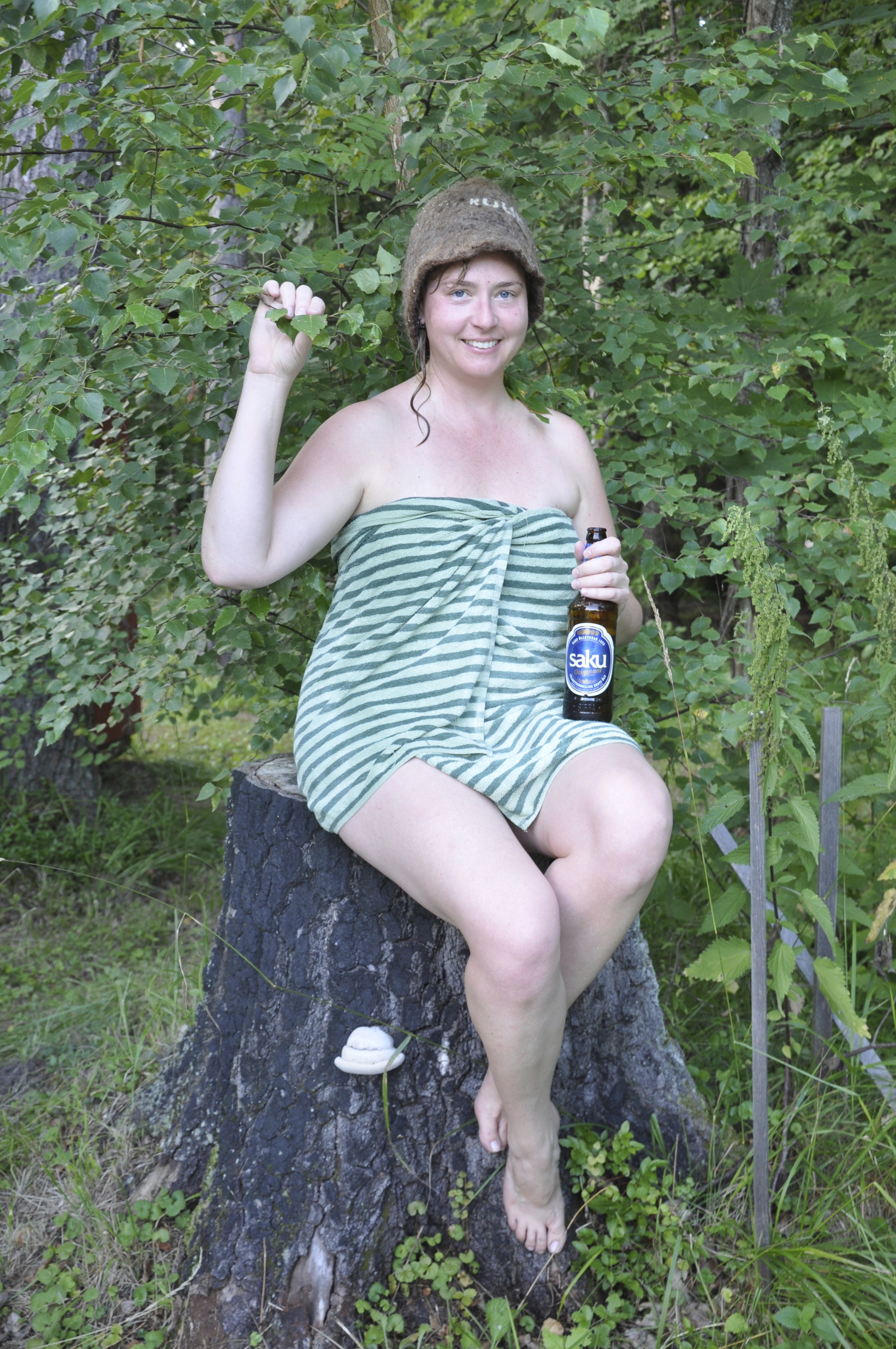
While the women stroll, draped only in towels, toward the little raw wood shack with its smoking chimney, located at the edge of the woods, the men cling to their beer bottles, talking. They speak briefly, distractedly, in either slow and comfortable Estonian or in bravely assembled English words, attempting to construct them in some coherent order.

Five o’clock comes while a hulking 250-pound bald guy with tattooed arms uses these words on me:

“Rein Ilja”  (pointing to his name tag), “drive” (holding an imaginary steering wheel), “truck” (his voice much deeper).

I nod, smile, give thumbs up, and say “good, good.”

A long quiet pause.

“Men’s sauna?” I pose as a question by giving the second word a higher frequency and pointing toward his wristwatch.

“SAUNA!” he breaks into a broad smile and stands more erect.

Then he slumps, shakes his head, and nods toward the smoking shed. “Women,” he shrugs.

Image

At 5:45 we are told the sauna is ours. The last woman strolls, pink, barefoot, and glistening, over the grass toward her room. My Estonian giant darts, like some cross-country runner, toward the sauna shack. I strip and follow him in. It’s already very hot. I look for a thermometer on the wall, but that is, apparently, an unnecessary luxury here.

In the near darkness, he has found the water scoop, and begun washing down the benches with giant swings of his arm, releasing violent splashes. He scoops up a new ladleful even before the previous tidal wave has degenerated into dripping.

He turns to look at me as I observe his ritual. Sweat pours from his bald head like a waterfall in front of his eyes. A big smile illuminates the dark, hot space.

“SAUNA!” he repeats.

When the benches are washed, he scrambles onto the top bench, and folds his legs under him, Buddha-like, still clinging to the scoop.

I usually begin on the second step, then, after some acclimation, move up to the hotter top bench. But, as other men come in, including a Swede and an Englishman still in his underwear, they all go directly to the top bench. I take a shallow breath (so as not to singe my lungs) and move up.

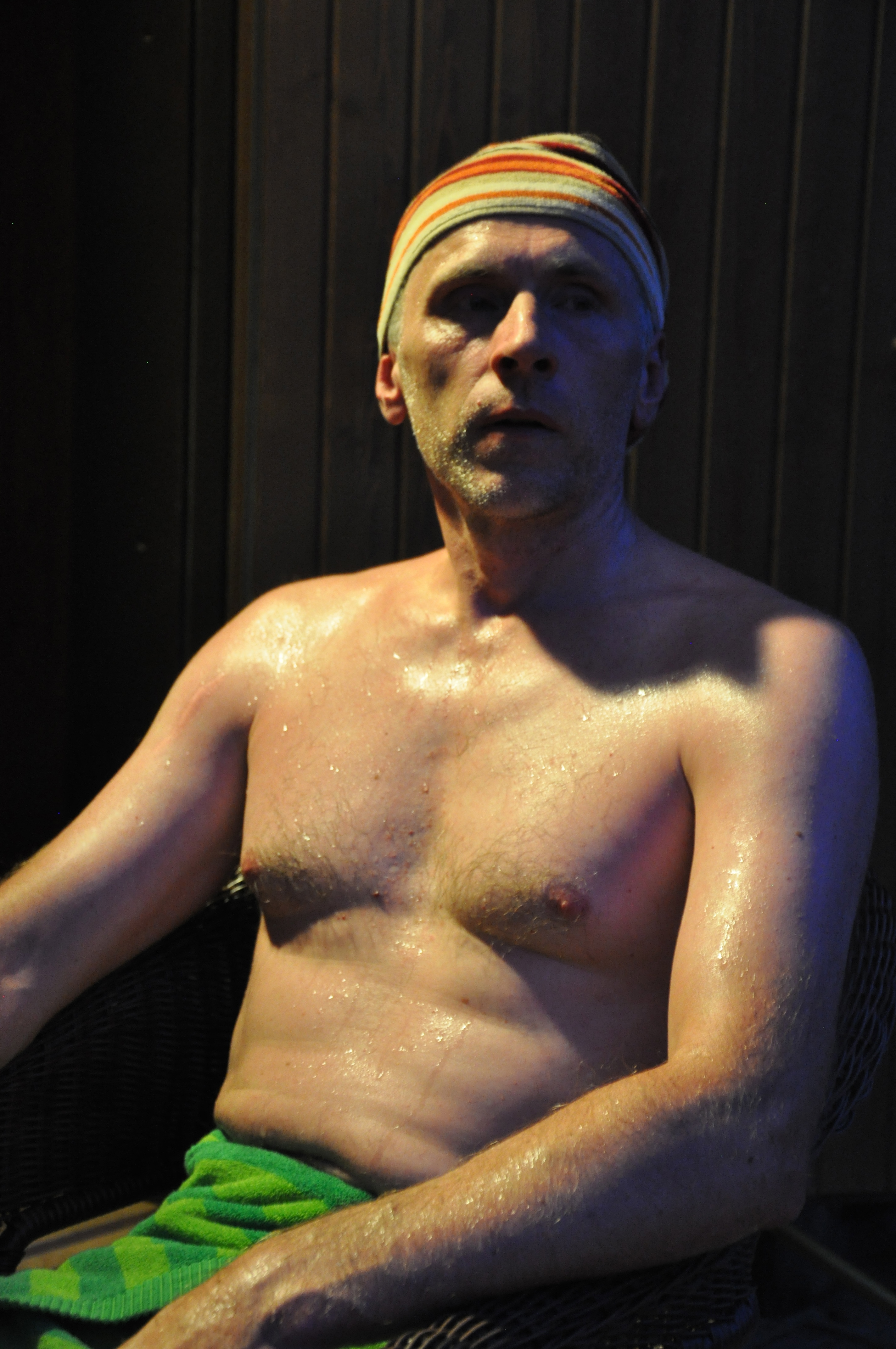
Sweat pours from me, cleansing (the Estonians believe) illness from my body that U.S. Alternative Health freaks visualize as “toxins.” If I want, there are birch branches in a bucket with which to thrash myself, improving circulation. I close my eyes and slow down, meditate, for as long as my obsessive pattern will allow. Fifteen seconds or so.

The Estonian Buddha moves within the scalding shadows. He scoops water from a bucket bubbling adjacent to the wood stove, and tosses it onto the rocks that surround the chimney. A loud and angry hiss sizzles water into instant steam.

I know what’s coming.

The steam will immediately raise the heat index by 10 to 20 degrees, taking your breath away, making your skin feel seared. If I can grip the bench tightly, breathe very shallowly, and get thru the next four or five minutes, the sauna will drop back to its dry heat situation. Eventually, in my experience, someone will splash more water onto the rocks and repeat the surge of steam, but until then –

Buddha throws another scoopful on. Sizzle. Bubble. Gasp.

Another.

He beams his big smile at me. This time he doesn’t need to say The Word.

Splash. Hiss.

“I need a snowbank,” I say to the Swede and the Englishman on the bench beside me.

We all dart for the door, trying to look like we’re not darting.

On the side of the sauna shed, a bucket is suspended on a platform seven feet up. A garden hose runs constantly, filling it. A handle is attached. I stand under it, take a deep breath, and pull.

Ice water envelops my red and sweating skin. I mutter something incoherent, meant to sound masculine. You know, like a fart.

Some of the Estonians are outside now, opening beer bottles and re-hydrating. They drape themselves with towels, and nod at us approvingly.

Image

Inside again, Buddha is still perched within the corona of the fire, feeding water onto the stove. His hulking nakedness glitters with sweat. He beams with pure joy.

I have found the thermometer.

The Sauna II

Next day is Saturday. The Estonian giant sits alone at a picnic table, flipping thru photo albums, as do two small clumps of people at other benches.

No other activities occurring, I sit and grab an album, curious to see if I can match photos of two and three year-old faces photographed at the beginning of WW II with those of the aging adults around me.

After a few minutes, he pushes his album across the table, beneath my eyes.

“Me,” he points at a small boy in a snapshot, wearing his Sunday best.

“Who?” I ask about the little girl at his side.

“Tia,” he identifies the now smiling blonde woman, mother of two 30ish blonde girls circulating with her at the reunion.

“Who your father?” I ask.

He flipped to another page. Pointed. “Ivar.”

“One of the twins?” I hoped he’d know, by now, the English word for the identical brothers, but just in case, I hold up two fingers. I won’t use the English word “Siberia,” although it locates them geographically under the Soviet domination of the 1940’s.

He nods. His smile is more subdued than I’d seen yesterday. I return to my photo album, leaving him to his.

I hear a sniff. I look up.

Within his meaty face – which Hollywood could use for a Russian hit man – a tear glistens in his right eye.

He blinks, pushes back on his bench, and walks away from the books. I hear one more sniff as his barefooted body heads toward the beer.


Do I talk to him more? Do I give him space?


A trio of towel-wrapped, red-skinned women emerges from the smoking shed, and one of them points to me, indicating ‘men’s turn.’

I chase after the crying Buddha. “Rein,” I ask, “sauna?”

“SAUNA!” he erupts. He wheels, and I scamper after him.

The Sauna III

In a modern spa hotel outside Võvu, we go to the sauna room. It’s actually a large solarium with five indoor swimming pools, each a different temperature (labeled in centigrade) two saunas, and a steam room.

The saunas have glass doors for light, are heated with electric, thermostat-controlled heaters, and are also labeled with their temperatures.

First sauna, 70 degrees. It’s hot, instantly sweat-inducing, but just right for me. Splash. Sizzle. Gasp. Water is released onto the rocks automatically, from a gleaming stainless steel pipe.

The Steam room sweats us up, too, but at a much lower temp (50 centigrade; 122 Fahrenheit). It recognizes that moist heat is harder to tolerate.

Warm pool is 42 C, equal to 108 F. OK for a while, but not refreshing. There’s no bucket of cold water here to upend on your head.

I decide to do the hotter sauna, then the cooler pool.  Second sauna is 90 degrees. I open the door, and get a blast in the face. Breathing is painfully hot down in the lungs. I can only do the lower bench. And only for three or four minutes. I touch the top of my head with my hand; my hair is so hot it almost burns my palm. My Estonian acquaintance remains in there after I leave for the pool, which is a welcome balm to my capillary-dilated skin.  Before he joins me, I calculate the Fahrenheit equivalent in sauna # 2.

194 degrees.

He wades into the pool. I think I hear him sizzle as he submerges.

“What is the hottest sauna you ever used?” I am curious.

“Vhen I am a student,” he smiles at recalled youthful abandon, “it is 130 degrees.”

“Centigrade?”

“Yes, of course.”

As my brain calculates to Fahrenheit, my eyes widen in obvious disbelief.

“I stay, vone minute, only” he shrugs apologetically.”

Image

October 22, 2013

Food: Estonian and Seto

Filed under: Uncategorized — cbmosher @ 5:00 am

Seto Food


The little village of Obinitsa is a cluster of small homes crowding both sides of the road so closely that traffic slows to ten kilometers an hour for that one and a half blocks.

The restaurant, “Seto Seltsimaja” would be easy to miss.  The sign is painted on wood, weather brutalized, and small.  But our Estonian driver had precise directions.

Cats – mother and several offspring, have territorialized the steps to the door.

The owner is a big, smiling man with several missing teeth.  The rest of his family are elbowing around each other in the kitchen.  From the picnic-style wooden table where he seats us, I can see directly into the kitchen.

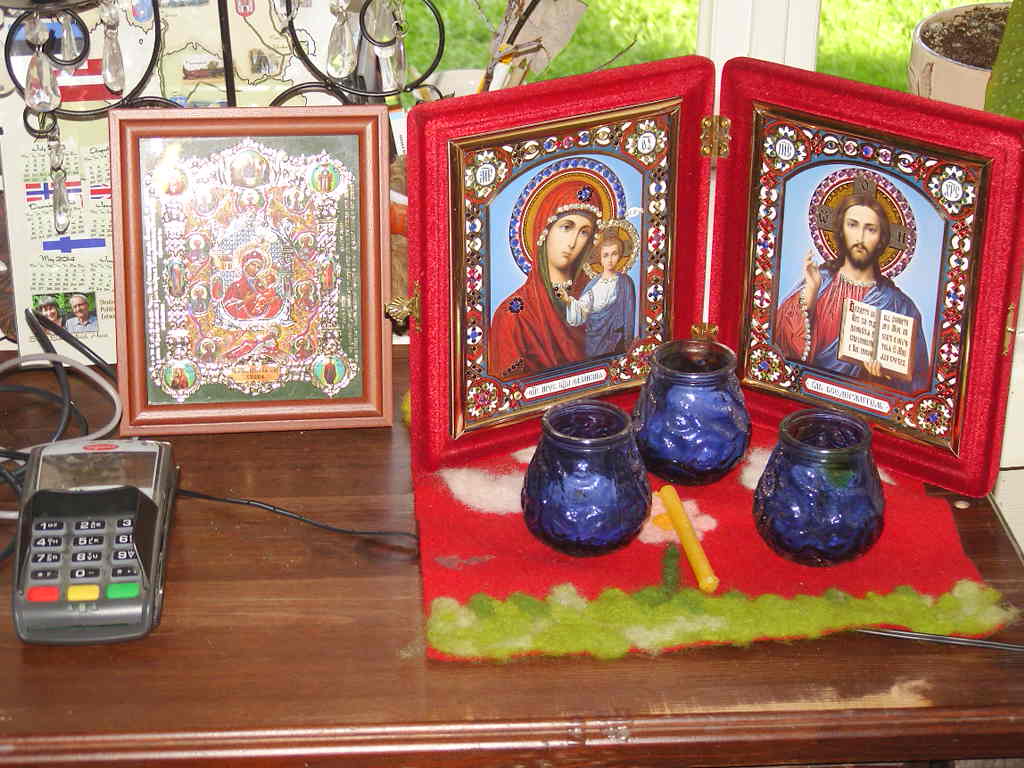
From a small table decorated by lace, religious icons and a credit card swipe machine, he takes a tattered notebook and stands at our table, speaking Seto-flavored Estonian which I assume is a recitation of the menu.


 Image


We English speakers, our stomachs rumbling, decide to let the Estonians order lunch for us.  The food begins to roll in.

He brings a plateful of pickles. drizzled with honey.  The pickles are surprisingly – shockingly – good with their dripping honey.

To drink there is kali, a beer made from rye bread, but containing no alcohol.

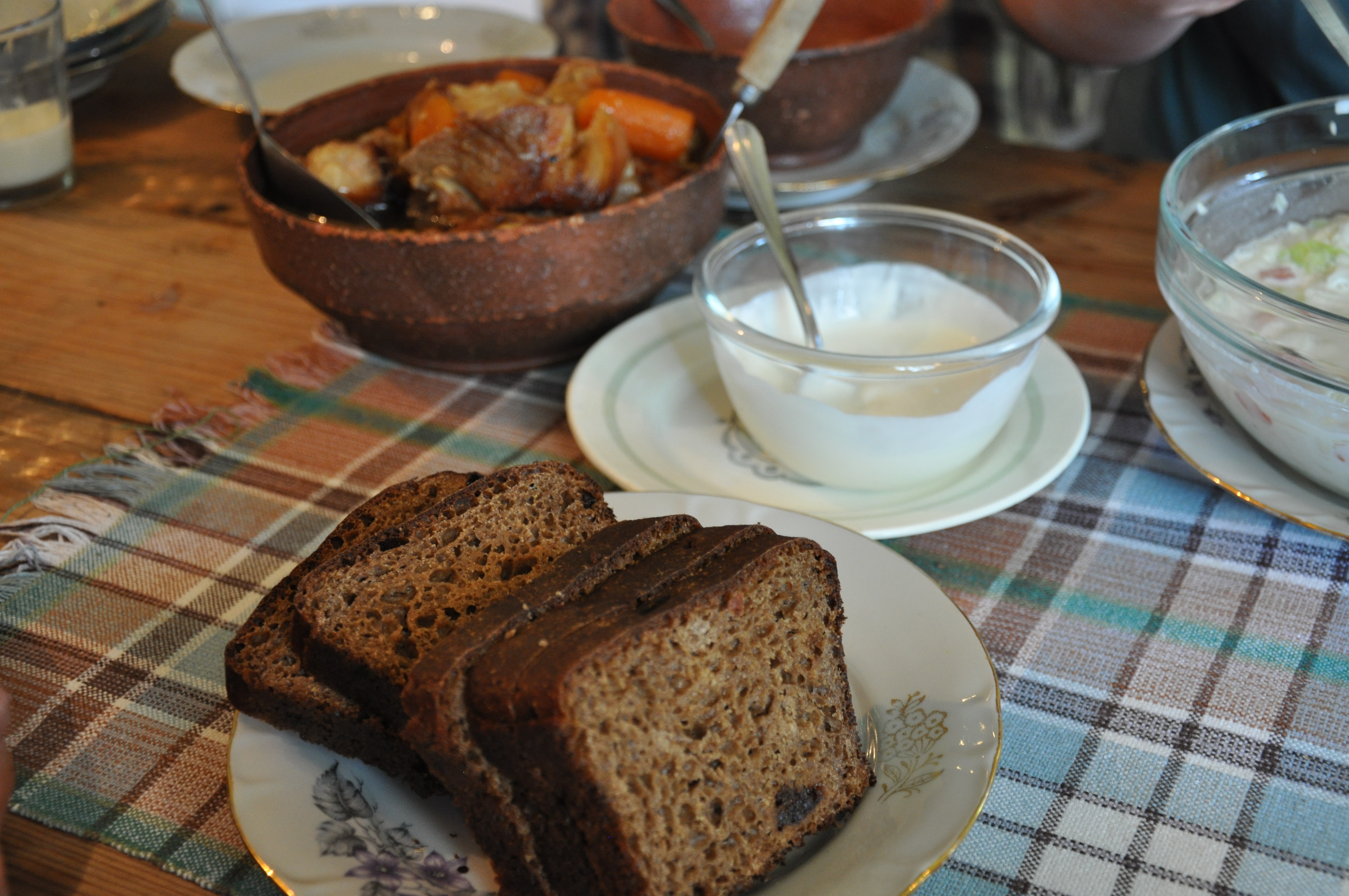
Leib, the dark bread they are famous for, tastes like molasses.

Sai, the white bread, tastes of yeast.

Next is a fish soup with chunks of some species that swims in their lakes, swimming now with carrots.

Then comes another soup: Suuliim, a milk based cold soup with cucumber slices, tomato chunks and pickles.  It reminds me very strongly of the Russian Summer Soup I make with buttermilk and sauerkraut.


Image 

A big steaming pot with a beef shank swimming in hot juice, the meat slipping from the bone by sheer gravity.

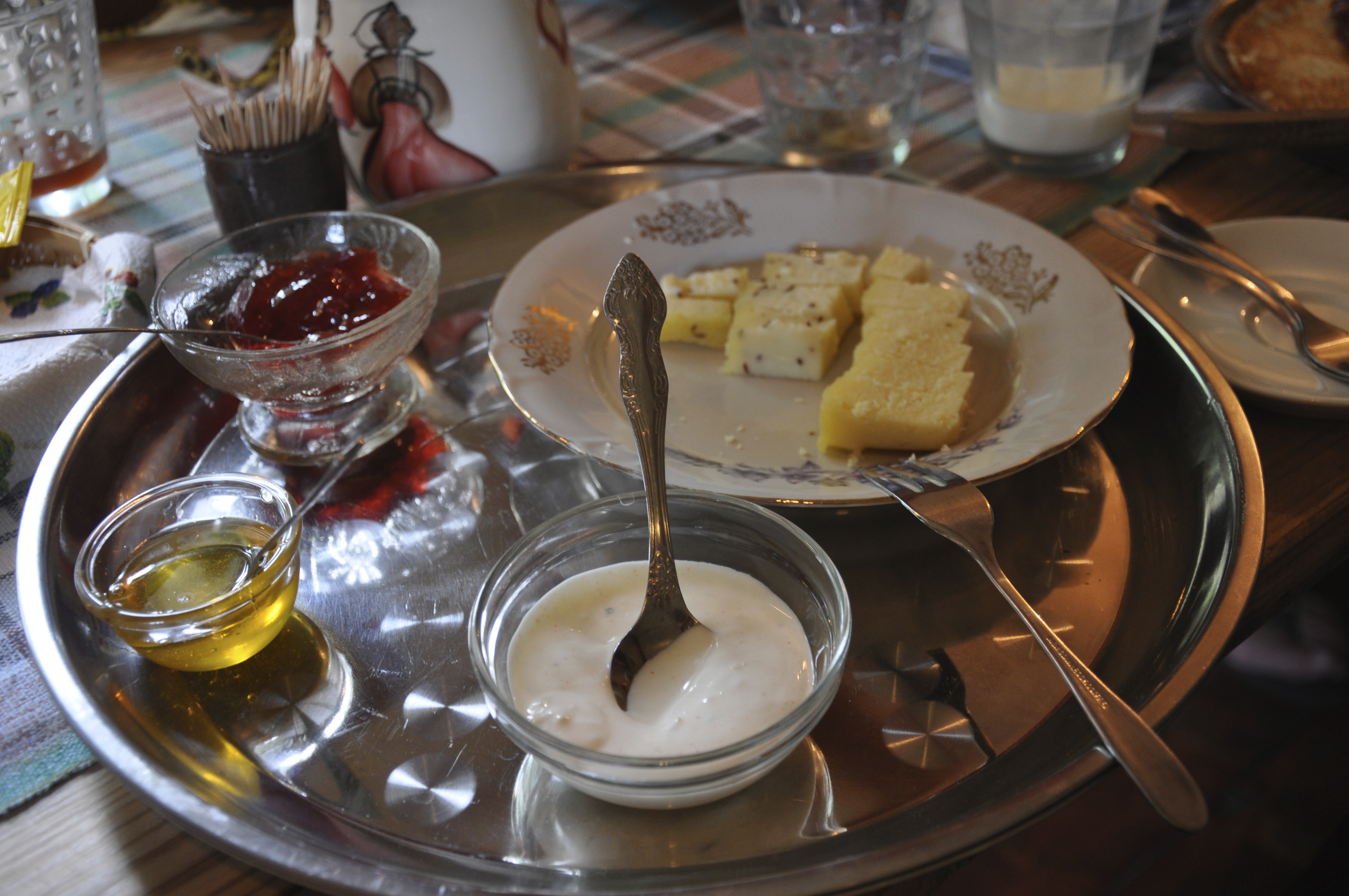
We are stuffed, but he brings sõir, chunks of some unique cheese with three dipping sauces: sour cream with garlic, honey and berry jam.

As an additional dessert, I also order a pankoogid (pancake) with lingonberry jam.

We eat in the downstairs of his wooden home. Near our table is a large, rectangular cement structure which has a fire box built into it on one side. It is molded, on the other side, into a long bench.  In winter, he explains, the bench is warm due to the fire which heats the cement stove. Today, cats occupy the bench.

The kitchen has some surprising amenities including a hood over the stove.  But I watch the gray haired woman who directs a young boy as her assistant, prepare my pankoogid by stirring the batter in an old tin can.

It is a Medieval meal in an (almost) 20th century kitchen.


 Image


                                                Estonian  Food


Breakfast

         Pancakes with lingonberry jam

         Assorted cheeses

         Smoked fish

         Potatoes

         Sausages

         Scrambled eggs (a.k.a. “porridge”)

         Oatmeal

         Salami, sliced

         Cold meat cuts

         Tomatoes

         Cottage cheese

         Fruit

         Yoghurt

         Breads


Lunch


         Bread

         Cheese

         Fish

         Soup


Dinner


         Fish

         Chicken

         Beef

         Soup

         Black currants


October 13, 2013

Estonia: In the King’s Court

Filed under: Uncategorized — cbmosher @ 4:43 am

 This post to Sex, Drugs and Public Health documents a recent trip to Estonia


In 1290, the Teutonic Knights grabbed a trading port on the Baltic which would someday become the capital of Estonia.  They pushed inland to force their influence (i.e. religion) upon the people of that land who lived in harmony with the forests.

At the same time, Czarist Russia pushed across its border with eastern Livonia – the early name for Estonia – and exerted its influence (i.e. religion) upon the people who lived in harmony with the forests.

Today, we drive deeper yet into rural Estonia.  Gone is digitally driven, high rise Tallinn.  Behind us the resort town of Pärnu and the university city of Tartu.  We go even beyond the small town of Tiina’s birth, picturesque Võvu, situated on a couple of small lakes, surrounded by farms.

We head straight toward the Russian border.  Dense forests, wildflower covered fields, occasional farmhouses.

We have an appointment with a King.

“It says here,” someone reads from a reference book, “that the Seto speak a different variation of Estonian, dress differently, and arrange their homes in clusters, not widely separated as all other Estonians do.  They’ve lived in Setomaa – the land of Setos – for millennia.  Part of Setomaa is in Russia, the rest in Estonia.  This causes problems for them.”

A very familiar problem:  Kurds, Iroquois, the Aché, the Basques.

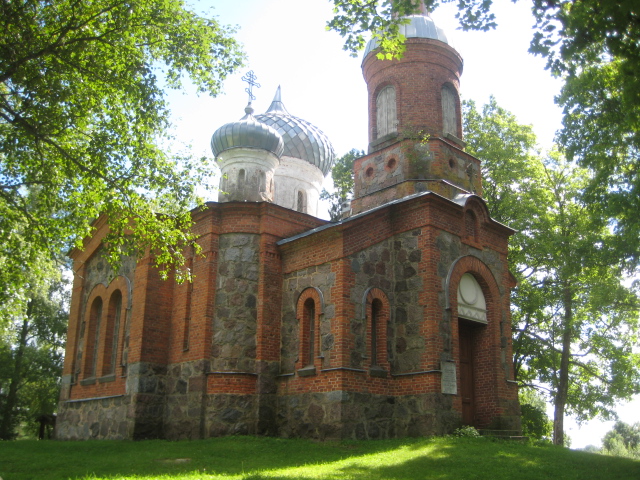
The road leads us past a church, very old, deteriorating, but still spectacular.  Onion-dome cupolas with Orthodox crosses atop, walls and doors of wood as weathered as the bark of near-by trees that umbrella over the church roof.  Two barefoot children sit quietly on a bench in front of the church waiting for something.

We stop.  Our cameras click.  The children ignore us.

Image

We come to the village of Muraski, a mere five kilometers or so from the Russian border, and drive beyond, into yet more of the patchwork landscape of wildflower fields and dense forests. We turn onto a gravel road and eventually pull into a driveway.  The house is of wood planks. “Simple” would be an understatement.

I was prepared to meet an uneducated grizzled old guy draped in traditional patterned wool receiving us with stoic seriousness from his throne, perhaps wearing leather boots elaborately bedecked with antique Russian coins.

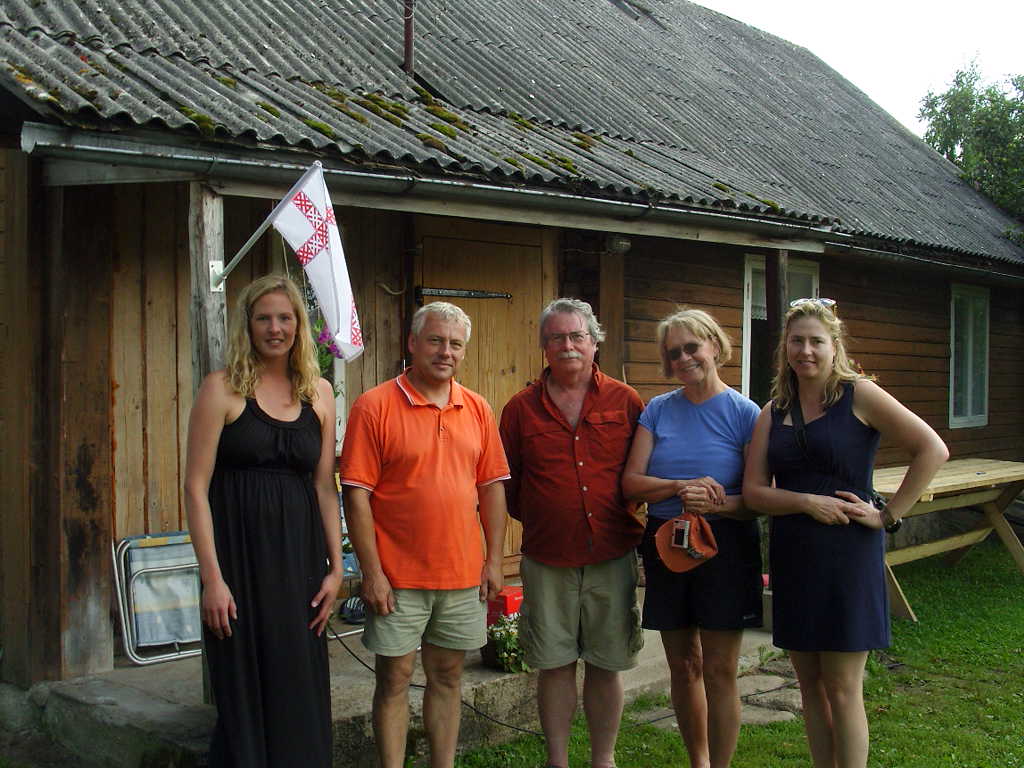
A man comes to greet us, wearing a polo shirt, shorts and flip flops.

“This is the Űlemsootska,” we are introduced by our family guide, Iivi.  “The King of the Seto.”

What do I do?  Bow?  Kiss his ring?  (oops, no rings.)  Address him by his title? Just rely on Iivi’s translations?

“How do you do?” he asks in English, shaking my hand.  “Thank you for visit to my home.”

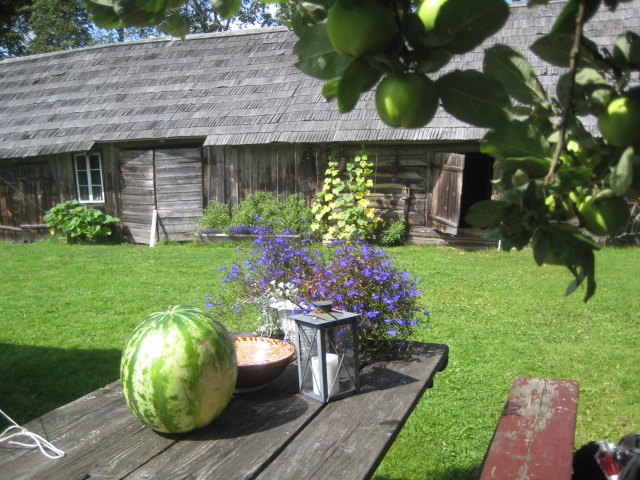
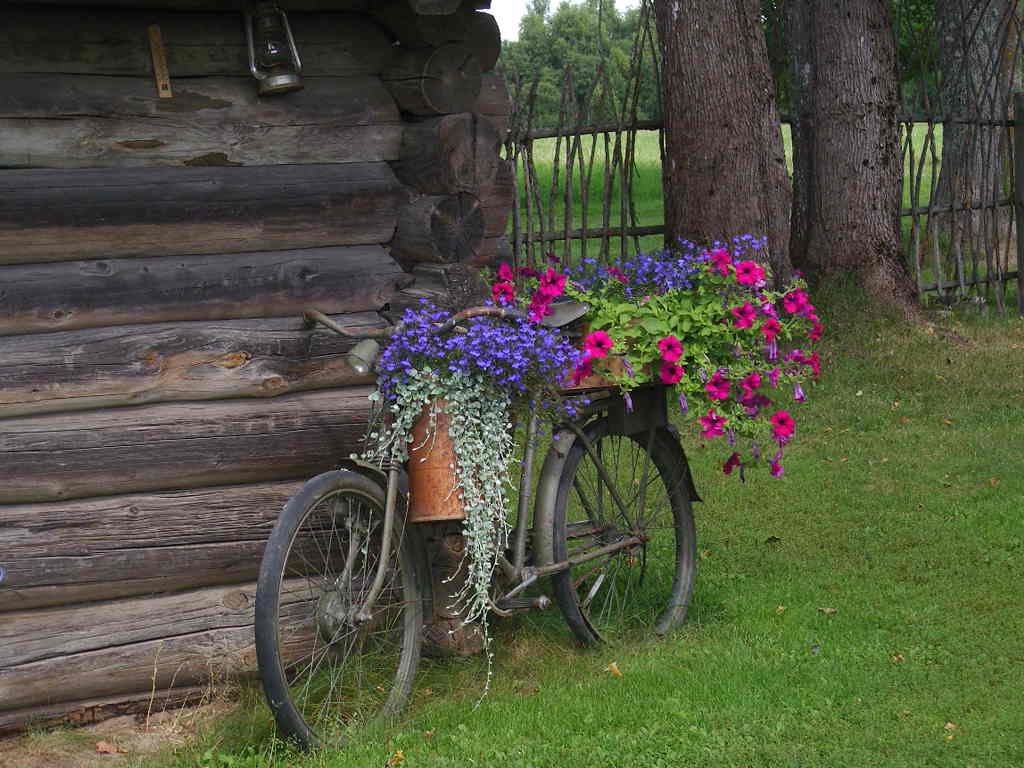
He leads us into his backyard.  Deep green grass is bordered by his house, a very old log constructed shed whose slowly collapsing roof line undulates like ocean waves, a shed stuffed with carefully stacked birch firewood, the outhouse, a garden plot of large multicolored flowers, a pond, and – of course – the sauna. A bicycle, re-purposed as a flower pot, draws my attention, and a smile. An apple tree sheds fruit with audible “thumps” all during our one hour stay.

Image

He leads us to a mosquito netted gazebo like the kind that you buy at WalMart, and polishes a half dozen wine glasses.  He pours cava.  We all wait.  He says nothing.

“To the King!” I offer.

“The King!” our party echoes.

He smiles.

“I am not King,” he begins, still standing, regally erect.  His face is handsomely muscular.  His white hair is short.  His arm muscles and leg muscles are those of a 30 year old.  In spite of his informal dress, he exudes class.  With a soft yet clear voice, he slowly parts the embroidered curtain of his people.

“I am Regent of zee King,” he trills the “R.”  “Zee king of Seto is, in zee monastery, sleeping.  Űlemsootska means zee one who brings message.  King in monastery sends message to me – I speak for King to my people.”

Just like the Aché head man’s job description, I think, minus the Russian monastery.

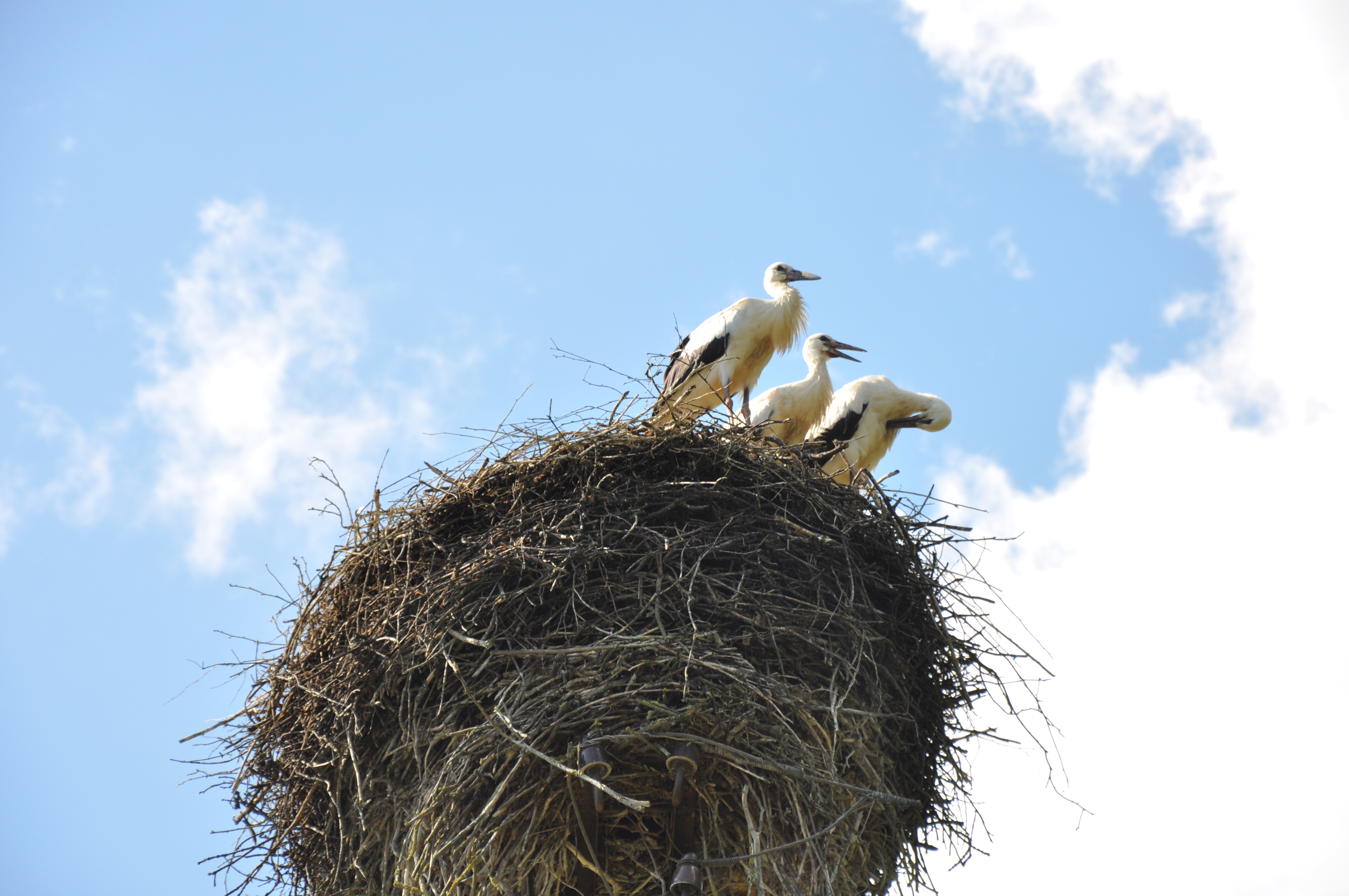
“Long ago,” his ‘g’ sounds accentuate, “zee Germans take Estonia.  Zhey make us change to zheir ways, to Lut-eran church.  Here…” he smiles easily and sweeps the green fields, nesting storks, abundant lakes and fertile forests surrounding his home, “Seto people are practicing Orto-dox church.  From Russia.  Ve don’t vant to change.  So ve live separate since zhat time, here in Souse Estonia.  Zis is how it is.

“Is my chob, Regent for Seto King, to tell vorld about us and, in Tallinn, to be certain parliament tink about Seto in zheir laws.”

“How do you become King – I mean, Regent?” I ask.

He smiles broadly and tips his glass toward us, sips, then continues.

“In zee old days, was honor to be King – but also dangerous.  You are King for one year.  Zhen,” he grins toward me, “Vhat happens?”

A pause.  A shrug.

He slowly draws his finger metaphorically across his throat.

“Zey cut off, from zee King, his head.  But ve Seto are only twelve zhousand of us.  So ve are too few.  Ve change and now zee King keeps his head.”

“It’s good to be King,” I quip before I can send a message to my mouth to not open.  “Please, sit.  Is this your throne?” I point to a canvas recliner he’s set up among the plastic yard chairs.

He laughs.  “No.  Not trone.  You may sit.  I have trone, but not here.”

Some of our party sits to sip the wine.  But I decide to remain standing as long as he is.

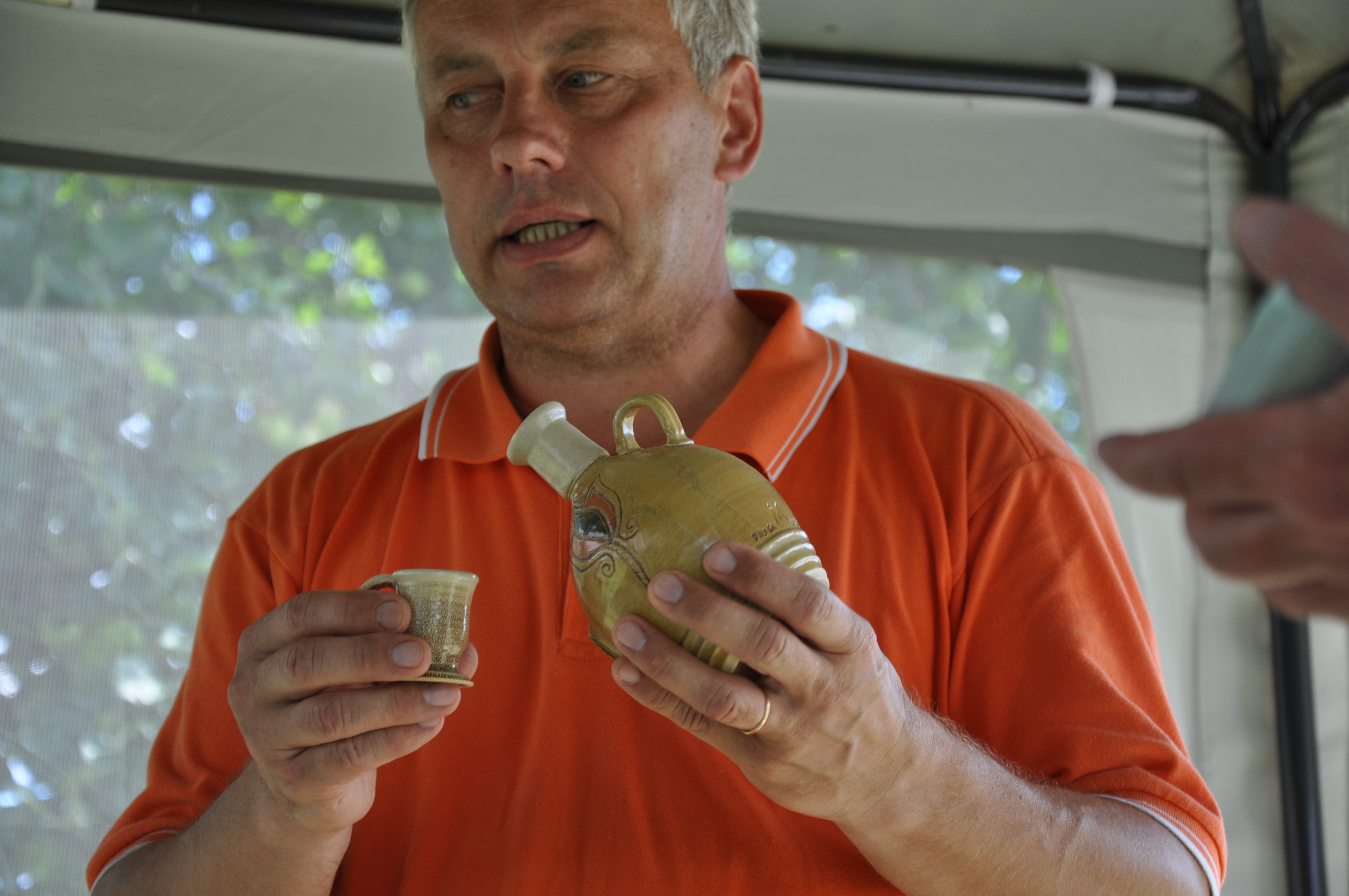
He sets down his wine glass softly, picks up a small ceramic flask and his eyes sweep us.

“You have, none of you, visa to visit  Setomaa.”

End a word with “maa” which means “land” and you are describing a specific place.  Separate and distinct from the other “maas” in Estonia.

“So I fix for you.  Zhis is hancha – is vodka ve make at home.  Very good.  Very good.  I offer, you trink, zhen you have visa.”

Image

With pride he pours a bit into a very small cup, preparing to give it to someone.

“You must trink, each one, around zee room in ziss direction” – he indicates a clock-wise progression – chust as zee sun, through the sky, moves.”

That puts me first up.  I picture home distilling in Appalachia.  I recall moonshine blindness from contaminated booze.  I call upon faith to be my guide in this.  Faith in people.  Not all people, but, I decide, faith in this man.  It feels like a good decision.

It tastes like clear, clean, fire.  I take it in little sips to avoid choking in front of the King. I finish it, and he pours the next cupful.

The hancha makes its ceremonial round, and only one of our party decides to chug the entire shot.  She pays the price in doubled-over gagging and wheezing.

“Now,” he holds the empty shot cup in one hand and flask of hancha in the other,” King may not take unless one of you – wiz your new visas – you offer it to zee King.  You say ‘No.  You trink first’.”

Oh.  Oh.  I think.  We were supposed to do that initially, from respect, maybe?

He slowly pours hancha into the little ceramic shot cup, fixes my eyes with his, and extends it to me.

“For you,” he says.

I take it.

“Please,” I say, handing it back, “you drink first.”

He smiles broadly.  He drinks.  Finally, he sits.

“Questions for me, you half?”

Image

“Do they pay you to be King?”

He laughs.  “Is expensive to be King.  I must, all zee time be travelling.  To Tallinn.  To graduation of Seto children in Tartu.  Soon – zhis afternoon – I must go Helsinki.  Zhree hundred Euros a year zhey pay me.  Zhat is gone wiz two trips to Tallinn.”

“How do the Seto people choose a King?”

“Ah!” he animates even more on this topic.  He stands up.  “Choosing Seto King is most democratic process in vorld.  Vonce a year, early August, ve have big festival.  If you vant be King, you stand up on top of box.  Other person who vants be King, also stands.  Zhen all the Seto people line up in front of you.  Person viz longest line is King.

Transparent voting I think.  That’ll test friendships.

“Of course, sometimes,” he continues, “zhere are problems.  Sometimes person stands one line while ve count, zhen jumps into other line, for other – how you say? – candidate.”

“We have that in America,” I blurt, thinking of Chicago.

“Why do you want to be King?” someone asks.  “It sounds difficult.”

He sits, and smiles pensively.

“When I am young, I leave Setomaa.  I verk in marine.  Sail the vorld.  But now I am fifty.  Vhen you reach fifty, you need more zhan money.  Zhis place is my grandfather’s place.  I come back.  It feels like home.”

Two more ripe apples drop with a thud.  I look again at the flowers, the green fields, the bike.  Rural peace envelopes us.

Image

“Zee vorld is rounded,” he expands his thoughts.  “If you start from here –” he points his finger to the earth beneath our feet – “you must come back here.”

“If you must get out the word to your people, but there are 12,000 of them all over the world, how do you do that?”

A fly buzzes my ear.  I swat angrily at it.  Flies have been everywhere in rural Estonia and very obnoxious.  I need a fly swatter but no tool so advanced is in sight.

“Ah,” the King slides easily into his answer.  “I use Facebook, of course.”

He stands and reiterates his need to begin his journey to Helsinki.

“You must go to Obinitsa on your way home.  It is capital of Setomaa.  Zhere is restaurant – very good restaurant.  Zhere you get good Seto food.”

And he ducks his handsome white haired head out of the gazebo to go down to his sauna by the pond.  The raw wood shack by the pond.  To clean up for his royal trip.

Image

« Newer PostsOlder Posts »

Blog at WordPress.com.