Sex, Drugs, and Public Health

February 23, 2014

MACHU PICCHU MADNESS

Filed under: Uncategorized — cbmosher @ 3:48 am

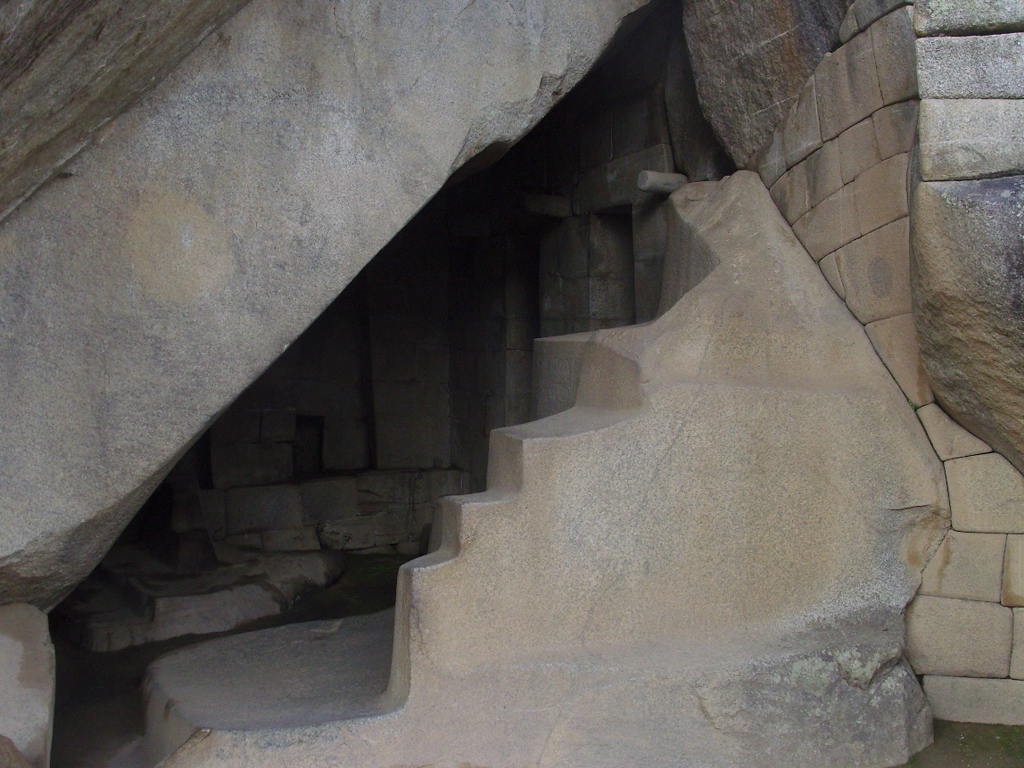
Pachacuti turned over in his grave. A challenging maneuver, since a tree root had been growing right thru his chest for the last 150 years.


“Why don’t they pave over these irregular steps?” he heard the Argentinean woman , walking on the ground above him, complain.


“Can you believe it? That Guard guy told me not to touch the rock,” a European man growled. “It’s a rock, for christ’s sake!”


Pachacuti twisted harder against his anchoring root, trying to remove himself further from this craziness.


Rocks are gifts to us,    he tried to yell to the tourist.    Gifts from the Earth – from the Pachamama – to us. She died trying to save her children, and she became the mountain. The rocks are Her body!

He twisted in furious frustration. The rocks are for creating. For building our city. The filth you slather on your hands from those little tubes will hurt the rocks. Why can’t you understand something so obvious?
 

Image


“Where do they sacrifice the virgins?” a middle-aged North American woman twanged.


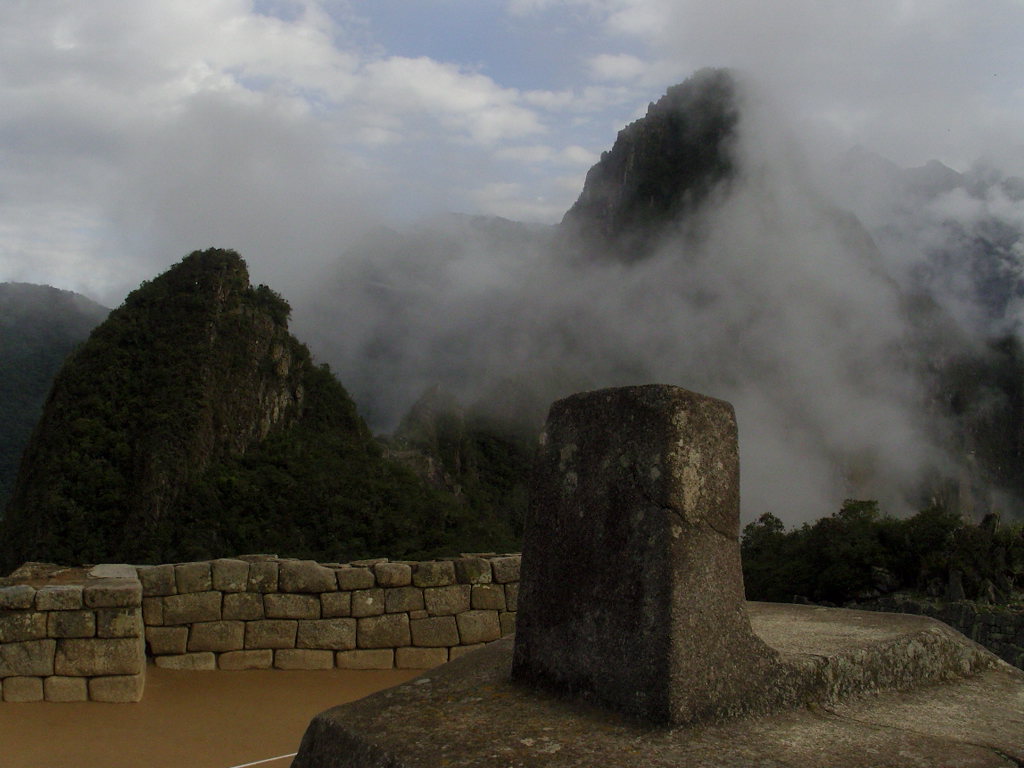
We are not animals! he tried to scream from below the earth. We are not Mayans. We are the civilized descendants of Inti, the Sun. we do not sacrifice people.
 Image


“They need to air condition the bus. This is intolerable.”


You sit. You let the oil from deep inside Pachamama carry you, while your muscles turn to flab. And you complain?


We got an AWEsome photo of us flying the Seahawks 12th Man flag from one of them temples!”


Such low aspirations! We covered these stones with woven fabrics of magnificent colors. With Inti’s blood – with gold – we reflected Inti’s  face from our temples! These stones were covered in gold,. We polished the silver in these buildings until it was worthy of the sons and daughters of this city. And you can only fly a flag?


They give you a little box lunch to take to Machu Picchu. It’s so cute!”


Pachacuti is amused by your description of your food. Ours, too, can be “cute.”


Image 


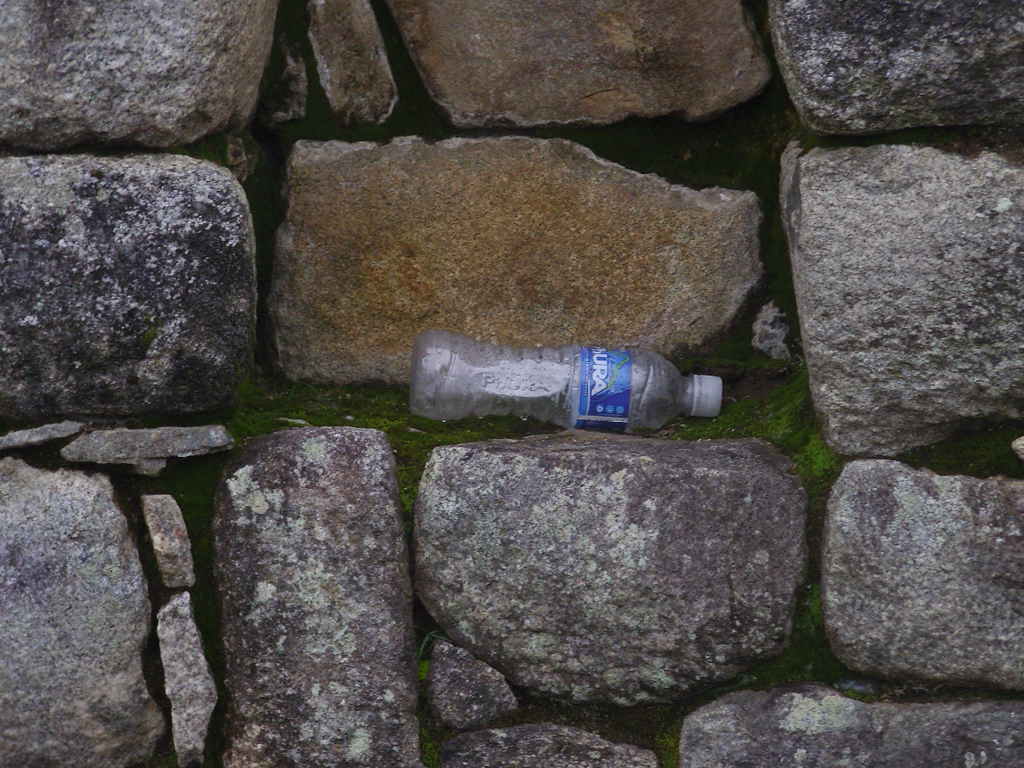
 But mostly, it’s quinoa. Please tell me why, after you eat, you drop your garbage on our city?
 

Image 


“Keep a lookout. I’m going to score some of the sacred water from the ritualistic fountain, and take it home in this glass vial. It’ll be mystical.”


‘Ritualistic?’ ‘Sacred?’ It is our drinking water. Please, help yourself. Drink some.


 Image


“Dude! Check it out! I’m the first one in at six A.M. and I’m gonna set the record for running up Huayna Picchu and back. Meet me at the gate at seven-thirty!”


A lot of MACHO.  But no PICCHU.


Image 

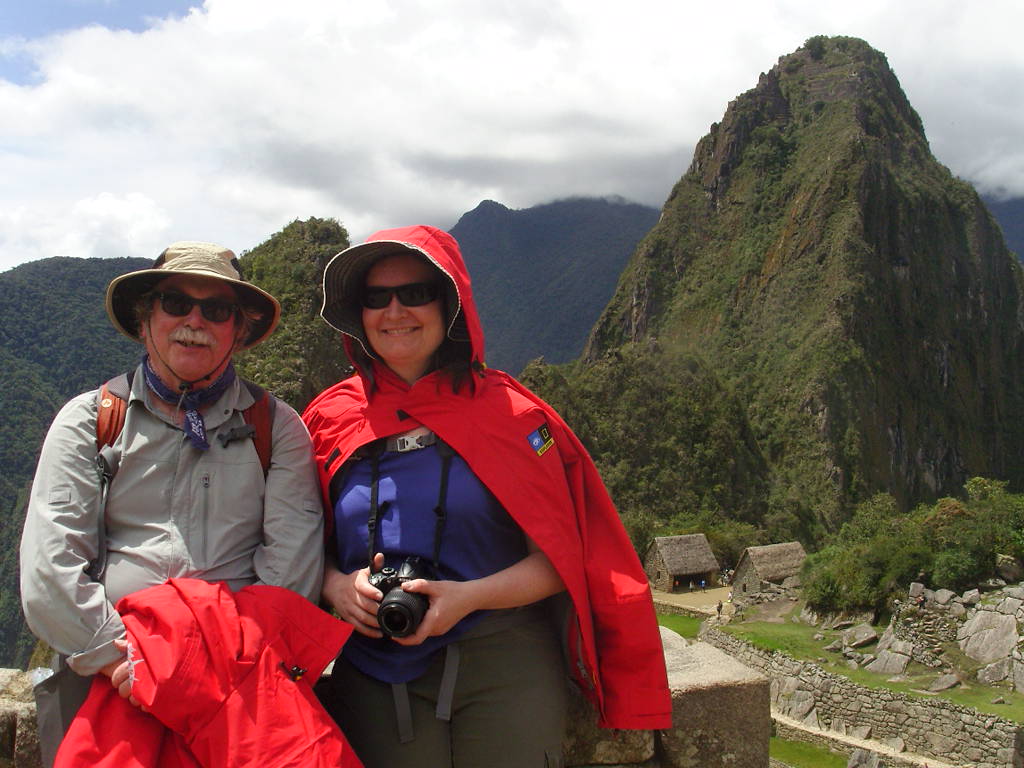
Ah. I see you are not all worshipers of Inti.


“You come quickly! I stamp passport. Say ‘Machu Picchu’ Hurry. Bus waiting.”


So, you are proud that the silver bird, drinking up Pachamama’s oil, brought you to our city. And you will display many pictures for your friends. But, tell me. Will you understand what you have seen? Understand, even deeper, how, we, too, have a connection to your Asia homeland from thousands of years ago?


“Ah’m tarred, Maude. Let’s us git back to the ho-tel fer a Pisca Sour.”


Inti is disappearing again as He has 205,860 times over this city. My comfort is that these people called tourists will leave for a few hours.  But they will return tomorrow. More than two times as many people as when our city was alive. Viracocha, the Creator, must have a Great Plan to allow such insanity. I will wait to see what it is. I will wait so long this root will die of old age and become the soil. But I will be here, waiting.
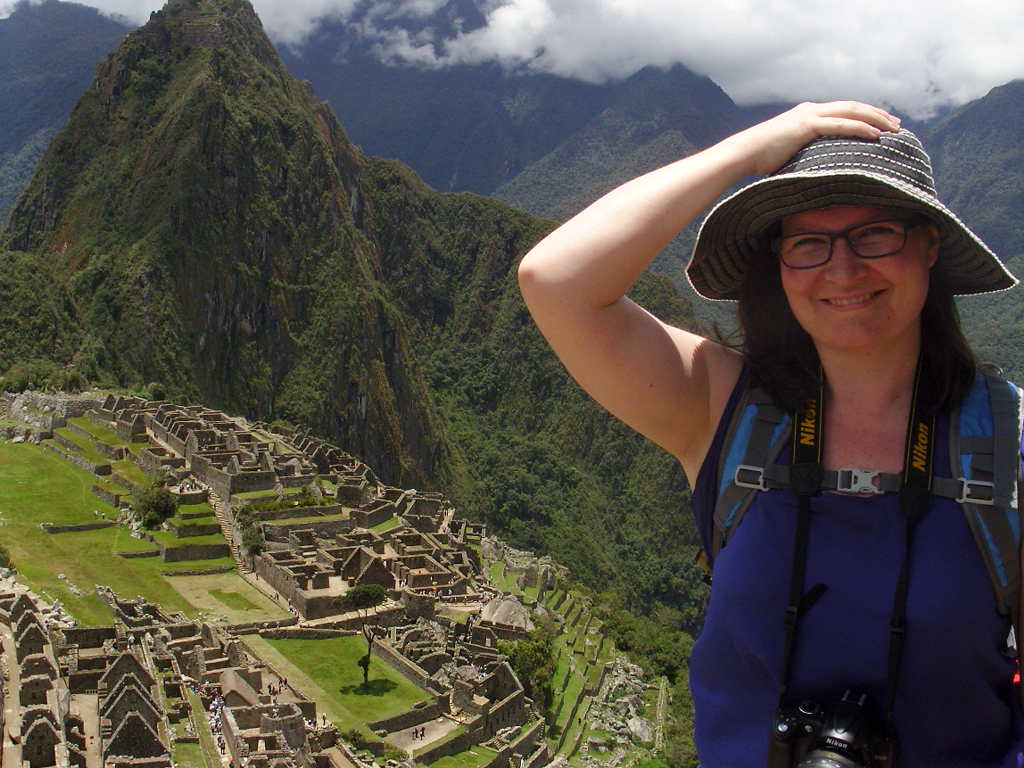
February 22, 2014

LEAVING LIMA

Filed under: Uncategorized — cbmosher @ 1:05 pm

Pretty much what’s happening from the moment we touch down.

Miraflores is nice: clean, good restaurants, safe to walk at nite, the ocean nearby. But you have to run a gauntlet to get there.

”I don’t like air conditioning,”the driver announces. “That’s just the fan – ” he points at the brutalized dashboard which is responsible for bringing in the hot, humid air. “I used it once – cold in car; hot when you get out; cold when you get back in – – – I got a horrible pharyngitis.”

So we roll down the windows to get a breeze from the movement of Lima’s February sweat as we pass broken-down vehicles clogging lanes, street vendors weaving among the cars, and street after street of decaying buildings.

The chofer leans back toward the door where Sarah sits. He pushes down the lock.

Bueno,” he declares. “Mejor.”

Then he spots her backpack on the seat beside her.

“Put that on the floor,” he animates urgently with his hand. “It’s not a good neighborhood.”

Forty-five minutes later, we’re in Miraflores.

Reversing the process to return to the airport, we lock doors, stash our backpacks, but keep the windows open so we can breathe.

Finally: “Aereopuerto 1 Km,” reads a sign, its lettering undulating slowly in the heat.

Then my nose has a flashback: penguins. Penguin poop, specifically.

Must be an olfactory hallucination. I decide to ignore it. But it’s there with the next breath. And the next. I turn around to Sarah.

“Penguins?” I test her. The heat in this place tells me my nose is geographically confused.

Sarah, however, says “yep.”

Hay un olor de pescado?” I check in with the chofer.

Si,” he affirms. “A factory of fish meal. Next to the airport.”

Indeed. The entire international airport is engulfed in a hot, viscous   cloud of regurgitated fish. Like some mother penguin feeding her little Happy Feet.

They assign gate 16. We go there and find they have closed doors to gates beyond 15 and posted ominously officious written warning against opening them. Finally, ten minutes before boarding time, someone opens the doors and the Machu Picchu hoard pours in.

Then they call Sarah’s name to come to the desk. Is she willing to change seats? For the convenience of someone?

We board. There’s a recorded announcement (they obviously use it a lot). It’s the only airplane announcement about seat belts I’ve ever heard where they direct you to NOT buckle your seat belt:

“We are re-fueling the plane. Please to not smoke or using electronic devises. Be seated, but do not buckle your seat belt. Thank you.”

Leaving Lima.

SAMSUNG DIGITAL CAMERA

February 19, 2014

DAY EIGHT AT SEA

Filed under: Uncategorized — cbmosher @ 3:12 pm

Disappointing Drake; Exhilarating Experience

For over forty years, I’ve heard from sailing friends of the notorious “Roaring Forties” and “Furious Fifties.” Unrelenting winds and massive waves in the latitudes of those numbers, off Cape Horn, let alone the Shrieking Sixties of Antarctic waters further south. But the return voyage to Ushuaia just gives us rolling, episodic disequilibrium, and 2 or 3 green-faced guests.

Image

With the whales, penguins, and icebergs far beyond our wake, they entertain us with lectures, underwater movies, and quasi-scientific demonstrations:

  • the Andes arise in Venezuela, run like a spine down South America, dive into the southern ocean at Ushuaia, then erupt again to become the Antarctic Peninsula. There, snow and ice weld the mountains of rock into the northern-most piece of Antarctica – the piece we partially explored.
  • about 500,000 years ago, Antarctica was the location of the magnetic North pole. The electromagnetic polarity of the Earth switched subsequently to what we have today.
  • If, from the interior of the continent, you head to a coast in any direction, you are always heading North.
  • Continental Drift, which broke Antarctica free from other land masses millennia ago, and continues to forge dynamic change, is making the Atlantic Ocean larger, and the Pacific smaller.
  • Lisa, the SCUBA queen, shows us the ocean bottom of Cierva Cove where multiple icebergs float and, frequently, become grounded. There are far fewer invertebrate animals on this floor – an area she calls “the Scour Zone,” where ‘bergs have scraped the animals away.
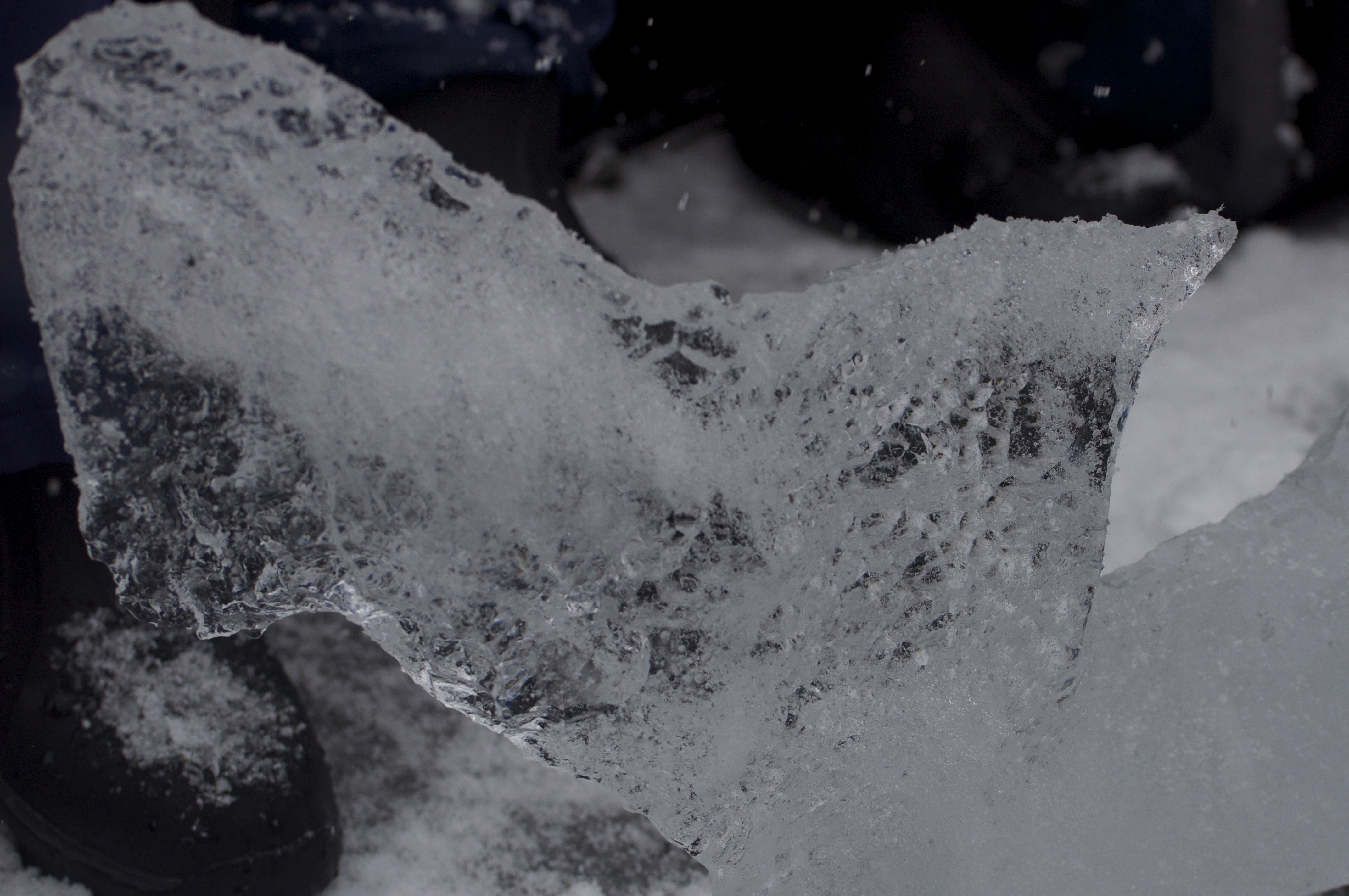
  • Eric, the “Ice Man” pulled a floating remnant of a berg from Paradise Harbor two days ago to show us that, upon removal from the water, air would soon cloud the crystal transparency of the ice. It did – within 15 minutes. The same phenomenon, he says, occurs as the pressure of tons of ice above a glacier are released with calving.

Image

  • This same Eric shows us a Japanese movie made about him and his hobby of exploring ice caves in glaciers. He has photographed many of these caverns carved by melt water, and they are eerie and beautiful.
  • And finally, Eric again, naturally inquisitive and energetic, pumps me for info on the “Diving Reflex,” then sets up a demonstration. One of his fellow Naturalists immerses his face in ice water while a volunteer from the audience reads the Naturalist’s pulse rate. Luckily for Eric, the reaction is textbook, the guy’s pulse rate falling constantly as long as he holds his breath and keeps his face submerged.

We all erupt in applause, not just for the wet-faced Naturalist, not just for Eric’s success, but for the entirety of the experience, enjoyable and educational right down to the relatively tame behavior of Drake’s Passage.

February 16, 2014

DAY SEVEN AT SEA

Filed under: Uncategorized — cbmosher @ 6:36 am

Sarah says she came for the ice, more than for the wildlife. An increasing number of guests say they came for the wildlife, but are now more fascinated by the ice.


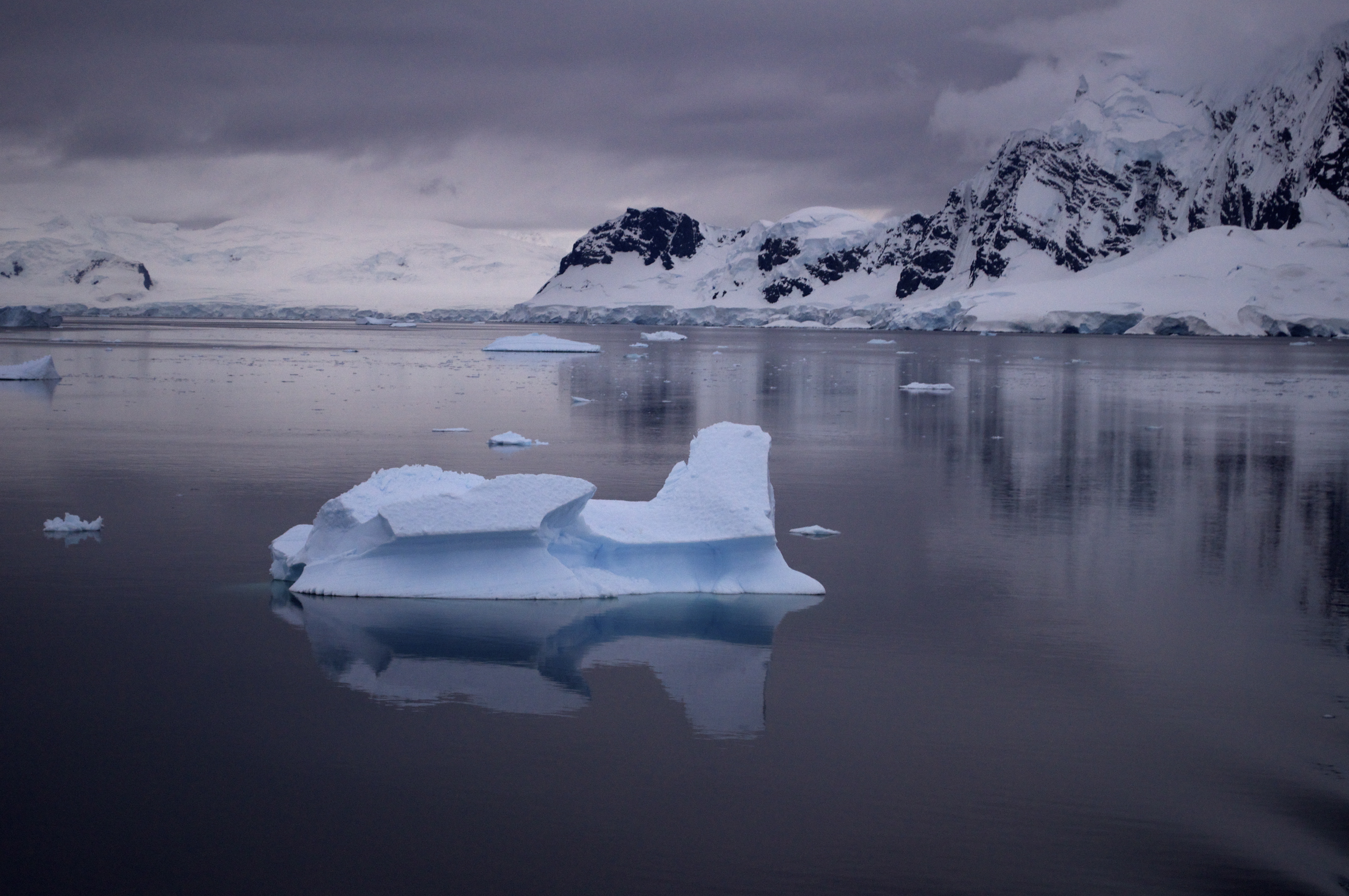
Every ‘berg is unique. They are continually sculpted by the sea, sometimes adding icicles. Often flipping to reveal a different face. Sometimes jamming a harbor so tightly, that it’s inaccessible (as was the Weddell sea for us).

DSC_0410

There are dozens of names for ice here and in the Arctic, but two major categories are: Sea Ice and Land Ice.


The first is what forms on the surface of the ocean when the salt water gets cold enuf in winter – 28.5 degrees F. It starts as a slurry, then becomes floating pancakes. These fuse into a surface of ice extending miles beyond shoreline.


Land Ice starts as snow falling, trapping air. As it builds up over the centuries, it gets heavier, compresses the air, and re-arranges its crystals as ice. Then it begins to flow, rivers of ice joining in the downslope run, into a glacier at the edge of the sea.


The Land Ice, because of the trapped air, is lighter. Once it breaks free of the glacier, it floats a little higher in the ocean than the Sea Ice.


We’ve seen millions of tons of ice.  Billions. Oozing down the valleys in place of water, floating free in the open ocean, in harbors, and in coves. The sheer volume of it is nearly ungraspable.


Then you look at a map. We’ve seen just 1% of the continent’s land and ice mass. The area called “Greater Antarctica” is entirely covered by an ice cap. Scientists have plotted the mountain range, individual peaks, and plateaus beneath the ice.


But 35 Million years of sparse snowfall (this is a desert – only six inches of water equivalent falls each year) and no years of melting have left that ice cap three miles thick in some places. The  ice is so heavy, that we are told much of the landmass (i.e. rock) has been pushed down below sea level. It would be a land of islands if the ice cap were removed.


Given the size and numbers of bergs, you wonder if Antarctica is losing ice faster than it’s accumulating it. So have the scientists.


As the snow falls, it traps small quantities of air and soot (e.g. from volcanoes). Thus, scientists have been able to take core samples, bored from the ice, and measure the level of various gasses in the Earth’s atmosphere over centuries. Then we can compare those readings with today’s levels.


The result:  CO2 levels in the atmosphere have fluctuated over the last 30,000,000 years. The highest level reached during that time was 280.


Today CO2 levels are over 400 and rising. A new record for the last thirty million years.


All the glaciers on this peninsula are retreating.


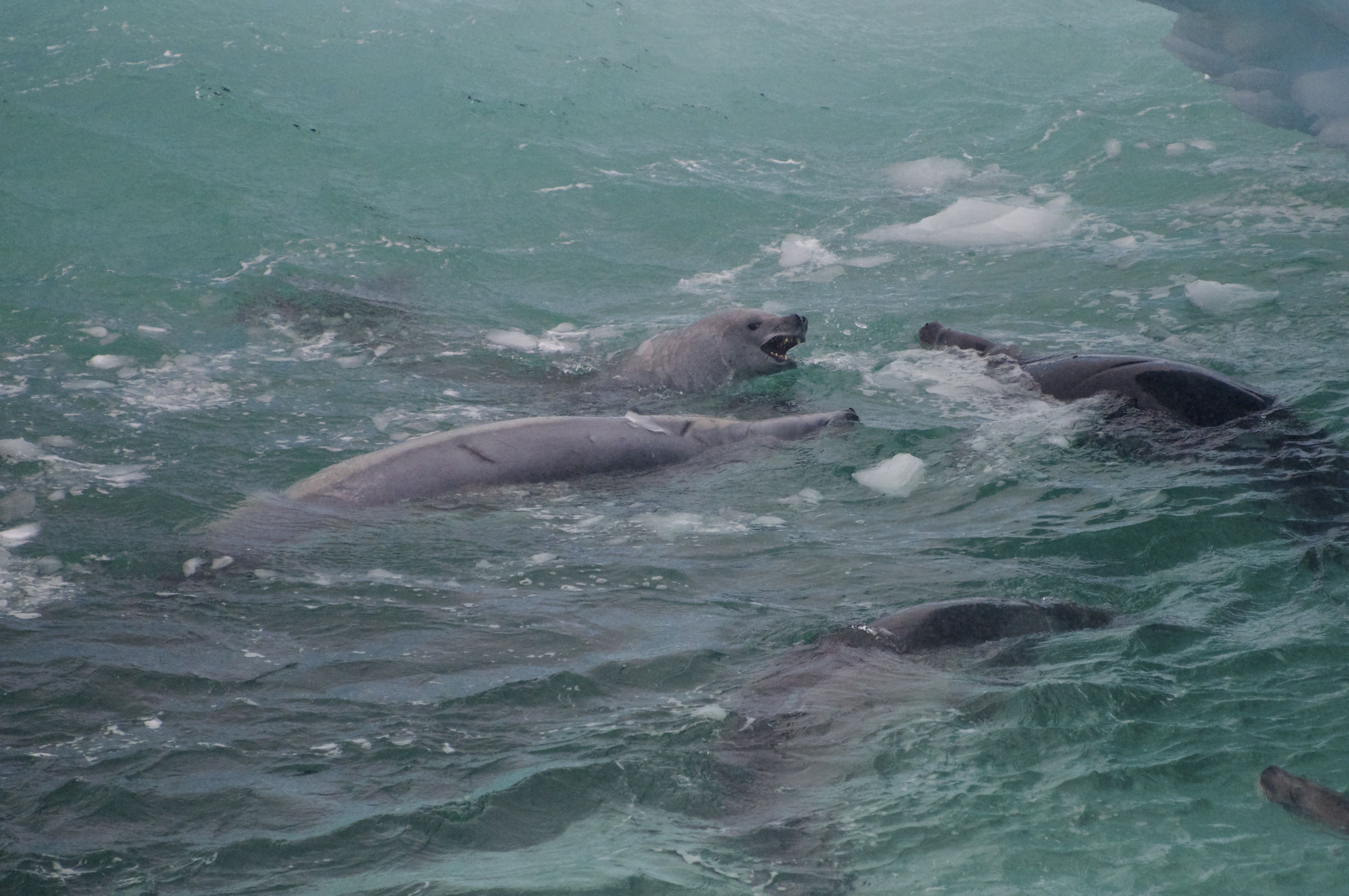
Regarding the wildlife: two days ago, our ship made its way into Paradise Harbor where snow, wind, cold and waves thrashed the ocean. Captain ran the ship aground to anchor us – an interesting technique – and we took a wet Zodiac ride among the icebergs. The highlite was a Leopard seal swimming within hands’ reach, fangs bared.

7 Seals

It had been prowling the shore, waiting for dinner to enter the surf and swim by. But the penguin babies were still molting their birth down into waterproof feathers. No water experience for them until next week. Back to his ice floe for the sleek, heavily muscled number two predator in Antarctica. He fills the niche where you find Polar bears in the northern land of ice. And these seals are so comfortable on ice floes, that’s where they breed and raise their pups, far from land.


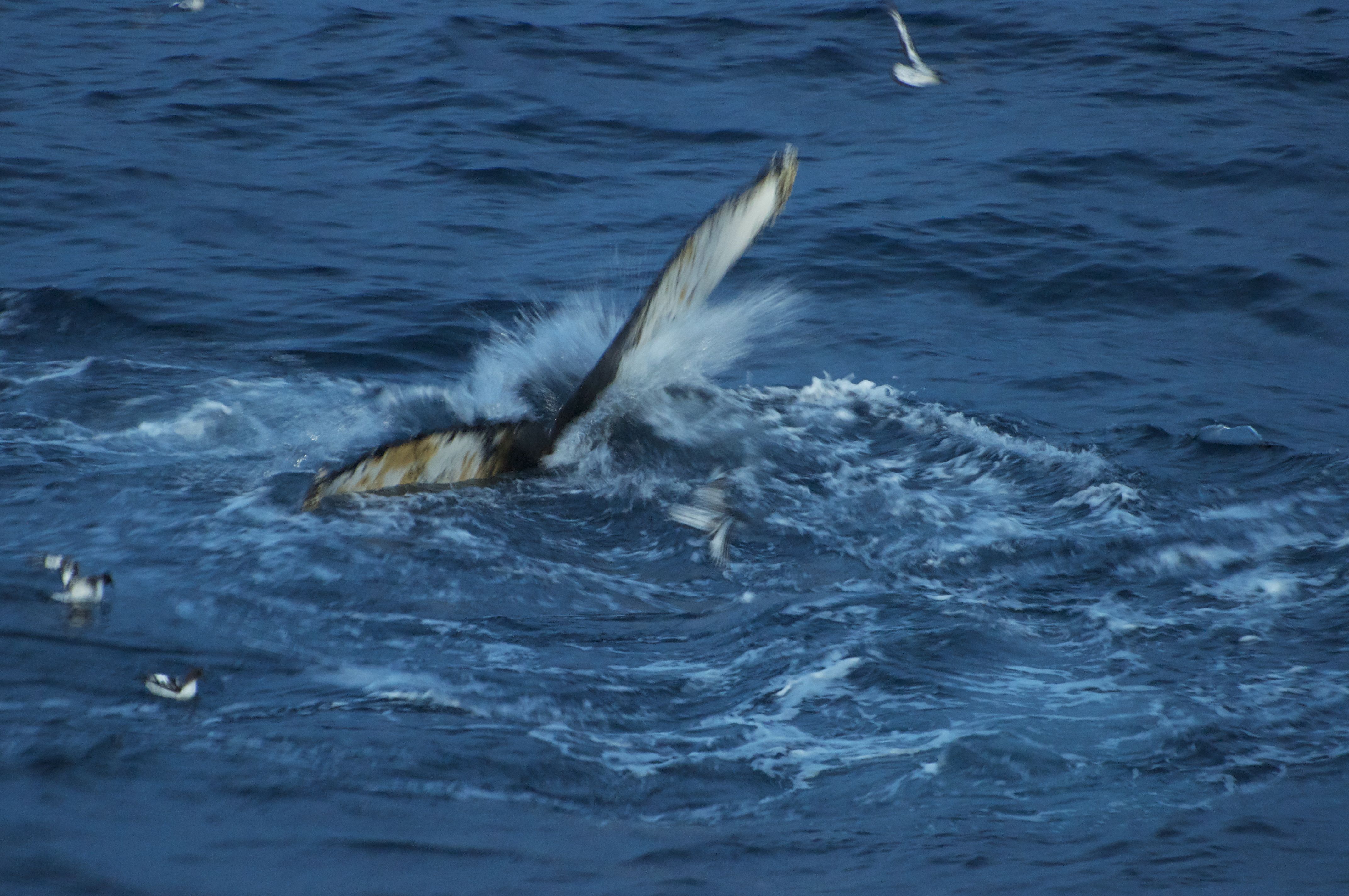
Yesterday Sarah took another Zodiac ride among the icebergs (the final of the trip) and a Humpback whale surfaced just off the beam, almost within touching distance. It then turned on its side to feed, expanding its pleats, and scooping up a vast quantity of water and krill. They hunt where the krill is, of course, and the krill breeds beneath the ice.

7 Humpback

So, I would add to the list for this continent of superlatives (the Highest, the Driest, the Coldest, the Windiest, the Loneliest) this: the Iciest. 80% of our planet’s fresh water is frozen solid here, for safekeeping and for regulation of our weather.


There’s work to be done, protecting this most spectacularly beautiful ad untouched continent: preventing the continuing trend toward ever higher CO2 levels, and ever quicker retreat of glaciers. Not just for the Leopard seals and Humpbacks, but for our grandchildren and, indeed, for the entire planet.

February 15, 2014

DAY SIX AT SEA

Filed under: Uncategorized — cbmosher @ 1:00 am

Antarctica, 21st Century Moon

In Med School, they taught us diseases named for the egocentric physicians who’d described them. Such names are useless – they don’t describe the involved pathology or physiology. But here, in cold, wet, remote, magnificent Antarctica, two such disease names arose where sub-freezing water splashes angrily against an iceberg.

Charcot joint and Charcot-Marie-Tooth disease evoke the epynemeous Paris physician whose estate was spent by the son of the famous doctor, constructing a ship for Antarctic exploration. Charcot junior was driven to be an explorer of the only remaining unknown land on the planet (“the Last Frontier” of the day). He bade farewell to his wife – the granddaughter of Victor Hugo – and crunched his ship ashore at Booth Island.

Today we lean all our weight into the fierce wind, trying to stay erect and photograph what remains of Charcot’s stone hut. He and his crew, like several other 19th – 20th century explorers, spent the winter: a suicidal move considering what mid-Summer looks like.

6 Booth Charcot

We and our cameras are ordered back to the ship, as the wind and waves are becoming unsafe for the Zodiacs to transport us between shore and ship.

“We don’t want to strand any guests on the island,” one staff person told me. “Again,” he added.

6 Booth wind

Charcot was just one of several turn-of-century explorers who planted flags here. Exploration of the Antarctic was the moon-shot of the day. Several countries have claimed pieces of Antarctica, but a current treaty states no one “owns” it.

Until someone finds oil, coal, or rare metals (component of ‘puters) here, it should remain spectacularly pristine. But, as with the moon, the fear is for future exploitation or militarization.

Next:  the weight of the Ice

« Newer PostsOlder Posts »

Blog at WordPress.com.