Sex, Drugs, and Public Health

March 23, 2015

Gorgas

Filed under: Uncategorized — cbmosher @ 4:27 am

Jerry was a cool guy for a boss. He wore a beard, which was against the former boss’s rules, spoke fluent Spanish, and had spent a year at the Cordon Bleu school in Paris. A great mix of rebellion, cultural sensitivity, and gastronomic priority setting.

So I was counting on him to see my point of view and support it.

“Chuck, the Ambassador wants you to take one of his officers to Panama for medical care.”

There. He’d delivered the message, like a good politician who hung out occasionally at the U. S. Embassy in Paraguay.

“Well, tell him I can’t. My prime responsibility is to the Peace Corps Volunteers, not to his Embassy staff.”

“Sit down, Chuck. Let me explain something to you.”

SAMSUNG DIGITAL CAMERA

So the officer, a diplomat named Jim, and I arrived at Paraguay’s airport on the designated day.

“I know you’ll be needing immediate access to oxygen,” the Paraguayan woman in charge of the Braniff Airlines desk said in perfect English. “In case anything…” she glanced toward Jim, paused, then tried to extricate herself, “In case you… want it, Dr. Mosher. In case you want it. So. We’ve seated you in the very front with an oxygen bottle on the bulkhead.”

She exuded a whole lot more anxiety about this than I had mustered, still fuming and muttering about how politics had hijacked me. Her words were like sharp jabs with a sword called “responsibility”. My mood darkened.

Not Jim’s. “Aw, oxygen, smocks-ygen. It’s nothing. Fly up. Get zapped. Fly back. Do you have cocktails on board?”

The Paraguayan agent smiled, nodded her head, and smoothed an imaginary wrinkle in her uniform. “For the other customers, of course.” She shoved our tickets toward us, and changed her voice to the standard industrial chipper, “Have a good flight!”

“No fuckin’ secrets in this cow country,” Jim mumbled as we walked toward the tarmac. “Oh, sorry,” he jolted. “Do you swear? ‘Cause if not, I’ll try not to.”

It was a short walk across the asphalt to the waiting plane, but a lot of stuff flooded into my head. Stuff I’d tried to set aside so I could fume and mutter. He was in Atrial Fibrillation, due, the Embassy physician believed, to excess alcohol use.

The local physician had refused to perform cardio-version on the alcohol-loving diplomat there in Paraguay, insisting that the nearest “competent” cardiologist with a cardio-version machine was 2,000 miles to the north.

He’d obviously decided that, if the Embassy functionary died in the attempt, the blood would, metaphorically, be on his hands. Even if this simple electrical intervention had taken place in Argentina, Brazil, Venezuela, or Columbia. Let alone his home country of Paraguay.

He was protecting his golden-egg laying chicken called ‘the Embassy of the United States’, and placing the patient, heart still thrashing irregularly, into my hands. Hands so fresh from Med School and internship, that they had very little dexterity with the profession’s skills. All my experience has been in the highly controlled, fully equipped confines of teaching hospitals and emergency rooms.

The Devil advocated all over my brain during the short walk to the portable steps, rolled into place against the plane’s fuselage, on a mercifully un-rainy day: as we climb, the oxygen pressure in the air will drop, stressing his heart; The irregularity could worsen, perhaps speed up to over 200 when blood circulation will drop drastically; Maybe even degenerate into Ventricular Fibrillation with a complete paralysis of the heart; Only C.P.R. and thumping his chest with my fist would offer any hope, 30,000 feet up; I need to be prepared.

“Stewardess,” Jim called once we’d clicked ourselves in. “Could I have a Manhattan, please?”

“Jim, no alcohol,” I whispered in my serious Doctor tone. “Let’s not make things worse.”

“Aw, one won’t hurt.”

“You can have all the drinks you want,” I promised, “once you’re back in Asuncion. None ‘til then.”

He pouted.

“Orders from Gorgas,” I added to heap on more ponderous medical authority. I don’t recall, at this remove of time, whether any physician at Gorgas had said such a thing to me. Or even, whether I’d communicated with them from Paraguay at all. But if I had, I’m certain they would have agreed.

I spent the flight glancing at his red-cheeked and red-nosed face, to confirm that blood was still circulating from his fibrillating heart. I clenched the arm rests with all the anxiety a cardiac arrest in my patient might provoke, doubting whether this long-distance transfer with a fledgling non-cardiologist was, really, in the patient’s best interest. Sure as hell wasn’t in mine.

Jim spent his time commenting on the size of the stewardesses’ breasts and the mobility of their asses. Twice he unbuckled and excused himself to seek out the bathroom. Because that’s awfully close to where they keep those little bottles of vodka and scotch, I accompanied him on both trips.

“You’re my patient,” I said in what I hoped was a jocular tone. “Can’t let you out of my sight.”

Except for when he slid the “occupied” sign from the inside of the little door. He was on his own in there. Limits to this doctor-patient thing do exist.

Hours later we landed. His cheeks were still red and the stewardesses – all three of them – were pretty done with him. The air of Panama, even in the evening, was heavy, thick, wet, and hot. As, I am told, it always is. My glasses steamed up the instant I stepped from the airplane’s door.

We were met on the tarmac by some Embassy driver and were checked into some excessively luxurious hotel.

“Let’s get some dinner!” Jim enthused, his hands rubbing together in anticipation of something. Something within his brain that I suspected he didn’t want me to know about.

“Downstairs is the hotel dining room,” I prescribed. “Then off to bed. It’s an early day for you tomorrow at the hospital.”

The disappointment in his eyes reminded me of my first dog, a sad faced beagle incapable of hiding his thoughts. Or emotions. Or whatever dogs have. Jim’s look also confirmed my fears that he had plans.

I got him through dinner without alcohol and then, into bed. Luckily, we were in the same suite. Unluckily, his Atrial Fibrillation didn’t stifle his snoring.

In the early morning, we were driven to Gorgas. The Embassy vehicle cleaved the Panamanian air, which was hot, wet, heavy and laden with the myriad perfumes of the city and surrounding jungle. I delivered him into the hands of a cardiologist and felt a sudden and complete relief a lot like – (medical metaphor warning) – unburdening a full colon.

I wandered the banks of the famous canal for as long as I could tolerate moving and breathing through the jelly-like mass of the Panamanian atmosphere, then returned to the air conditioned hotel to await news.

“They’re keeping me overnight,” Jim reported by phone. “For observation.”

I smiled, relaxed, enjoyed the feel of the hotel’s air.

“Then they want me to stay at the hotel tomorrow night, too. Just to be sure.”

Crap! I’d hoped I could just get him back to Paraguay immediately upon discharge. Still breathing. “Okay,” I said.

“Man, my chest is sore. That defibrillator packs a punch. See you tomorrow.”
The Embassy took care of plane tickets and another night at the hotel. I wandered outside into the evening to look for a restaurant. But I returned quickly to the hotel to eat. And to breathe.

Next day, Jim was delivered to me at the hotel, all chipper and oblivious, as usual. He insisted on seeing the canal so we ventured out, allowing the environment to drain us of copious sweat and most of our energy. We returned to the hotel at siesta time, removed our sodden shirts and hung them up to dry in the conditioned air, then lay down for siestas.

I awoke near dusk to find his bed empty. I knocked on the bathroom door. No answer. Pulled it open. Empty.

“Jim?” I called into the obviously empty room.

“Jim?!!” louder.

Shit!

I yanked open the door and looked down the hallway. No Jim.

I picked up the phone and hit “O”. Hard.

“Is Mr. ______ from this room down there?”

Of course he wasn’t.

“Did he leave a message?”

Of course he didn’t.

I called Gorgas Hospital. “Is he there?”

“No, Doctor. He’s been discharged. Didn’t you know that? It says he was discharged to your care.”

I scribbled a note: “Jim – When you get back, STAY HERE!!
I’ll be back soon. Doctor’s orders.”

Increasing frantic, I checked out the restaurant, the bar, the pool, the gym (that’s a joke, I thought), and the sidewalk outside the hotel, as far as dusk would allow my eyes to penetrate.

Shit!!

Shit! Shit! Shit!

Back to the room to wait, seething. Like Gorgas said, – – – into my care – – –

He waltzed into the room three hours later, whistling.

In spite of my relief to see a live Embassy officer, I fear that my question to him may have been sharply worded, for his eyes dropped to the floor, his lips pushed into a pout, and I swear he looked exactly like my beagle for a few seconds there.

“I just went out to find a hooker,” he explained in all innocence. “I wasn’t gone that long.”

“Hooker? Are you nuts? You could have been robbed. Murdered.”

“Oh, nonsense,” he shrugged, smiling as naively as an altar boy.

“Didja find one?”

“Oh, yeah! They’re all over. You want one? I know where…”

“Jim!” I jolted him. “Did you have a drink?”

“Well, Jeez. You can’t find hookers in ice cream parlors. What do you think?”

For the remaining twelve hours in Panama, I camped outside the bathroom door when he showered. I laid awake all night, watching the room door, which I had locked and chained. I confirmed that the Embassy car was downstairs, waiting, before I opened the door and we went down.

The Braniff plane for home had, I recall, one of those gaudy paint jobs for which the airline had paid an artist named Calder. All the way south, Jim smiled and jabbered and regaled me with stories about the nurses of Gorgas and the whores of Panama City. I kept feeling his pulse to confirm sinus rhythm. As long as he had a regular pulse, I allowed his enthusiasm to wash over me like Panamanian air.

“There was this nurse in Cardiology. She was just gorgas.”

“She was what?”

“You know, beautiful. She had the most beautiful body.”

“You saw her naked?”

“Of course not. She was wearing a uniform.”

“Then how do you know she had a beautiful body?”

“Her smile.”

Is this part of his job skills as a diplomat? I shook my head.

“If I could paint, like those Italian guys from the Rainy period – ”

“The what period?”

“You know, the 1400’s.”

”Oh. The Rainy-sance?”

“Yeah. That’s it. I could paint all of her just from her eyes. She’d be like the sea-shell lady.”

The joy his face exuded was so intense, that I expected him to spasm his fists up to his mouth, and begin chewing on them, overwhelmed by it all like a five-year-old on Christmas morning.

“How do you like being a diplomat?”

“Oh, it can be boring – parties, dinners, talking, kissing asses that don’t even speak your language. And it can also be scary – say just one wrong word and you’re fucking up things for a whole lot of people.”

A stewardess walked by, distracting him.

“But the world is still fun,” he continued, “wherever you are. Flowers to smell, women to see – sometimes touch, scotch to drink.”

It was pouring in Asuncion when we landed. They swung the plane’s door open and the sound of torrential splashing flooded in. Jim jumped up and charged for the door, but the stewardess intervened.

“We are bringing you umbrellas, Señor Ambassador,” she inadvertently promoted him. Please wait here and remain dry.” Two Paraguayan agents for Braniff, with rain dripping from their hair, ducked onto the plane, opened two umbrellas, and handed them to us. The outside air that snuck in with them was cool and clean smelling.

He stared at me. “I’m going to miss you, buddy. It’s been fun.”

“Sure has,” I replied diplomatically.

“Bad luck.” He grinned and pointed to our open umbrellas within the plane.

And down the steps he went, rain rattling off his umbrella, bound for the Embassy, to resume his unique approach to official U.S. diplomacy.

Actually, I admitted to myself, would be nice if I could be a little less terrified of my responsibility as a doctor and a little more into smelling the flowers – – –

“Naw,” I smiled to his descending back. “Bad luck’s all behind us now.”
SAMSUNG DIGITAL CAMERA

Going to Hades – – –

Filed under: Uncategorized — cbmosher @ 3:53 am

– – – is how a colleague mis-pronounced what I’d said.

“Haiti,” I corrected. “I’m going to Haiti.”

They sent us to St. Marc, a city north of Port-au-Prince and beyond the zone of impact from The Earthquake. But tent cities of blue plastic metastasized from the maimed capital, to line the road north, leaking streams of sewage like pus from sores. These clots of densely packed refugees from Mother Nature’s attack remained camped out, waiting. For something. For someone. The parched and stripped Haitian landscape around them gave no hint of where they’d find water.

Our van stopped at a roadside market halfway to St. Marc. The primary items for sale were food and water. The food was the same from every vendor – deep fried something. It looked identical on every platter carried by the competing hawkers. Water was sold in sealed plastic bags the size of your palm. This was the water I’d been warned about on the airplane by a flamboyantly dressed Haitian woman:

“Da water dey sell in bags – don’t you drink it. Bad.”

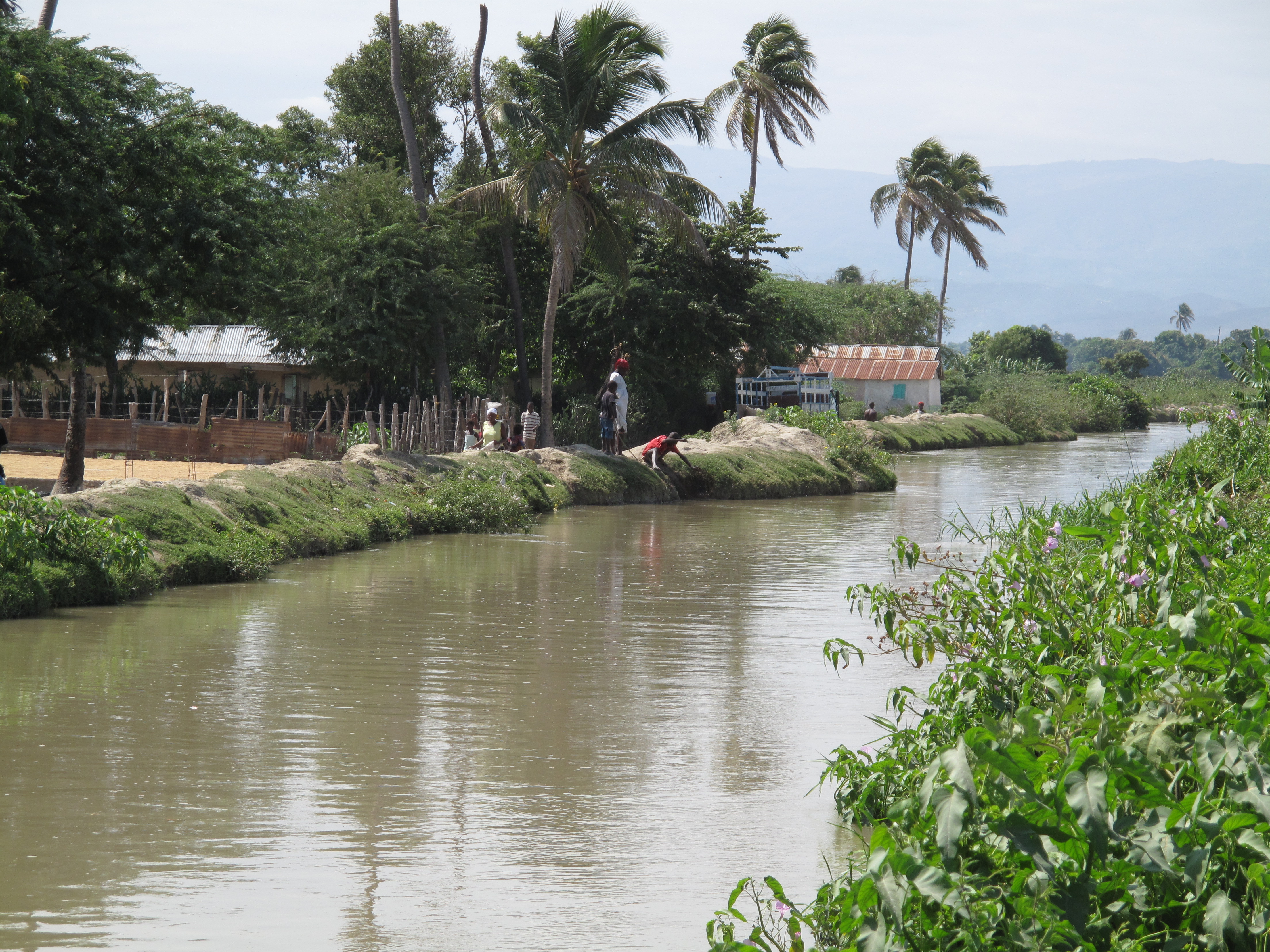
St. Marc is a densely packed town surrounded by thousands of farmers’ small plots. Our clinics were set up in churches scattered among the farm homes, barefoot kids, free range pigs, and roads as rutted and pitted as horse trails. To get there, we bumped alongside an irrigation canal churning with brown foam, in which naked children played and from which women scooped water.

IMG_8579

Throngs of people appeared at the clinic doors from amid this landscape, and grew quickly to a chaos of jabbering Creole voices. We admitted them in a controlled manner, to sit and wait their turn, only to discover that the chaos was now inside, at our elbows.

From this outside squalor and the chaos of waiting people inside, we brought patients, one by one, to our tables:

A thin grandmother wearing a clean and colorful dress stood, in shoes, with two granddaughters flanking her. I was surprised to note that the old farm woman didn’t smell of sweat and mud. Both girls had ribbons braided into their hair and tied in bows. They wore clean Sunday-go-to-church dresses, and they both wore sandals.

“Dis one, she won’t eat, and da other is always tired.”

Intestinal parasites in both; medicine for the two of them.

A six year old boy, on his mother’s lap, wore a suit – dark slacks and matching jacket over a crisp white shirt. His shoes shined like black mirrors. He had a congenital problem that meant he couldn’t control his bowels. “Dey tease him at school,” his mother worried. “He maybe will drop out of school. Den how he get a good job?”

A teenaged girl stood mute by her mother’s side. She wore a clean dress of multi-colored flowers, and smelled of perfumed soap. Her face had no expression.
“She was in Port-au-Prince,” her mother nodded toward her, “when the earthquake hit. I brought her back here because she was so terrified to stay there. She lost her words.”

Lost her words?

“She hasn’t spoken since the earthquake.”

Luckily, we had a French-speaking counselor on our team.

After we’d listened, examined, then prescribed, they each smiled and thanked us effusively for the little we’d done.

“Merci, Doctor, merci.”

One middle-aged woman told me, “You are the first doctor I’ve ever seen.”

On our way back to the airport, weaving thru crowds of people who were barefoot again, incompletely covered by tattered clothes again, it was obvious to me that, while our medicines may have helped a few people for a few days, what the appreciative and classy people of Haiti really need is water which is separated from the sewage.

Real simple concept. Apparently, monumentally difficult in Haiti.

So maybe my colleague was right. The people are powerless to drink anything other than the contaminated water of Hades.

Ticking time bomb.

IMG_8820

July 7, 2014

Pyromaniac’s Orgasm

Filed under: Uncategorized — cbmosher @ 4:50 am

A thrill electrifies you when the fuse bursts to life.

Before, it’s just a string-like object hanging from the paper-wrapped cylinder. Inert. Unexciting.

You hold the glowing red tip of your punk against it, waiting, waiting, glancing around in the dark, to see if others are fleeing their already lit fuses, still waiting – – –

Suddenly the fuse sparks, enflaming your face. It comes alive, sizzling, crackling, and burns rapidly toward your cylinder, now hiding deep inside a plastic tube, pointed skyward.

Like horseradish in your picnic food, the Thrill includes fear,

You run to where the spectators stand. The sparking fuse and its rattlesnake sound disappear down into the plastic tube.

Waiting – – – waiting – – –

Ba – FOOM !

It launches into the black sky, trailing a faint glow. Higher – – – higher – – – . Until your neck is bent back to where you hear the vertebrae crunch against each other.

At the tip of the climbing streak of sparks, there’s a small flash.

BOOM !

It explodes into glowing embers of phosphorus, strontium, barium, and charcoal that expand outward in all directions, trailing white, red, green, gold. A mini-Universe is born, glows majestically in the vast blackness, and falls slowly toward you, already dying, but doing it with beauty.

Occasional little dead embers land in your hair.

Then you run out to re-load the plastic tube with another Mortar cylinder.

There are at least a couple dozen of us on the night of the 4th, playing Creator of the Universe with our Mortars, Roman Candles, Fountains, and Cakes, while hundreds of others flank us and watch, contributing to the show in the night sky with Spinners and Sparklers .

We – all of us – came to the Indian reservation just at the edge of the County line, where laws about such things change when you cross the street. 40 or 50 fireworks stands sold big stuff – boxes the size of medium sized children, packed with dozens (in one case, 720) explosions of your choice. In the frenzy, tens of thousands of dollars changed hands at a speed approaching that of light.

The designated area is a vast paved field in the industrial seaport section, flanked by looming container cranes on the water side, and railroad tracks on the other. Nothing flammable here but what is in our boxes, and the clothing of small children. Someone has positioned two containers side by side with just a narrow alley between them, 100 yards across the macadam from where we stand.

From the sides of this massive parking lot, people shoot their Mortars skyward at random moments, attacking the night sky with explosions of varying colors and reverberating ignitions while others decorate the earth with Fountains of white sparks, spinning Fireballs that shriek and change colors as they whirl, and air-dancing Sparklers.

A couple next to me hold a flame to the small cake of wax wired beneath a miniature hot-air balloon of paper. Slowly, it inflates with the heat. They release it. It hangs there, glowing blue, round and a couple of feet in size. The breeze drifts it out over the pavement. Slowly it begins to fall toward the ground and it appears destined to crash. But the wax burns on, and the balloon begins to rise. We watch it climb into the black sky as it drifts, glowing blue, toward whatever is out there.

Someone lights a Roman Candle and aims it toward the balloon.

POOM !

A tracer bullet of red arches thru the air, missing the floating balloon to the right.

POOM !

A green one streaks toward the balloon, falling beneath it.

POOM !

This time he misses to the left with a yellow one.

And the happy little balloon, still glowing and inflated, floats further south and higher, up toward where the jets approach Sea-Tac airport.

BA – WHOOM !

The detonation prolongs as an echo of itself, like a kettle drum reverberating to the blow of a drumstick. The penumbra of a large Mortar erupts from behind the container across the field, creating a multi-colored semi-circle above the pavement, its lower half raining down upon whoever dares to run into that alley of fire. They shoot their Mortars, not up, but into the container.

We have so many boxes of stuff that we stay there, lighting fuses, running like hell, and contributing to the chaotic cacophony of color until midnite. Then we pile up the boxes and ignite them, the traditional method of clean-up, apparently, for those who have blown their wad and are heading home.

What do we Americans celebrate on July 4th, I muse as we follow the beams of our headlamps to our cars. Not the Revolution, I shake my head. Even the Roman Candle guy, who got closest to the historical origins of fireworks, probably missed his own symbolism, so long forgotten was that history.

Military might? If that were so, we’d be at some tank-and-marching parade, craning our necks skyward for acrobatic jets, not fireworks.

How about Individualism? The great Lone-Cowboy-on-the-Plains social model we worship perpetually, manifesting here as a day off from work to consume hot dogs, beer, and a pyrotechnic show. If that’s it, we certainly upped the ante: took the fireworks from the hands of professionals and, fueled by beer and pyromania, re-created the unchoreographed terror of war interwoven with the beauty of friendship and color.

February 26, 2014

THE BATTLE OF OLLANTAYTAMBO

Filed under: Uncategorized — cbmosher @ 5:55 pm

We find ourselves with a little unexpected time on our hands in this really fascinating town. So we climb to the incomplete Temple of the Sun, which, in spite of the aborted construction, is such an exemplary piece of classical Inca architecture, that it’s billed as “second only to Machu Picchu” by some.

Decided to rent a guide, which was a good move. He was a handsome Quechua guy, very well spoken in Spanish, well educated in the history, and obviously proud of his heritage. Both Sarah and I felt we learned more about that 500 plus year old culture here than we did in M-P.

Three notables:

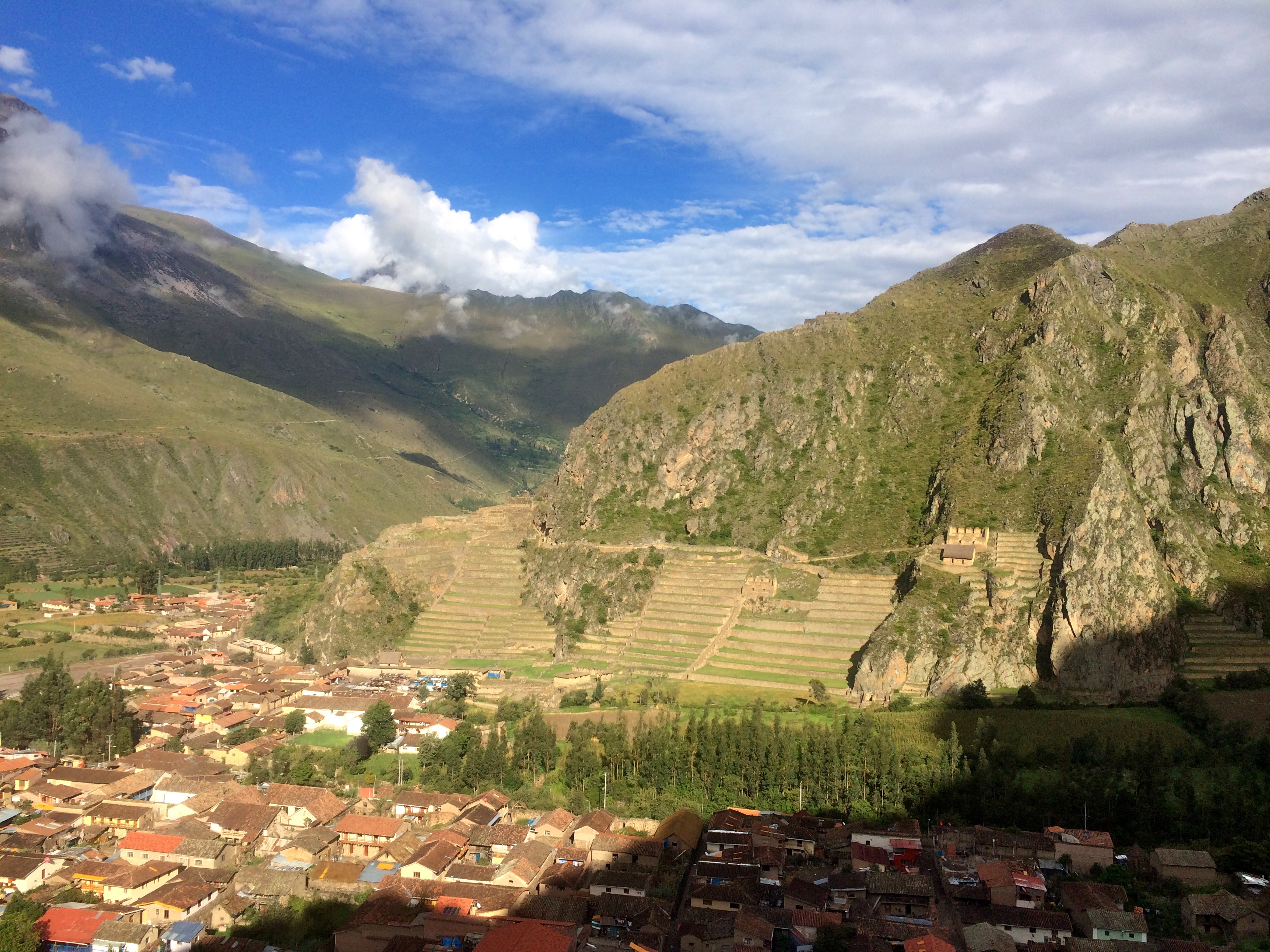
One – Ollantaytambo is laid out in the form of a tree (the Sacred Tree of Life). Not obvious from the ground, but very evident from mountaintop or airplane (Inca era Quechua had only one of these). Similarly, Cuzco is laid out as a Puma, Pisac abuts a mountain sculpted by terraces into a condor, and a mountain in Ollantaytambo is terraced and stone-sculpted into the constellation of the Llama (we plan to climb the adjacent mountain to get that view, if the airline wrangling doesn’t use up all 48 hours).

Image

Here’s the Llama:

Image

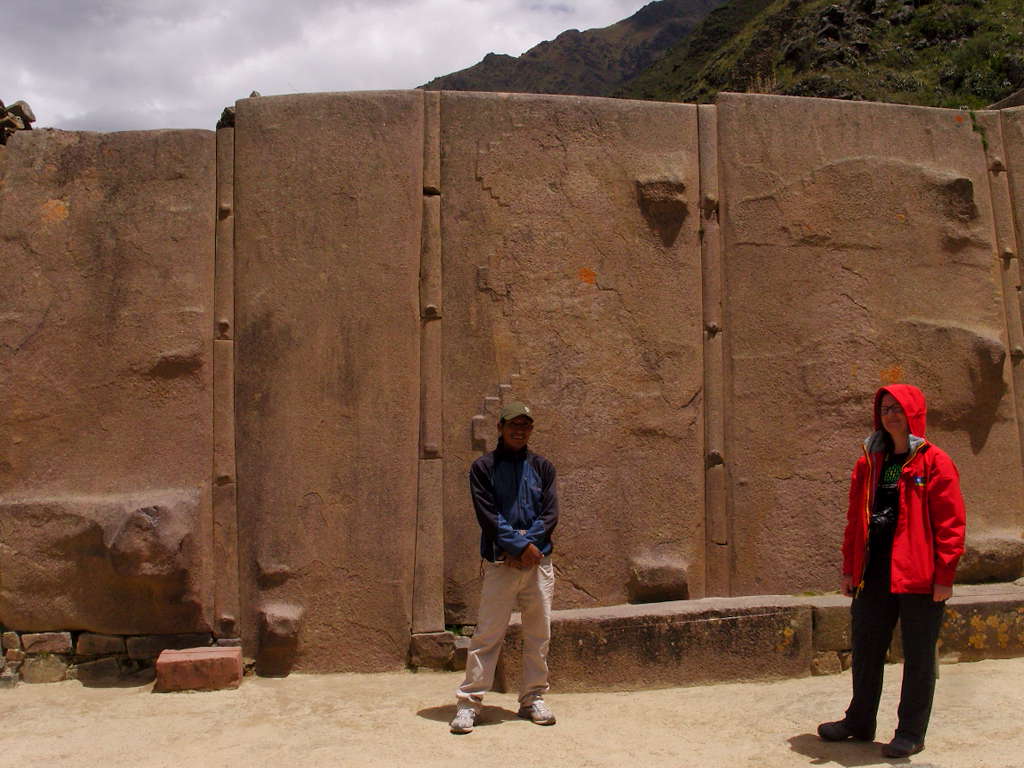
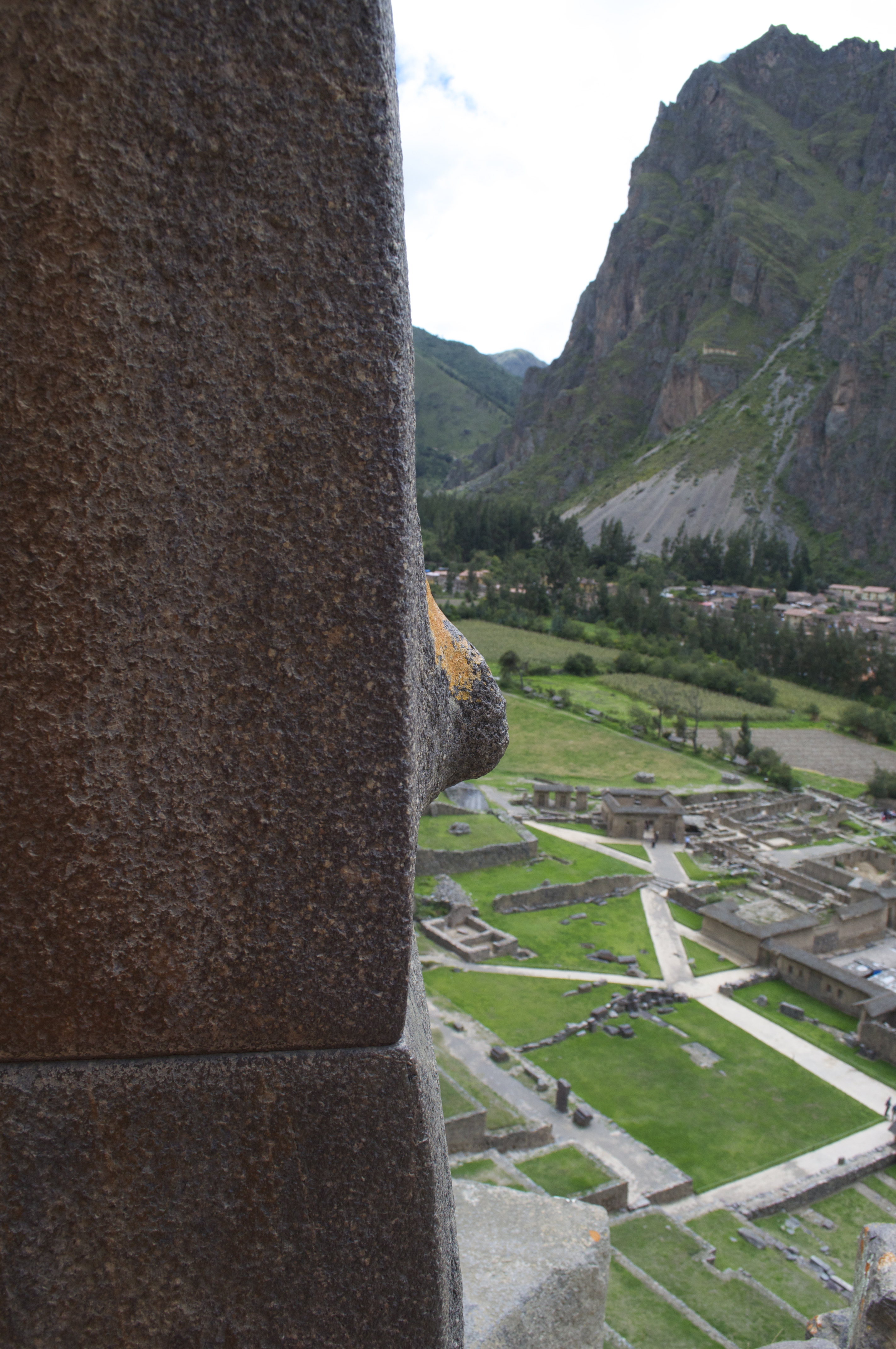
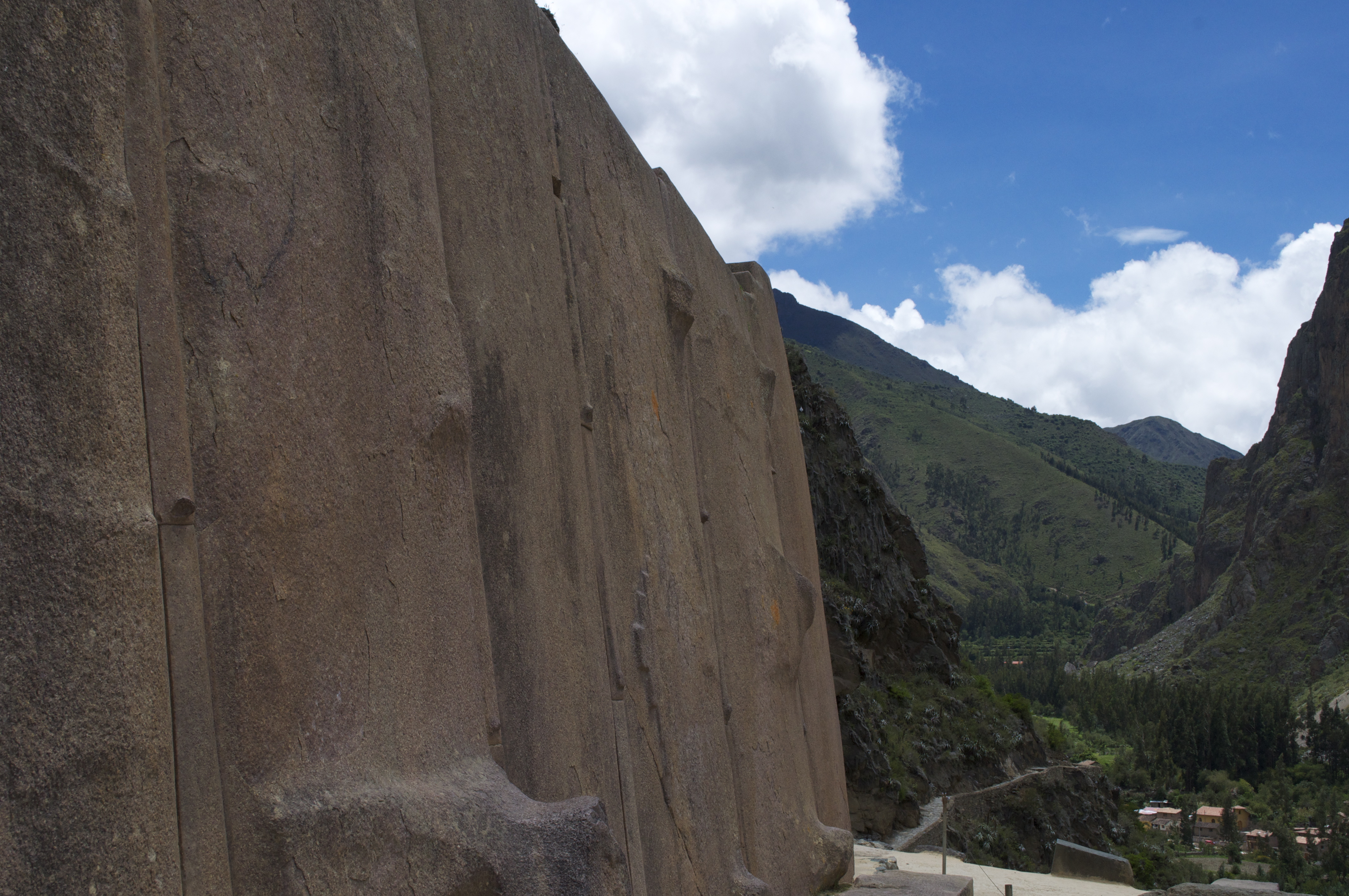
Two – the (very) incomplete Temple of the Sun is breath-taking (in two ways). Only six slabs, but they are MASSIVE, even by M-P standards. They are PINK (rhyolite, not granite). They were quarried and carved on the mountain across the river, then each piece (up to 50 tons) was brought down from that mountain, across the river, and up this mountain to be placed at the top. Stone workers from Tiahuananku (near Lake Titicaca – no snickering) were “enlisted” in the work. The slabs not only have the classical ‘can’t fit a credit card between the joints’ tightness, they have male-and-female fittings carved into the abutting (hidden) sides. Moreover, they have carved receptacles on the abutting sides into which was poured molten brass. Earthquake-proof. The astronomers had it perfect, of course, the rose-colored stones catch the rising sun and glow. There is conjecture that the Inca had learned to “vidrify” the stones’ surface with glass for enhanced reflection (echoes of the Maya).

Image

Three – in 1537, Manco Inca, wise to Pizarro’s deceit (he witnessed the previous Inca’s public murder after the requested ransom of an entire room filled to the ceiling with gold was fulfilled by the people), escaped Cuzco, the Inca capital before the “Spain-people” came. He retreated to Ollantaytambo, knowing Pizarro would hunt him down.  But Ollantaytambo is strategically placed on a narrow plain at the confluence of three valleys.

Image

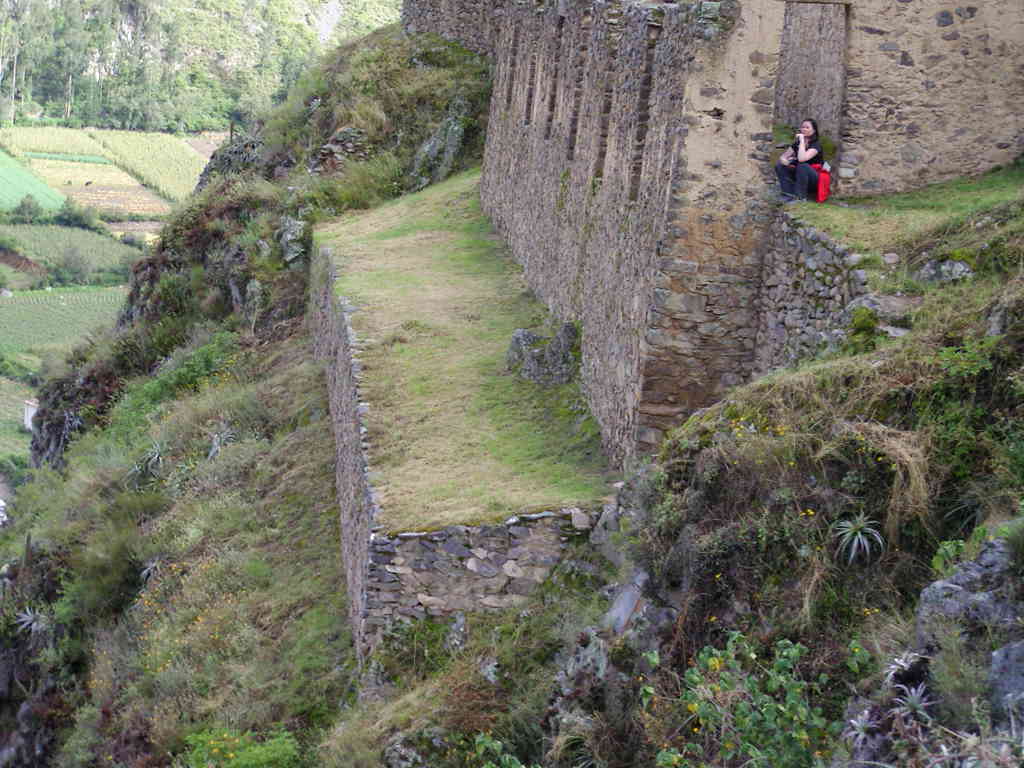
He turned the agricultural terraces above the city gate into fortifications. He turned the unfinished temples and/or buildings of Pachacutec into fortresses. He amassed an army.

Pizarro’s brother came with cavalry, footsoldiers, and their European armaments.

Manco’s men rained down on them rocks, boulders, bolas, spears, and, from the Inca of the forests beyond Machu Picchu, arrows. Hand-to-hand combat was with clubs, and a kind of battle ax with multiple points.

Image

Pizzaro was losing. He turned to retreat to Cuzco. Manco was ready for this. His men diverted rivers (and may have dammed the Urubamba) which flooded the narrow plain below the city gate. The horses floundered in mud. Manco’s men persued. Pizzaro nearly lost all his men.

DSC_0750

The Spanish eventually returned. When they did, it was in such numbers, that Manco knew he couldn’t defeat them. He retreated to Vilcabamba in the jungle, and burned the storehouses of Ollantaytambo to leave no food (we saw the black layer on the interior stucco of such a building).

The rest of the history is known, and tragic.

But Ollantaytambo, impacted by tourists mostly en-route to M-P, is not an Aguas Calientes (the tourist destination town at the foot of M-P, recently re-constructed from flood and ramshackle). The 500-plus year old town here of narrow streets, stonework houses, and running water for all is largely unchanged. Just behind the little town square and its increasingly numerous pizza parlors, only a one block walk takes you back 500 to 1000 years, and if you look up, the rose colored wall of the Temple of the Sun glows in Inti’s light, reminding the people who speak Spanish with Quechua intonation, that this is their Earth. Their Pacha.

Image

February 24, 2014

THE NITE OF THE WHITE MALBEC

Filed under: Uncategorized — cbmosher @ 2:59 pm

Buenos Aires saw its best days over a century ago. The city is energetically moving into the 21st century, in parallel with Europe. Malbec united both cities for us.

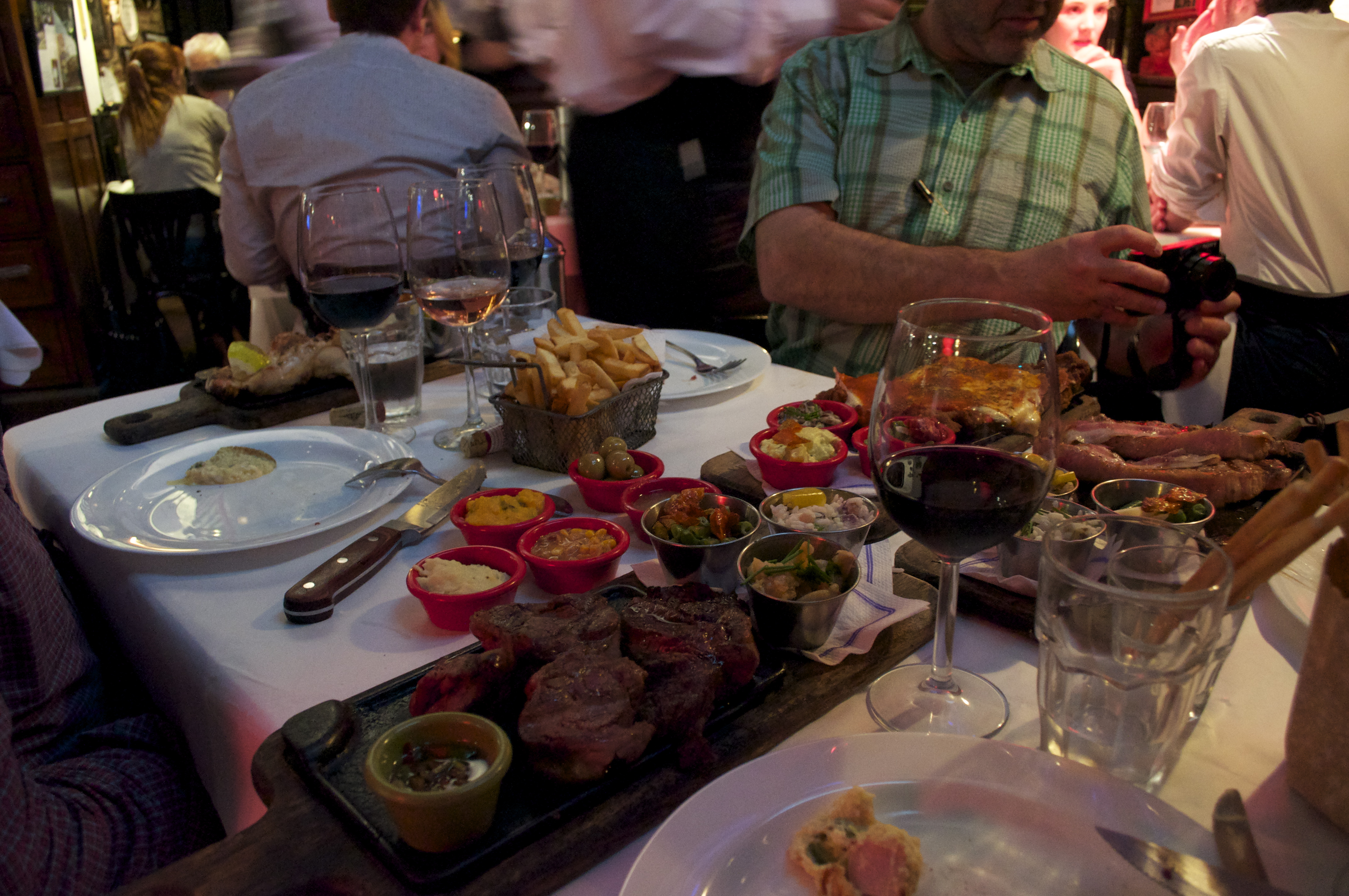
When we landed in BA to begin this trip, we did the planned tour of the city’s famous sites. But we finished in a steak house, where Sarah declared that the recommended Malbec was the best she’d ever tasted. It was, indeed, smooth, free of sharp edges or acidez, earthy, full, and pleasant in the nose.

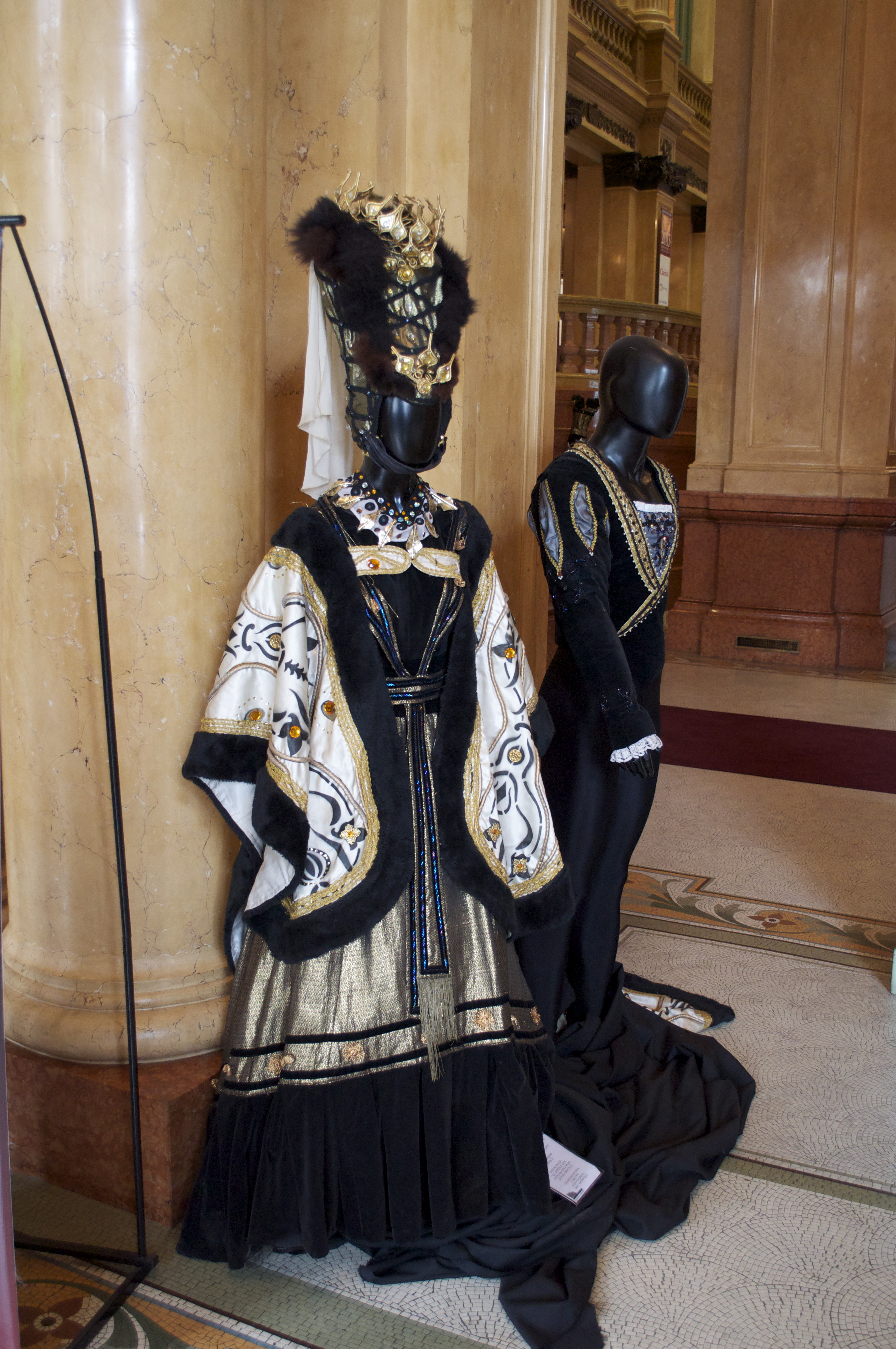
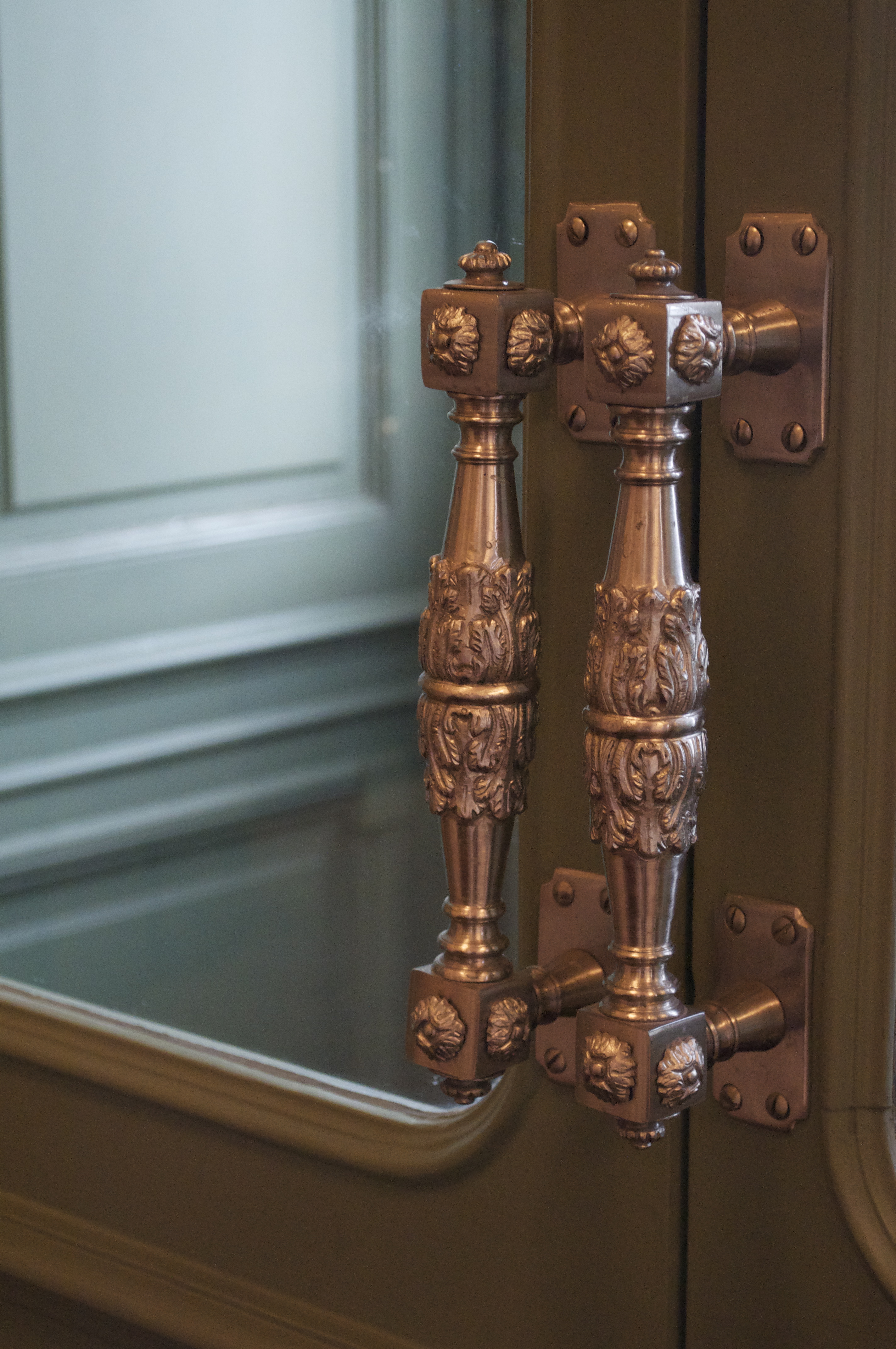
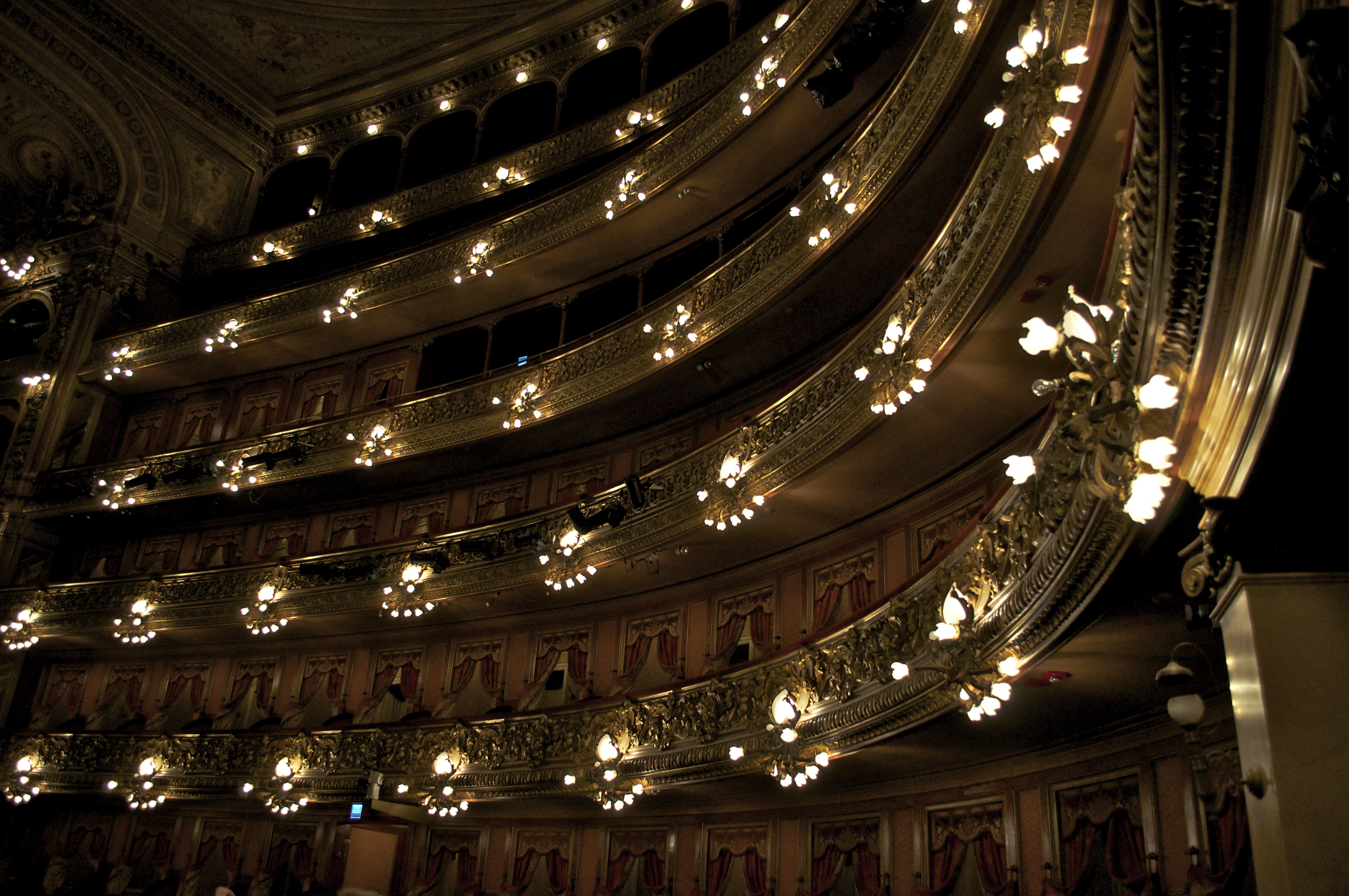
Returning after the Antarctica experience, we hooked up with a couple from the ship, and toured the grand opera house, Teatro Colon. It was built in 1908, when Argentina was ranked as one of the wealthiest countries in the world. It is a masterpiece of Italian marble, custom brass fittings, and Spanish velvet, financed by Argentine beef. It still ranks as one of the world’s best opera houses. The Costume Designer found spectacular creations and we all marveled at the ornate details.

Image


DSC_0033

DSC_0106

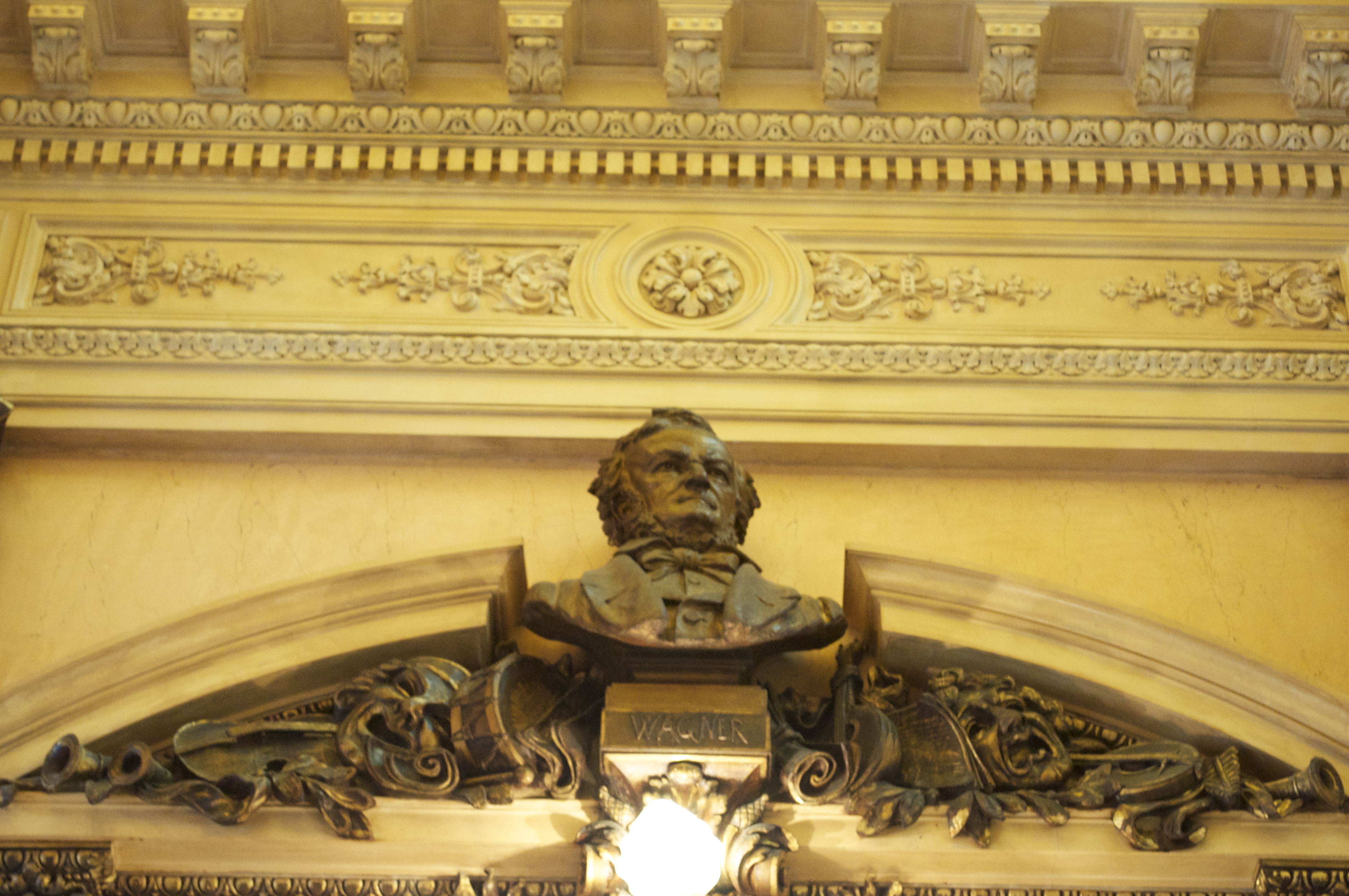
Our empassioned guide explained how the busts of Wagner and Verdi, reputed enemies in life, were placed opposite so they’d be forced to recognize each other for eternity (the expected lifespan of the Teatro Colon). But the Argentineans, soft-hearted beneath, allowed the two to look away from each other.

Image

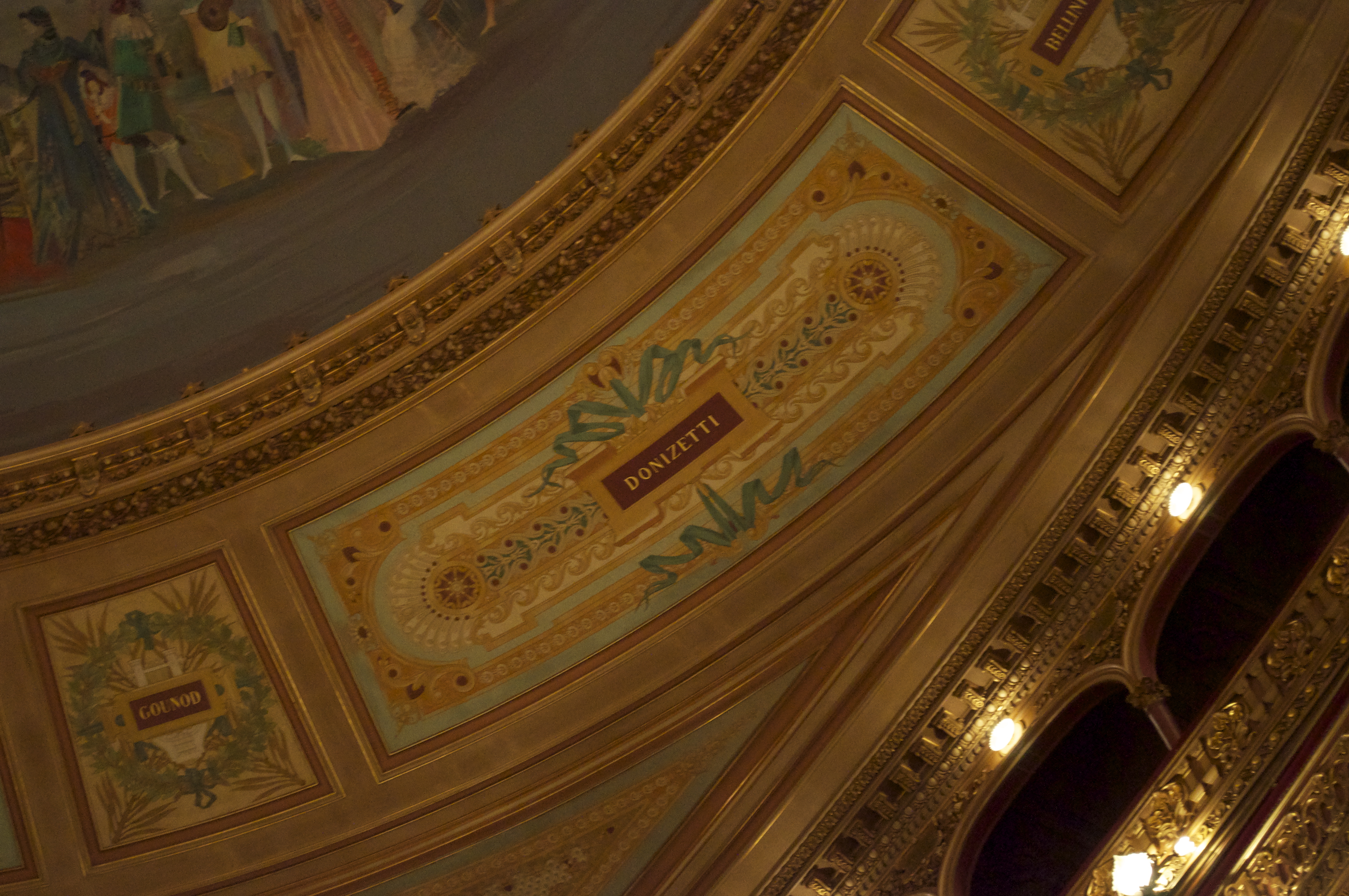
For the opera lovers back home, here’s the Teatro’s recognition of the creator of “The Elixer of Love.”

Image

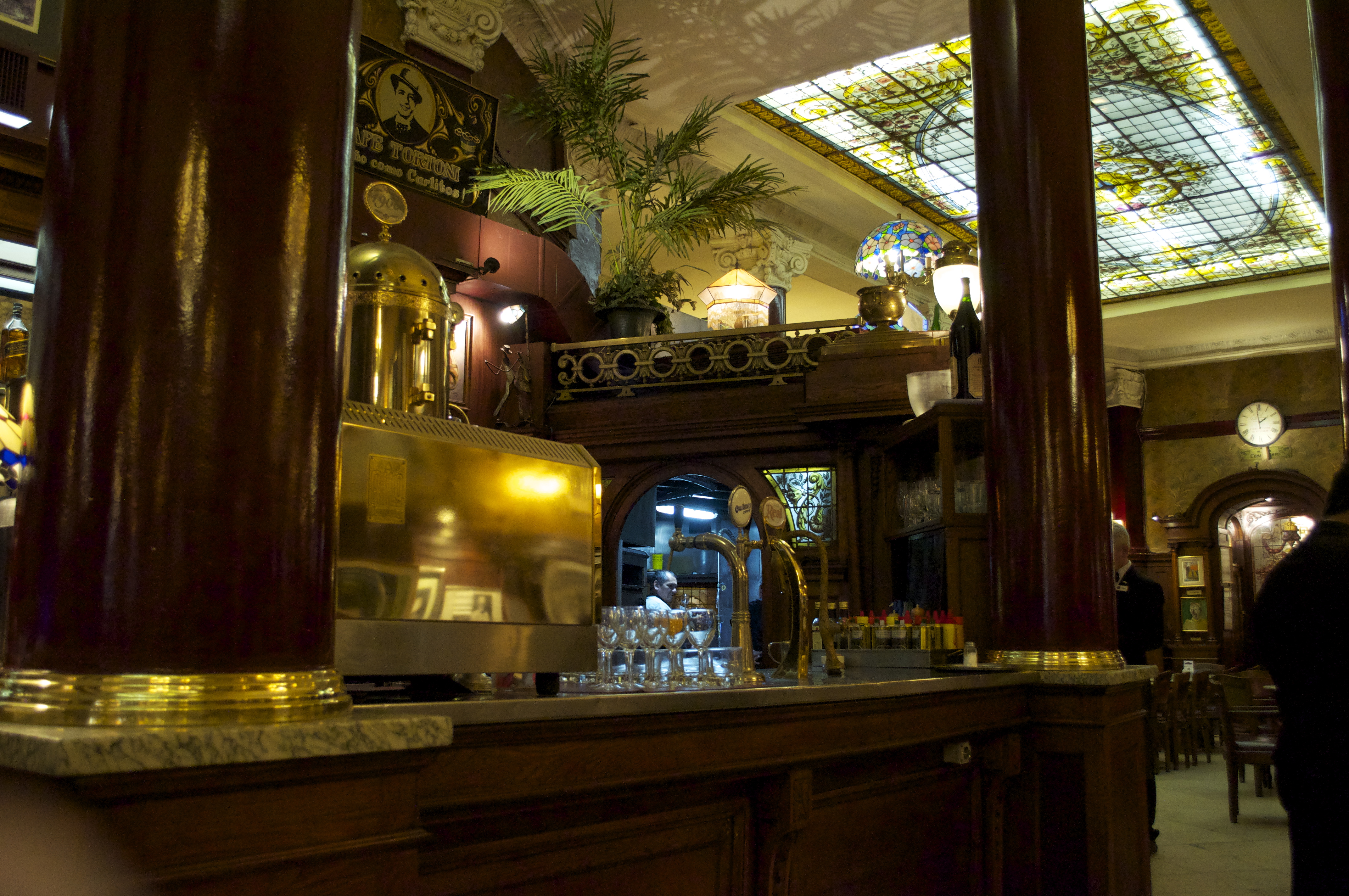
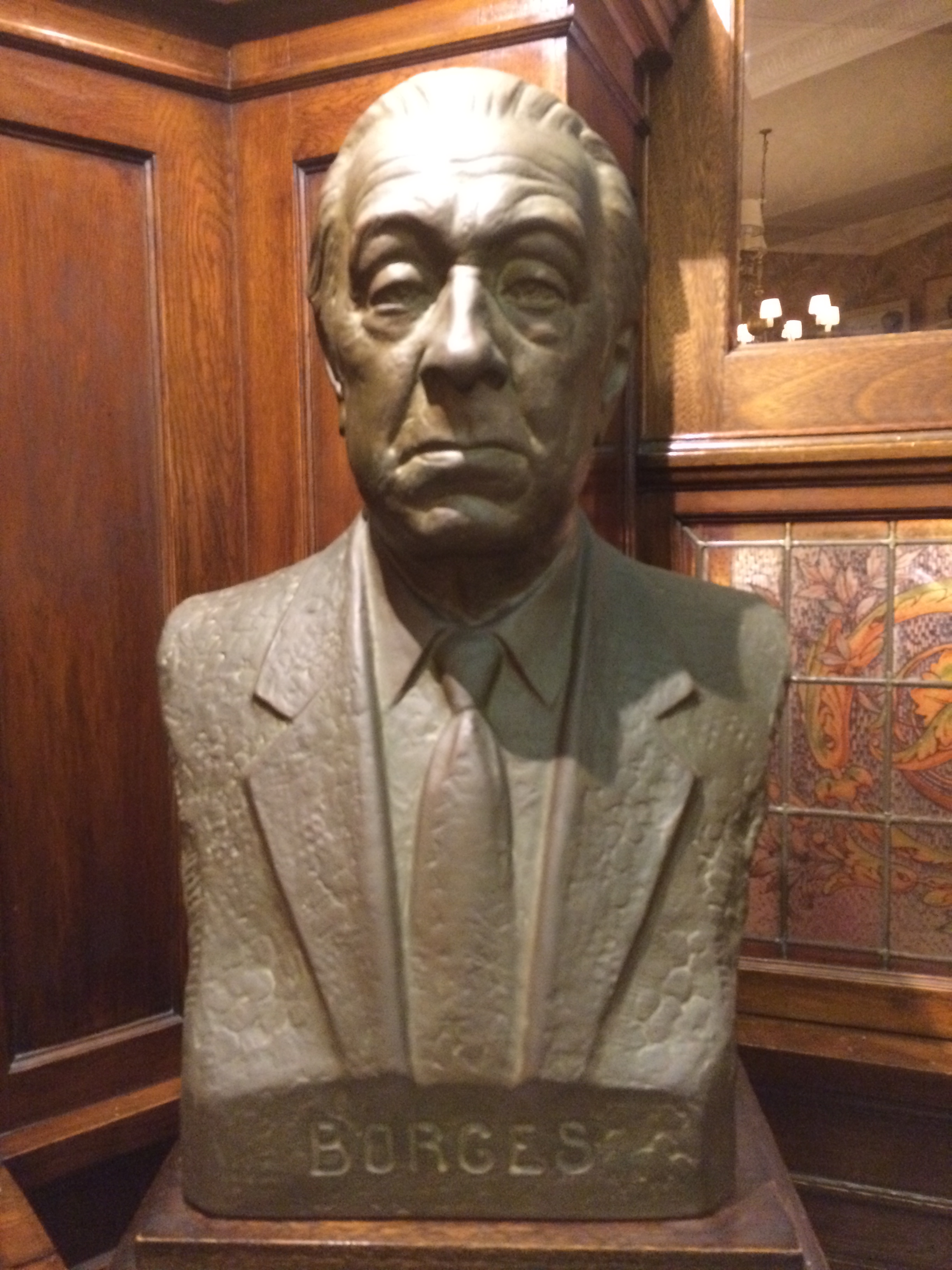
Stalking the greatest short story writer of the 20th century, we came to the 150 year old Gran Café Tortoni. Too early for Malbec. We settled for a Don Pedro – ice cream, walnuts, and whiskey.

Image

I paid a reverent visit.

Image

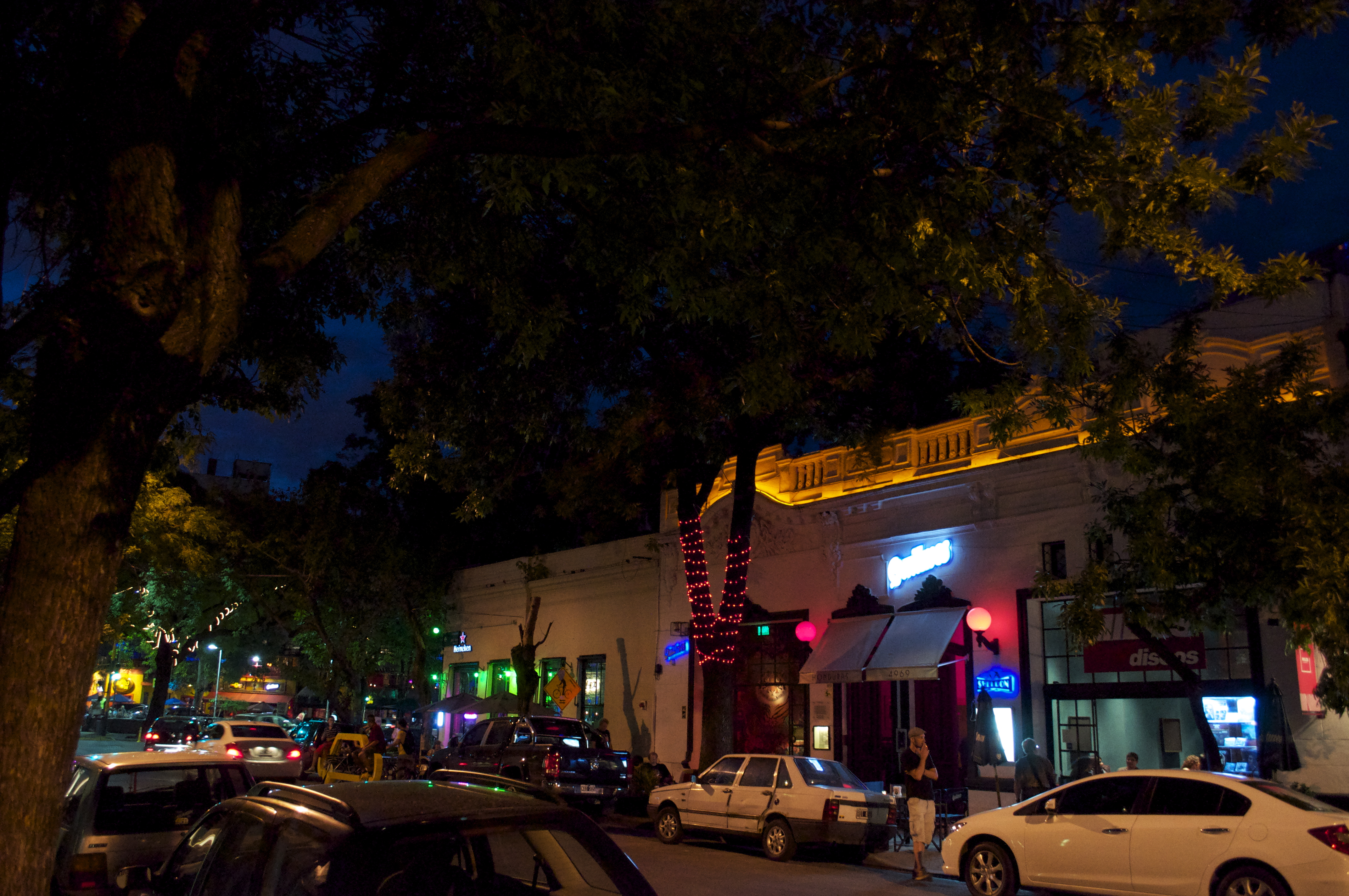
We made plans with the couple to have as typical an Argentinean dinner as possible: a parillada in Palermo Soho that evening. Malbec, surely, would attend.

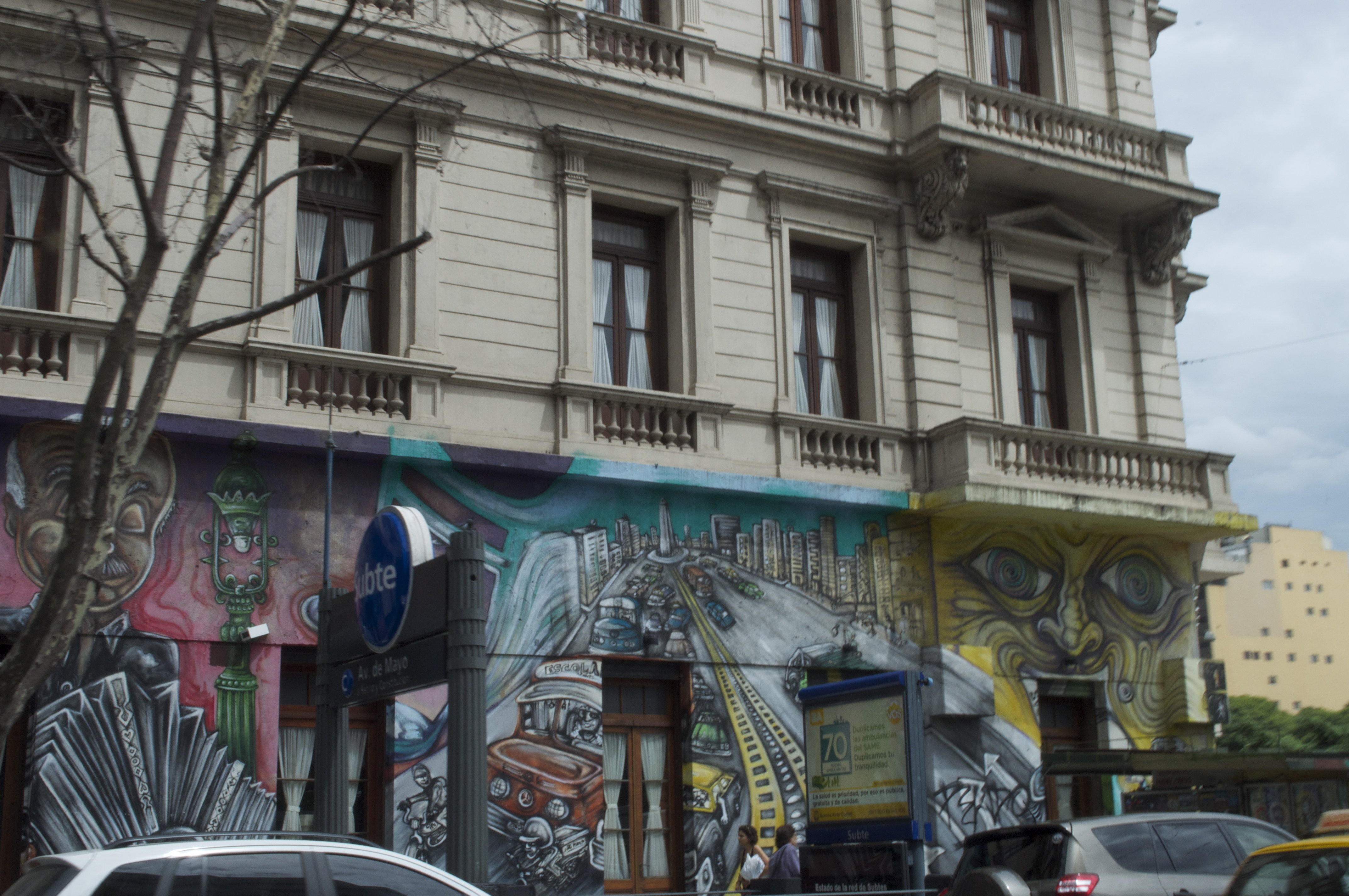
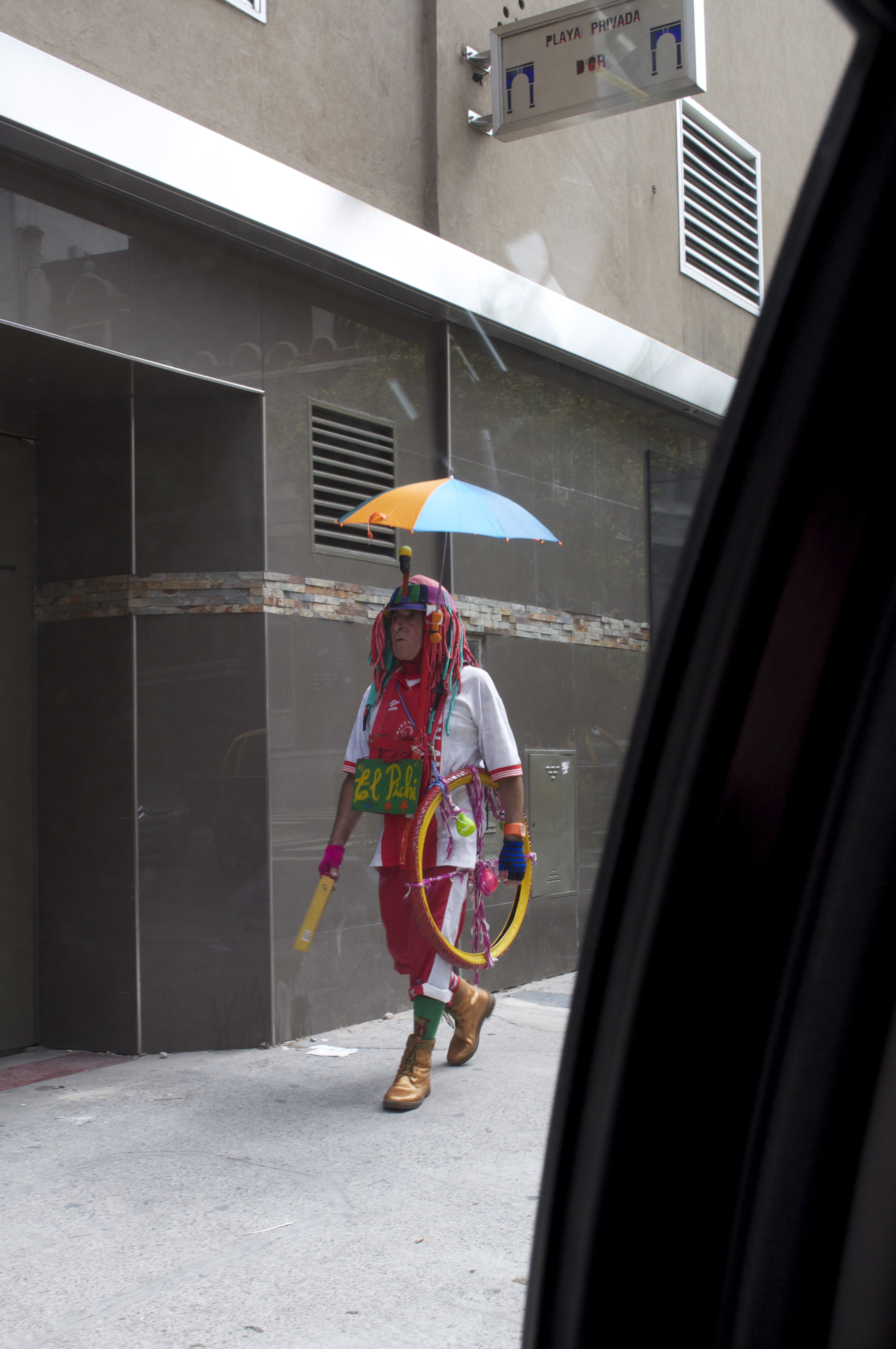
Getting from downtown to Palermo was like an acid trip between 1858 and 2014.

DSC_0188


DSC_0196

DSC_0200

We kept our stomachs empty, waiting.

Nite.

DSC_0218

The big dinner looming.

“Hey! There’s a white Malbec on the wine menu. What’s that?”

No one (not even the guy the others stared at just because he speaks a little Spanish) knew what ‘Blanc de Malbec’ was. But we all knew the aromatic, full, Argentinean taste associated with the name. So, of course, we ordered a bottle.

The waiter, a proud and distinguished gentleman proficient in his occupation for at least 40 years, said:

not   “como no

not   “por supuesto

but   “Blanc de Que?”

Apparently, it had rarely been ordered in this very busy, very popular parillada. We added a bottle of what he recommended as his best red Malbec, as well.

Then, the food. A groaning table. I saw no vegetables available, so I ordered chicken. Just to balance out the beef and bacon.

Image

They actually did provide some green beans, delicately arranged in a thimble.

Stuffed, groaning as much as the table of Argentinean wood had been, we somehow ordered dessert.

The Blanc de Malbec was interesting. But, order the red.

« Newer PostsOlder Posts »

Blog at WordPress.com.