Sex, Drugs, and Public Health

May 19, 2015

BLOG from the Sea of Cortez 3

Filed under: Uncategorized — cbmosher @ 7:58 pm

DEAD  SEA ?

“Aquarium of the World”: Jacques Cousteau’s term for this Sea.

For two days, as we sail south from Loreto to Agua Verde, to Timbabiche, now on toward Bahia Evaristo, Tom Uno has towed a fishing line and lure.

“I’ve never gone this long without catching a fish in this sea,” he laments.

I look at the water’s surface, but I envision the world beneath. 950 species of fish, 10% of which are found nowhere else in the world; the rays, who swim in geometrically magnificent schools and break the surface to fly over the water, wings outstretched,  raining diamonds; 120 species of sea mammals including multiple whale species, sea lions, dolphins and one smallish, unique creature – the Vaquita.

This latter, whose name means “little Cow,” is vanishing. They were rare to begin with – only about 500 in 1997, but are down to an estimated 150 individuals now. These accidental victims of the nets of large fishing trawlers are the marine canary in the mine that is the World’s Aquarium. Marine biologists tell us that 85% of those fish species are being harvested beyond sustainability, that several of the sea mammals are nearing extinction, that the turtles are nearly gone and sharks are dying in large numbers because of the soup which demands their fins. And Marlin still hang from thick-timbered gallows at the Cabo pier, the prize of “Sport” fisherman.

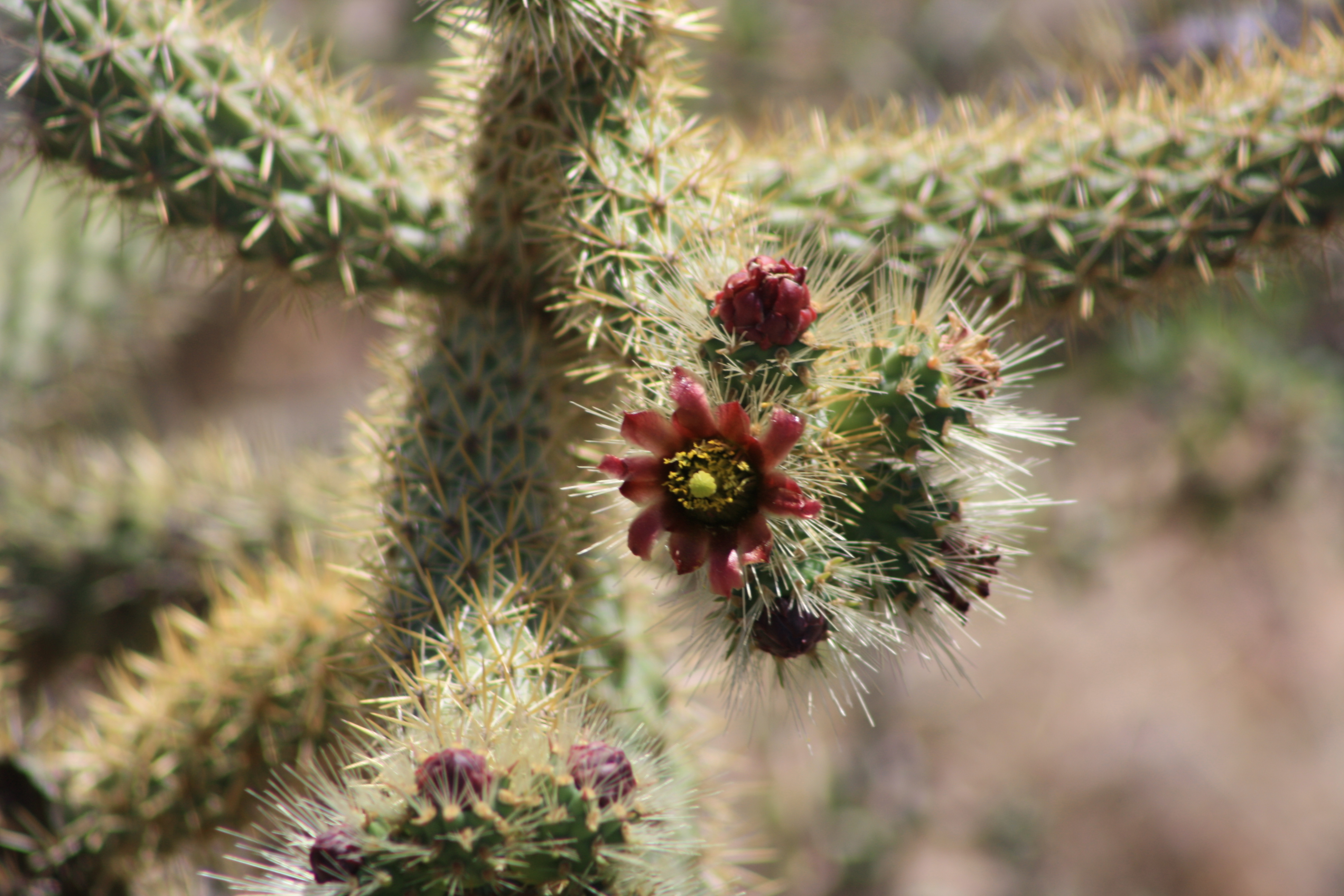
On the land we sail past, the vegetation is sparse, thorny, and dry.

“You’d think those plants would just give up and relinquish their space to the rocks,” I muse.

Tom Dos offers his favorite axiom:

“Natural systems will do whatever they can, for as long as they can, until they can’t do it anymore.”

“You mean, these cacti?”

“As long as they can survive and reproduce, they will. They’re a Natural system.”
IMG_3865
“Including the Pacific plate crunching itself up into the Mountains of the Giantess?” I test his axiom further.

“Nothing’s stopped it yet.”

I don’t care about the trawlers’ profits, but how, I wonder as we sail into Bahia Evaristo, are the 60,000 Mexicans who depend on the sea for their lives, going to make it?

Here, there are four or five other boats. We anchor, then dinghy over to snorkel.

It’s a wonderful flashback to visits I made to this Sea in 1972 and 1988 to sprawl out on the water, facedown, breathing thru a snorkel. I’d forgotten the continuous crackle and hiss of the ocean in your ears; the taste of salt in your mouth. Beneath you, flows the submerged shoreline of sedimentary rocks welded together by old lava flow.

But there are few fish. A translucent needle fish, maybe eight inches long and half inch thick; small schools of yellow and black striped three inchers; an occasional lonely clown-fish. Some of the rocks have pale corral attached in the shapes of an underwater cactus or a human brain.

In the late afternoon, our radio squawks: “Attention boats in Evaristo Bay. The best food is now fresh and waiting for you at Lupe Sierra’s restaurant.”

Her voice is as Gringo as they come.

The family structure at the restaurant mirrors that of Agua Verde: husband fishes; wife cooks; kids play.
IMG_3775

A blonde American woman drifts between the outdoor tables and the kitchen inside, mixing familiarly with the Mexican family.

The menu is in English, and apparently never changes.

IMG_3780
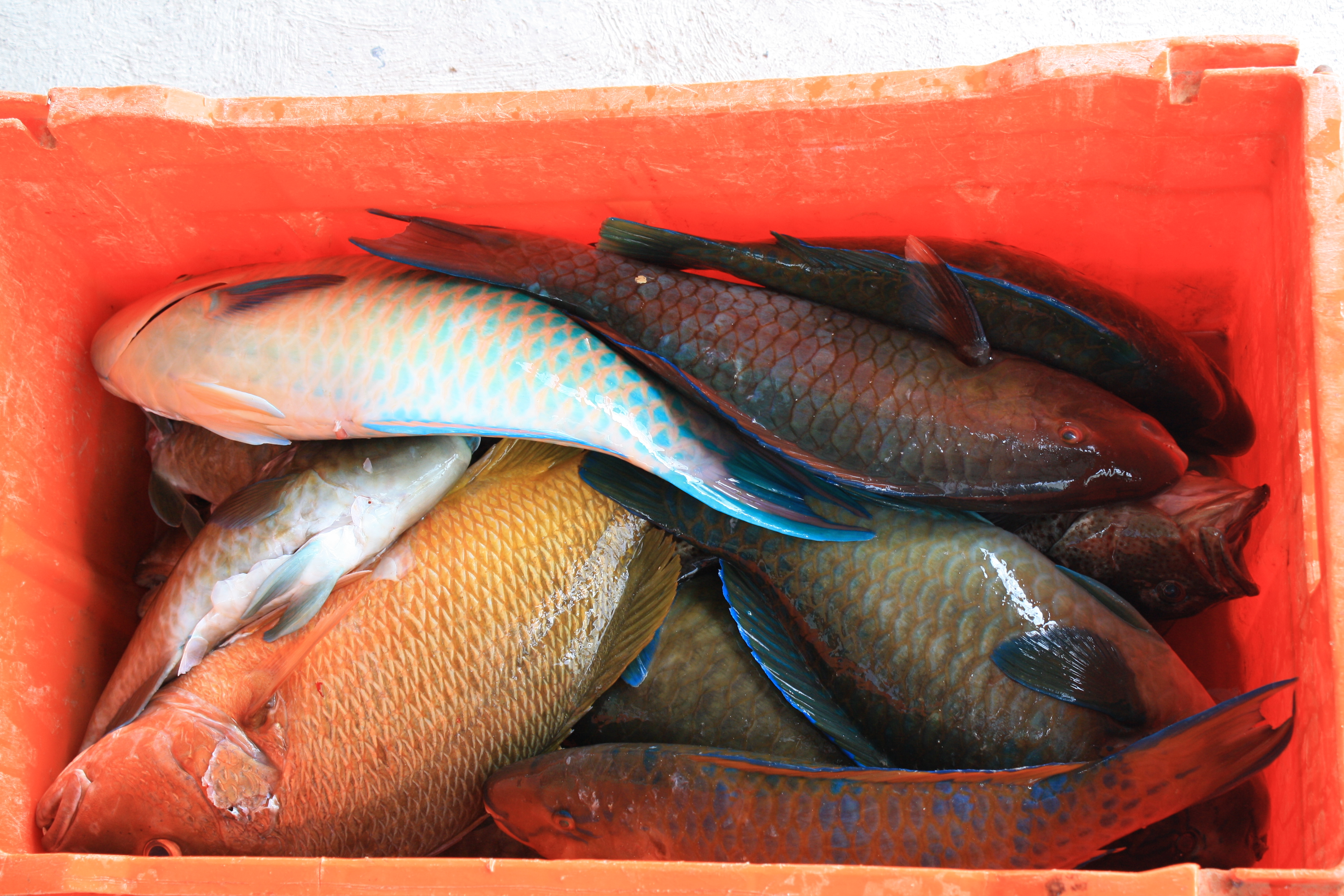
The fisherman tells me that, yes, fishing is harder than it was in years past. And catches are smaller. But, he assures us, he has fresh Pargo (snapper) and excuses himself to cook it.

His son, home from college in La Paz, tells us that he’s majoring in Eco-tourism, and plans to develop such a program here in Evaristo, with his girlfriend. No, he won’t become a fisherman.

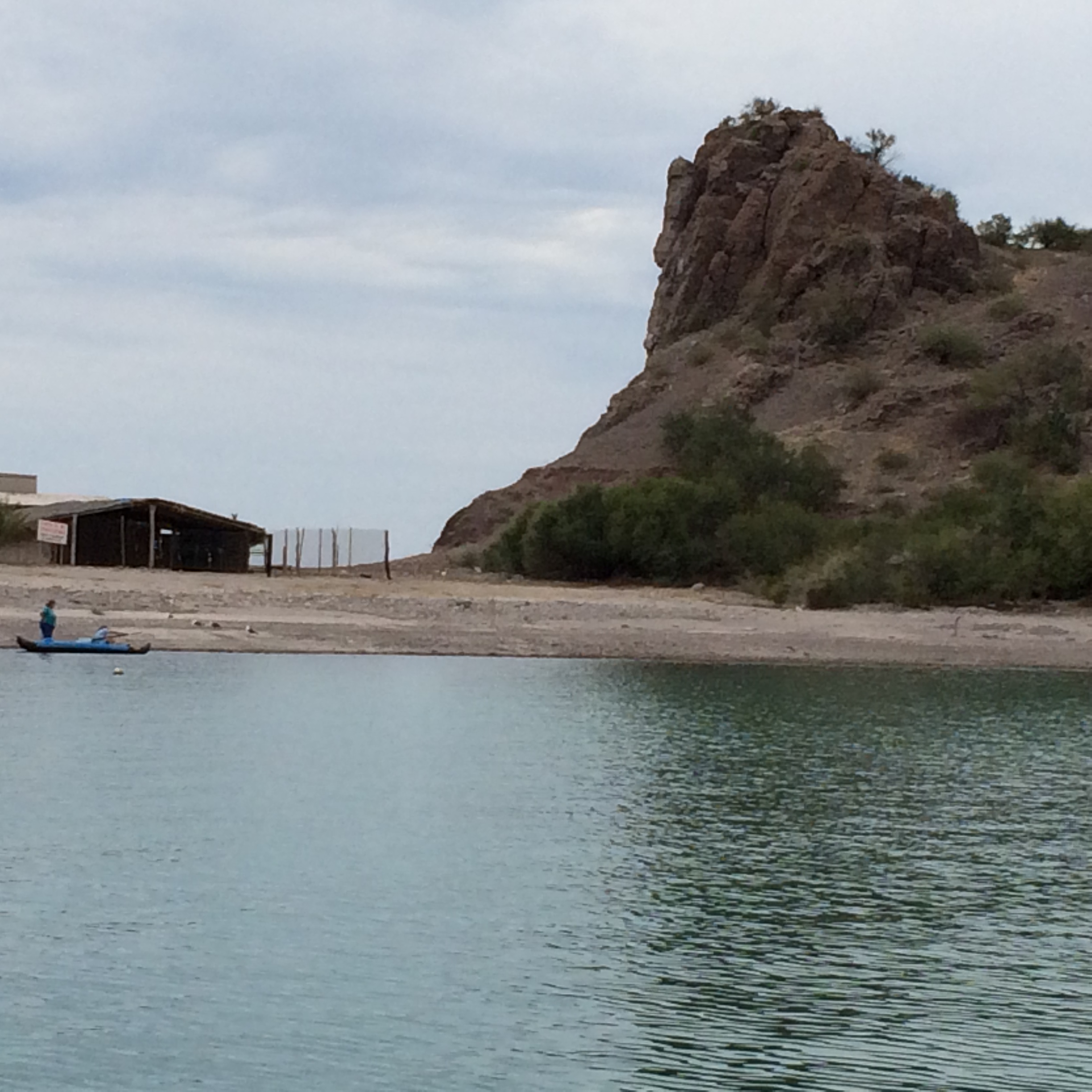
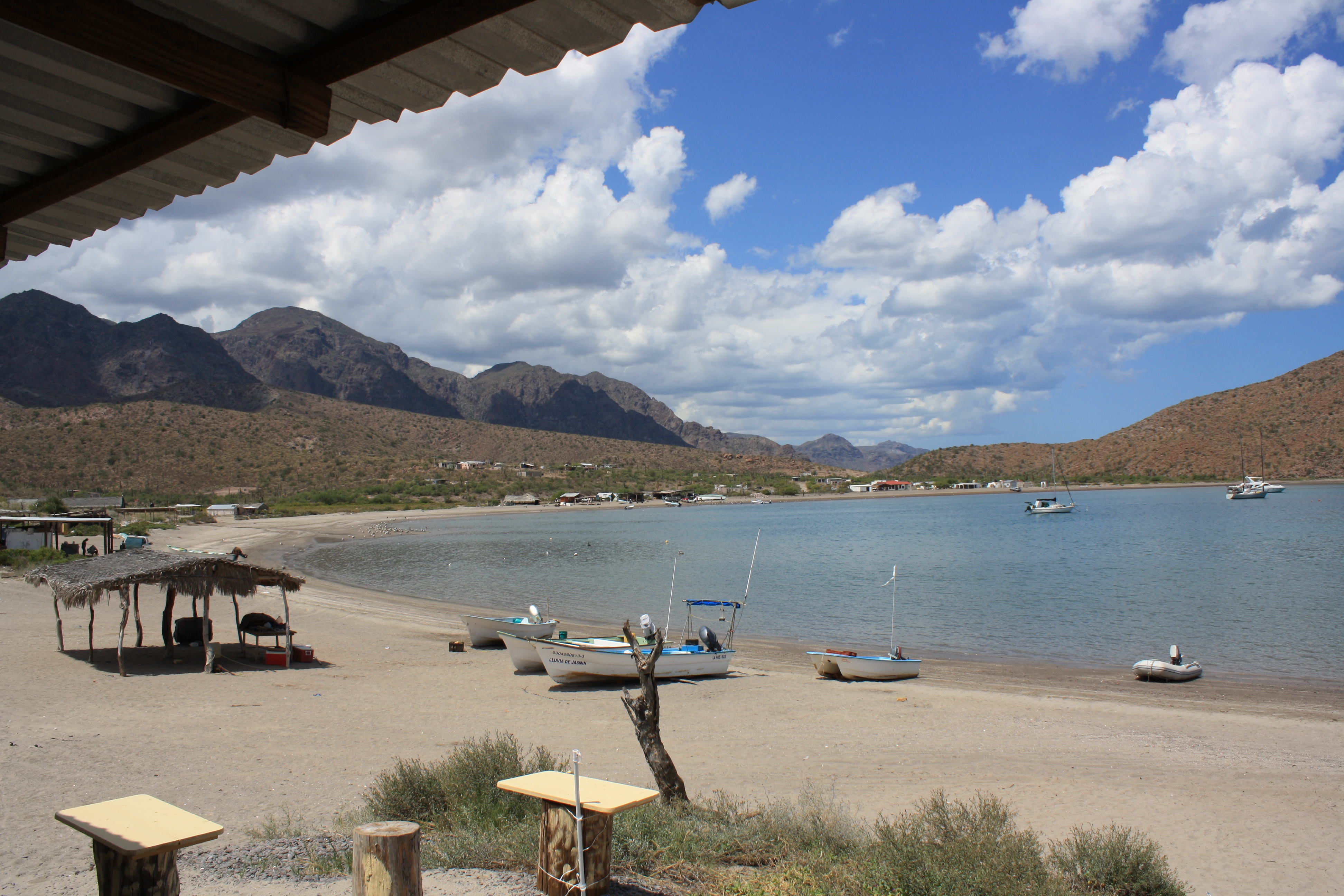
The fish tacos are yummy, the view takes in the handful of sailboats and many panga fishing boats. We walk the beach, then the desert hills flanking the restaurant.
IMG_3770

We weave among the cacti, the myriad bleached bones of sea birds – hollow, delicate, gracefully curved – and the basura (garbage) to a point overlooking the sea, adjacent to the lighthouse.

“They’re fishing it to death,” one of us observes with sadness, looking at the turquoise jewel below the cliff.

“They know it, too. “If they left the sea alone for a while, it might recover.”

“They’ll do what they do until they can’t do it anymore.”
IMG_3782
There is a small de-salination plant across the bay. A gift from some international agency, maintained by Public Works from La Paz.

Fresh water, I recall my research on the deteriorating ecology of the Sea. The natural infusion of fresh water into the northern reach of the Sea no longer exists. The Colorado river dried up – somewhere to the north – in 1999.

“Tourism in place of fishing,” Tom Uno ruminates. “They tried that. Built a lot of hotels for the Gringo trade, including the sailboats. Then the Recession of 2008 hit. Lots of empty hotels, still. Not many Americans buying boats.”

“Then what?”

“Canadians. More and more boats from B.C. and other provinces came down.”

“Like an invasive species into an emptying sea?” I analogize.

The sailboat anchored closest to the beach is painted “Willful Simplicity.”

“Lots of rogue males live aboard their boats,” Tom Dos educates me. Not this one, however. The blonde woman of radio and restaurant fame lives there with her husband.

In the restaurant, we sit sipping fluids, allowing the family to enjoy their final meal of Semana Sancta together. Son and his novia will return to La Paz afterward, and Evaristo will sink back into the torpor of a small fishing village of a dozen or so homes.

The Gringo owner of the permanently moored sloop strikes up with us while his wife promotes the restaurant to all the boats listening on local net.

“We came down five years ago. Sold everything in the Bay Area, and we live here now.”

“What do you do?”

He takes another sip of beer. “Oh, sometimes we cruise. Occasionally, fish. Mostly relax.”

For five years? the three of us each think.

“How long do you figure to stay here?”

Another sip of beer. Around one of the ankles of his bare feet he wears a bracelet of woven strings, like the other around his wrist. His T-shirt reads “Old Guys Yacht Club”. Swim trunks finish what obviously, is his daily dress.

“Evaristo is our home,” he smiles.

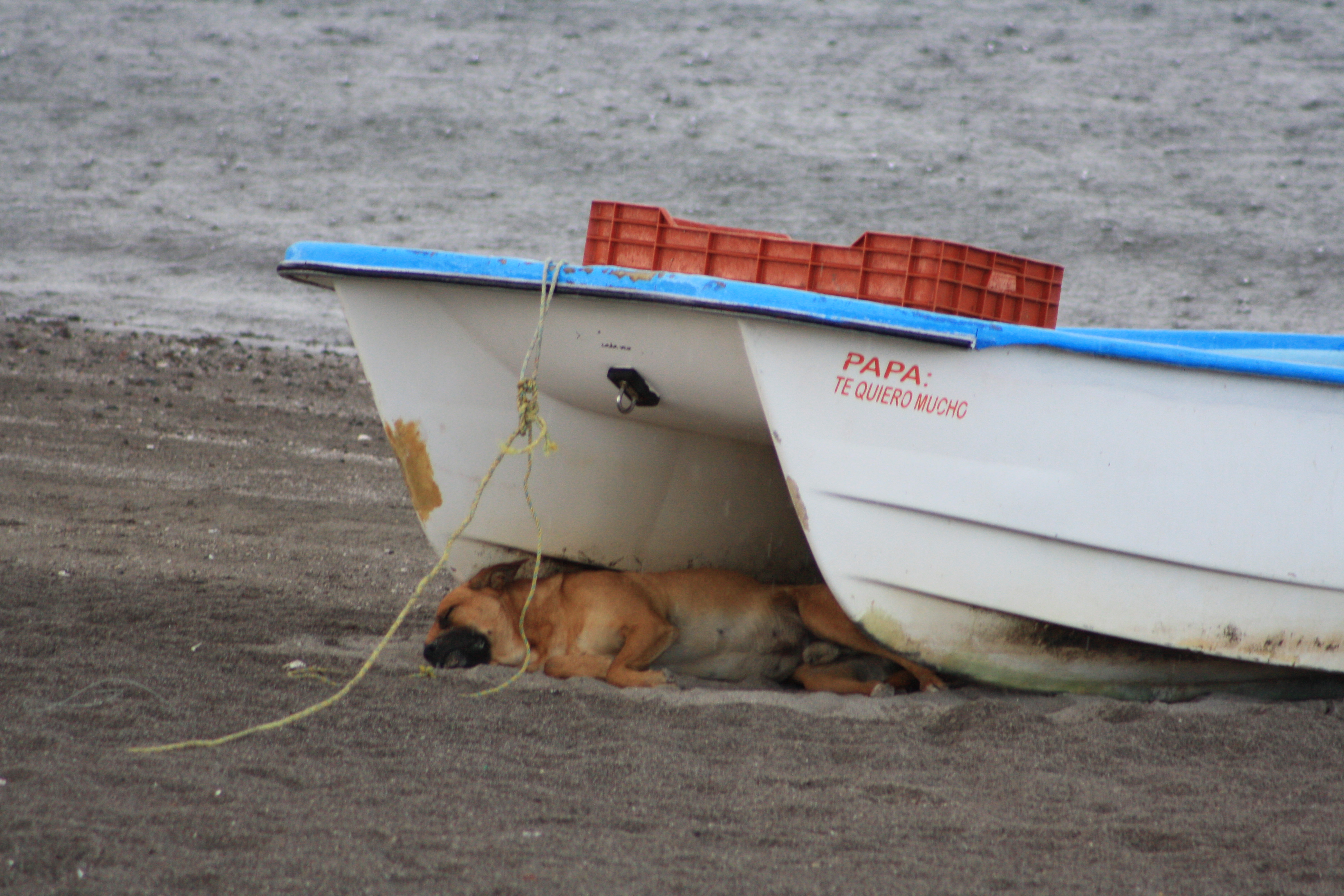
My eyes shoot again to the desert surrounding us. To the left, a few crude houses and beached panga fishing boats. To the right, three more crude houses and two pangas. We sit on the porch of the only restaurant and store in Evaristo. The sea laps, oblivious to us.

“We just do what we do,” he clarifies, finishing his beer, then he rises from the chair to get another.

For as long as you can do it – – – I finish the axiom silently.
IMG_3842

(photos by Tom Marlow; see also http://ketch-22.com/ )
May 16, 2015

BLOG from the Sea of Cortez 2

Filed under: Uncategorized — cbmosher @ 12:50 pm

THE SAINT’S FAULT

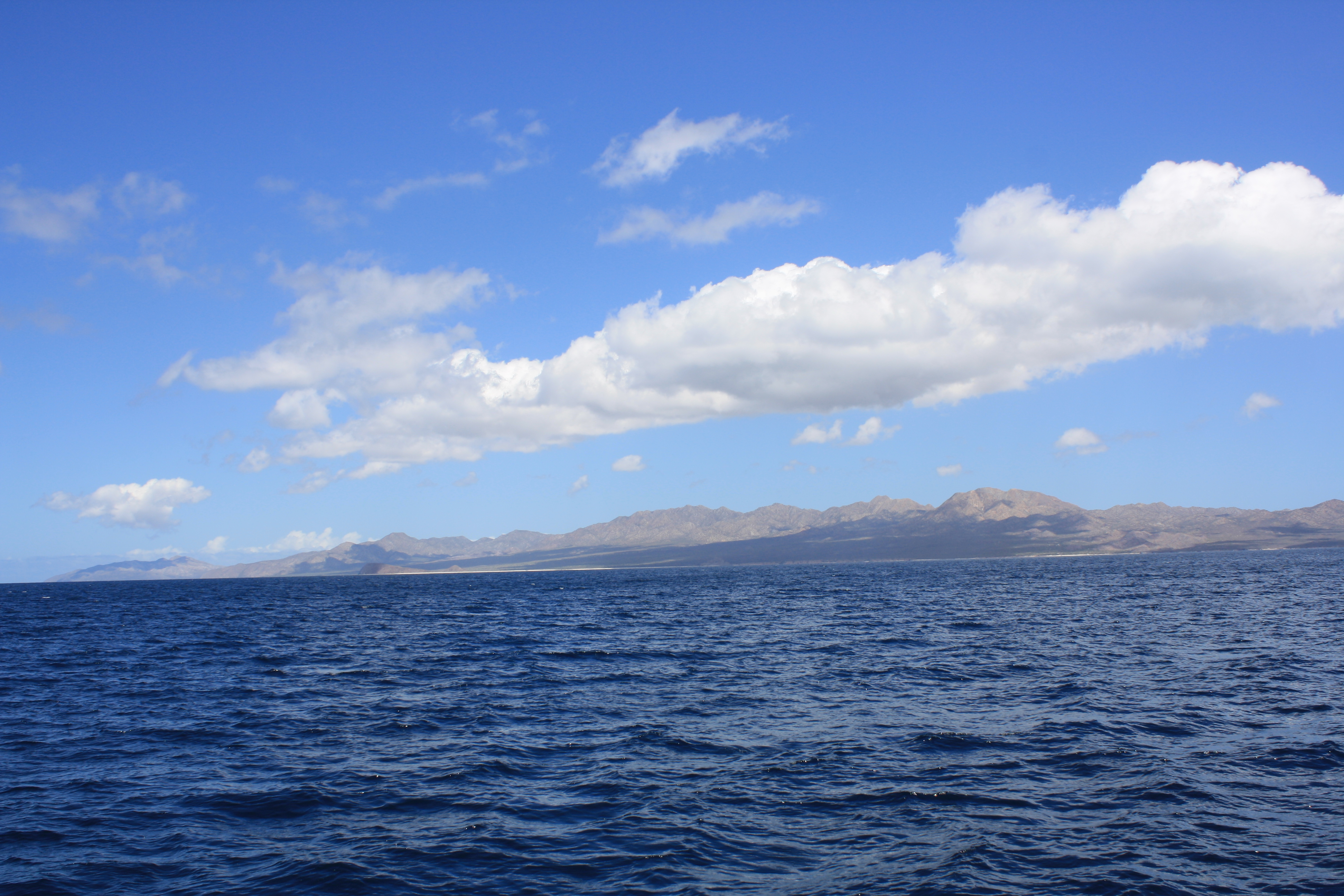
I’m worried about our keel as we sail south, with the rocky coast of the Baja Peninsula no more than a few hundred yards off our starboard beam. Will some hidden rock tear out our bottom?

 
IMG_4301

 
“We’re sailing right over the San Andreas fault,” Tom Uno explains.

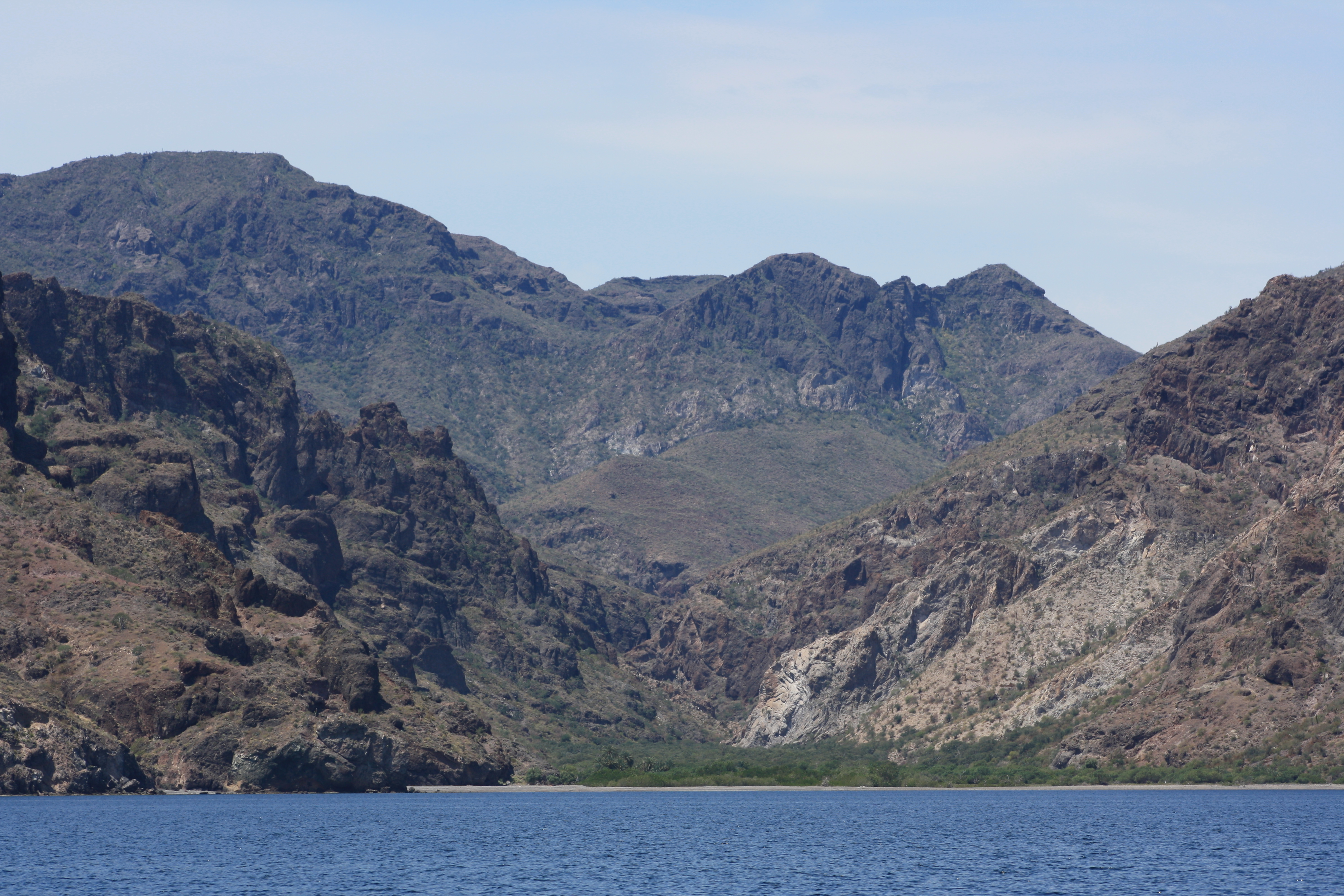
Then, looking at the mountain range – the Sierra de la Giganta – it’s clear how the leading edge of the Pacific Plate in crumpling up and over the subducting North American Plate of the Mexican mainland, 150 miles to the east. Peaks up to seven thousand feet loom to define the “Mountains of the Giantess,” then drop precipitously into a canyon, over which we float. I can visualize the rock above the water continuing its plunge to profound depths below us.

We troll a fishing line behind us, hoping for a non-spaghetti dinner, but nobody bites by the time we enter the bay known for the deserted “Casa Grande” of Timbabiche. The bay is an open crescent, exposed from the NNE to the SSE.

“Most winds come from the southwest,” Tom Uno explains. “Katabatic winds of cool Pacific air roaring down from the mountains. Coromuels, they’re called. We need to anchor where we’ll avoid the fetch and where, if we drag, the boat won’t hit a rock wall.”

As with Agua Verde, there’s plenty of rock wall flanking a small beach within this bay. Captain Tom chooses his location and depth, then Tom Dos and I control the gypsy windlass, letting out anchor chain. In fifteen feet of water, we let out 90 feet of steel chain as a breeze blows us back from the anchor. After it digs into the bottom, we sit a while, watching landmarks to be certain we aren’t dragging the anchor.

 
IMG_4077

Satisfied, we dinghy to the beach to explore it and the estuary behind it. Except for a paint-splattered, well worn fishing panga, beached on the sand, we’re the only ones there. Telltale fan-shaped disturbances on the sand at water’s edge reveal where blue-legged crabs have burrowed. Tom Dos digs one out for a photo. For a small animal, it makes a lot of noise, clacking its mouthparts in anger, flailing its pinchers in search of a piece of Tom.

IMG_4237

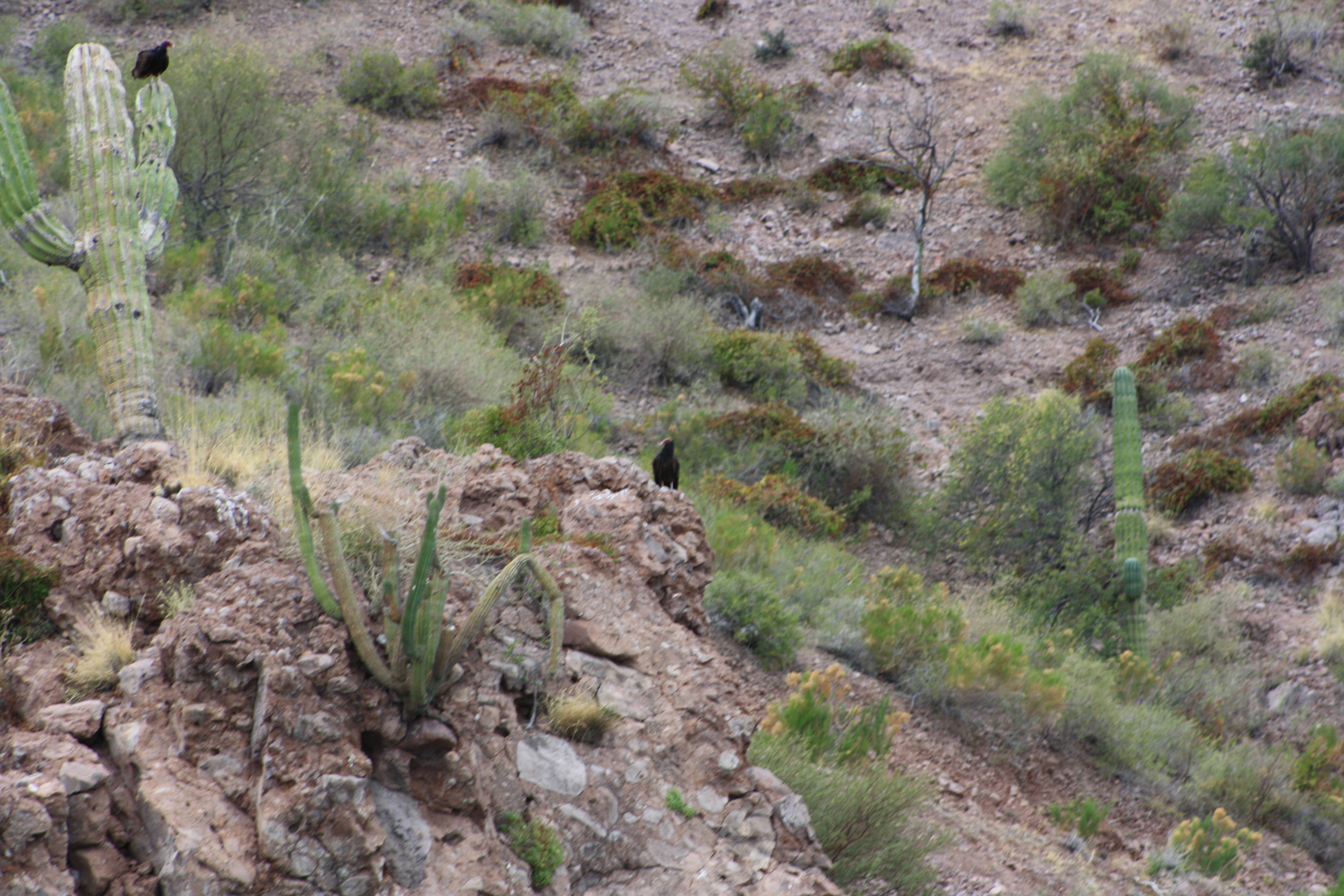
Beyond the beach, among the dry, twisted, thorny bushes, someone watches us from his perch.

IMG_4255

“He’s eyeing the crab, right?” I ask.

“Not ready to be recycled yet?” one of the Toms smirks. “When was your last confession?”

The strip of green flanking a brackish estuary provides food for a different bird.

 
IMG_4265

At dusk, the wind begins its skid down the Giantess’ peaks, as predicted. We eat, sip libations, and, as if mimicking the Coromuel’s action, slide into philosophical stuff:

“This reminds me of the sessions we’d have in college, debating the Meaning of Life.”

“I went to a Catholic college. We weren’t allowed to discuss such things unless the archbishop had approved the answer in advance.”

“We all went to Catholic colleges. Yours wasn’t a Jesuit college, obviously. But you were allowed to drink, I assume.”

“Oh, yeah. Drink. And drive.”

“Any accidents?”

And we all three recalled our near-fatals.

“Here’s a question: how did we survive those teen years?”

Then it’s time for a trip to the head. So I take the plastic bucket with a line attached, climb up the companionway, drop the bucket overboard to fill it, haul it back, then carry it down to the head so I can flush when finished. Repeat the process to supply the next flush.

My bunk is directly over the fuel tank, so I fall asleep inhaling diesel vapors. They must effect my dreams, because I hear Sirens wailing like gusting winds topside, homicidal mermaids plucking lines against the masts, and rabid seagulls regurgitating wet fish parts all over the deck.

Not hallucinations. The coromuel tears at our flags, violently slaps lines, and stretches the anchor chain into a rigid cable as the wind tries to rip us free. Rain splatters all over us for a couple of hours as the wind whips the boat in an arc around the buried anchor. Fearing “anchor drag,” Tom Uno sets the GPS to alarm if we move from our position beyond than the arc.
The waves, however, are minimal – not much fetch – so we don’t roll or pitch or yaw. Back to sleep.

In the morning, the drying of soaked cushions begun, the flushing by bucket finished, and the first coffee swallowed, we prepare to sail out over Saint Andreas’ canyon again.

“What did keep us alive thru those Altar Boy years?”

“Luck,” one of us figures. “Just luck.”

“So how do we pay back Society for that gift?”

“Well, we’re all 70, or nearly so in Tom Uno’s case. One of us must surely have discovered the Meaning of Life by now. Maybe we should share that with today’s college kids.”

“Something to think about,” Captain Tom Uno allows. “Time to weigh anchor.”

IMG_4303


(photos by Tom Marlow)

May 12, 2015

BLOG from the Sea of Cortez I

Filed under: Uncategorized — cbmosher @ 6:45 am


NAMES


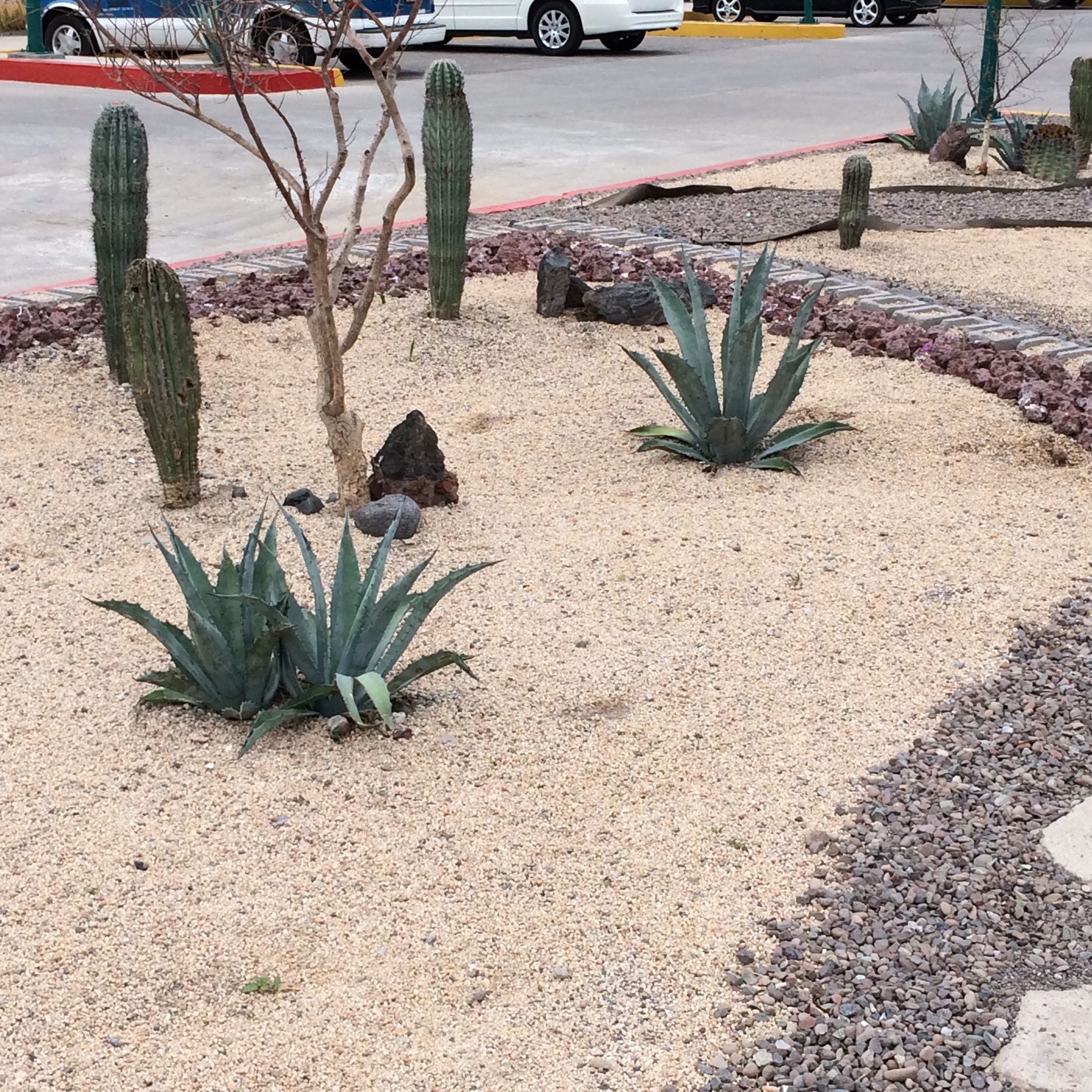
Begin in Loreto. There’s a small airport by the Sea. Just outside the terminal, the environment is immediately categorizable.

IMG_0083

After sailing from Loreto out of Puerto Escondido, we anchor the boat in a small bay of turquoise water, surrounded by rock walls on three sides with a small, empty-looking sand beach. Agua Verde, this bay is accurately named. We dinghy ashore to see if the “restaurant” is open.

IMG_4083

“Restaurant?” I don’t see a structure anywhere.

But, as we approach the beach, I see, where the sand gives way to the cactus and scrub beyond, a barely visible primitive structure.

IMG_4106

We wade ashore, shoes at first wet, then full of sand. There’s a grass roof on this structure, which looks to be just four posts protruding from the sand. As we approach, a small brown table of crude wood and four similarly constructed and colored chairs separate from the sand of the same color.

IMG_0085

Three women emerge from the shadows beneath the roof. They greet us, ask us if we wish to eat, bid us sit down.

We order beer – Ballenas – much touted by my two fellow mariners, and the only thing on the menu – fish tacos.

I’m a little concerned about sanitation, given my grumpy intestines which, ever since a brutal siege of dysentery acquired in Bolivia and enduring well thru graduation from Med School in New York, have rebelled every time I’ve gone to Mexico.

I need to pee. Their “bathroom” is a crude rectangle of blue plastic behind the restaurant. I push aside the plastic cutain of a door, then push my way thru a swarm of flies and dense vapors of excrement. The source of the vapors stares up at me from a hole in the sand. The head on the boat looks pretty good, now.

Back at the table, I see one woman cheerfully pour flour into a battered aluminum can (probably once held canned peaches). She then pours in some water. She plunges her fist into the can and begins to work it while the other two deep-fry their husbands’ catch of the day on a camp stove.

“What are your names?” the Dueña asks.

“Carlos,” I respond, comforted to think that the tortillas she is making will be fried to a temperature lethal to most bugs before we are served. “And this is Tomás,” I point to Tom. “And Tomás,” I point to the other Tom. “Easy to remember.”

She laughs, removes her dough-covered hand from the can, and points. “You are Tomás Uno and you,” she moves her finger, “are Tomás Dos.”

These guys are both so mellow that I know they won’t fight over it.

The fresh tortillas and fried fish are delicious. The beer is delicious. Our Mexican hosts are delightful. Agua Verde is paradise.

IMG_0193

(Photos by me and Tom Marlow)

March 23, 2015

Beer and Bubblegum in the Shadow of the Amazon

Filed under: Uncategorized — cbmosher @ 8:47 am

SAMSUNG DIGITAL CAMERA


The good news was, I would spend the final three months of medical school in exotic South America, studying rare tropical diseases; the bad news? The medical organization there was run by missionaries – no drinking, no smoking, no girls.

So I thought.

“Charlie,” the missionary doctor rasped down at me from his elevated position six and a half feet off the floor, “Get your jacket and Spanish dictionary – we’ve got a house call to make.”

He sucked so hard on his Marlboro that the room’s air whistled as it rushed between his lips.

“Where we going?” I asked, bracing for the toxic cloud of his exhalation.

“Over across the Ruta. We’ll walk.”

The “Ruta” was the major highway that snaked through this sprawling grasslands and remaining islands of hardwood forest. It was “major” only because it was paved. All other roads including the town’s streets were either dirt paths or mud slides, depending on the weather. A depression in the main street remained a puddle for days after a rain, and was home to a large pink sow who moved for no bicycle, motor bike, or truck.

The Ruta was also a steady source of emergency patients to our little hospital. It brought us the chainsaw accident victims and women in labor from miles away where people were clearing the forest to create new lives as farmers. It aimed careless truck drivers and drunk motorcyclists into sudden collisions. Although most were low speed collisions compared with the U.S. variety, they were ugly because motorcycles usually carried entire families at a time.

I could hear the Ruta at night, when the clamor of this frontier town surrounding the hospital ebbed. During brief silences in the cicadas’ songs, it hummed with a low roar that crescendo-decrescendoed as trucks loaded with mahogany logs roared away from the frontier, and trucks loaded food, beer, cigarettes and other essentials of frontier life roared into town. Lacing the edges of this low roar, like embroidery on a dishrag, was a tinkling of loud music, obviously blaring and shrill at its origin, but muted over the distance between the Ruta and us. Aside from the initial drive into town two weeks earlier, I hadn’t been to the Ruta.

“What are we gonna do there?” I asked my mentor as I arose from my after dinner siesta.

“Told ya,” the lanky West Virginia physician said in a cloud of smoke. “House call.” His long bones were so loosely hung on him that he lurched more than walked through the door into the fading light of dusk.

“I didn’t know there were any houses over there,” I trotted to catch up to his ambling silhouette. “Just stores and gas stations and bars, I thought.”

He stopped, turned, and showed me his teeth through a mischievous smile. “Depends on your definition of a ‘house,’ doesn’t it, Charlie? Come on.”

We found a dirt path that wound into the stand of palm trees, reduced now by dusk to shadows against a sky which glowed blue-black from a sliver of moon. Insects buzzed so loudly on either side as we walked that my eardrums hurt. Some bird up above let go with a fusillade of caws like a machine gun. Then I thought: “Snakes” and looked down to find my feet, but they were swallowed into the darkness of the path. I was walking by Braille.

Just as I took a breath to say something, he rasped, “You bring a flashlight, Charlie?”

“No.”

He clicked on his. The path before us materialized from the darkness.

“You should, you know. There are creatures out here at night.”

“Really?” I ran a couple of steps to get closer to the illumination. “Doesn’t bother me.”

“Oh, good,” he laughed. “I like that. To be a doctor around here, best to be macho.”

A glow ahead silhouetted the tree trunks. The distant cacophony of musical notes became louder as we walked. It was connected to the glow, which also intensified as we approached.

When we emerged at the edge of the Ruta, the blaring of tin quality music smothered the droning cicadas. Behind that noise was another: a gasoline generator, driving the turntable and loudspeaker system wired together somewhere. Stark electric light bulbs, bare and swaying in the evening breeze from wires hung at roof edges, were as harsh as the music.

Four small square buildings of crude plank lumber and thatched roofs randomly sprouted at the other side of the Ruta.

“Where we going?” I asked.

“La Mariposa,” he pointed at one of the buildings which had a faint pinkish hue. “The Butterfly.”

“Why?”

“Already told ya.” He started across the road. I followed him into the glaring din. The flashlight was no longer necessary.

Inside the one-room building, the “music” was so loud it was unrecognizable as something produced by instruments. There were four or five small tables of thick wood, about the size of card tables my parents utilized to play bridge in more genteel surroundings. A bare light bulb dangled from the roof above, flooding the center of the room like a stage, and casting the walls into shadow. We sat on crude wooden chairs at the table he chose.

From the shadows, a girl appeared. Short black hair, ebony eyes, skin-tight top low cut to cover half her breasts (until she bent over), and a skirt that ended mid thighs. She was barefoot, I noticed. And her feet were broad – splayed actually – as are those of half the people here who live in such intimate connection with the soil.

“Cerveza,” the missionary requested of her, lighting another cigarette. “Dos.”

She looked at me, smiled – or was it leered? – and said something to him in Spanish too rapid for me to comprehend.

He chuckled. “The joven is a doctor,” he told her. “Recently arrived. Be sure to be — nice — to him.”

She tossed her hair back in a maneuver meant to be sultry, I suppose, and walked away. Wiggled away. Jiggled away.

“Pay attention, Charlie.”

I whipped my head around to face him. “Yea. Sure. Okay. Attention to what?”

“To what you see around you.”

“Been doing that. What did she say?”

“Said she hadn’t seen you before and wanted to know who you were.”

“What did you tell her?”

“The truth. Here’s our beers. Only place we can get beer this time of night. All the stores in town are closed.”

For some reason, it had taken two girls to bring both beers. For some reason, they also brought chairs and joined us.

“We’re not alone,” I said taking a sip from the bottle. I was nervous, trembling a little for some reason.

“You noticed?” he guffawed. The two girls giggled with him.

“Good,” he continued. “You’re paying attention.”

The second girl was more attractive. She was blonde, which is unusual here, and looked older. Wiser. More relaxed and sure of herself. Her eyes, however, were as black as the other girl’s, and burned into me. She said something.

“What’s your name, Charlie?” the Marlboro man said.

“That’s really kind of a dumb question,” I blurted, “for a couple of reasons.”

He guffawed again. This time with a head back, all teeth showing, spontaneous gesture. The girls laughed with him.

“Yeah, I suppose it would be,” he said once he gained control of himself again, “if it were me asking. But I was just translating for you. Margarita asked.”

“Who’s Margarita?”

The blonde smiled broadly and lowered her eyelids demurely at the sound of the name.

“Blondie. Tell her yours.”

“I am called Carlos. Please I am to meet you,” I repeated the phrase I’d memorized best. I had to scream it above the blaring noise.

Then there was more Spanish, half of it drowned by the “music”, the other half too fast for my primitive knowledge of the language. It pinballed among the other three at the table, with occasional sentences aimed at me to which I merely smiled and/or nodded.

At first, my mentor translated a few phrases, but he eventually abandoned English. I had the tone of the conversation by then. It wasn’t deep. It wasn’t philosophical. It was, unfortunately, mostly about me.

“Rosita thinks you’re cute.”

“Cute?”

“Yeah, you know, handsome. Margarita wants to know if you’re married. They want to know what state you come from. Do you have any questions for them? They are asking.”

Half way into beer number two, I became aware that the two girls were no longer sitting across from me and from him. They were on either side of me. They were laughing and tousling my hair. Margarita’s bare thighs were rubbing against my pants. Rosita was blowing big bubbles from her gum and we all laughed as she peeled the pink slime from her face, time after time.

“What are they saying now?” I asked the hospital’s medical director.

He blew out a dense cloud of blue smoke that enveloped his brain-shaped skull.

“They gave you a nickname – ‘Choco Clinudo’ – ‘cause of your brown hair. They think you’re cute.”

“Yeah, yeah. I know. They wouldn’t think I was so cute if I was broke, I betcha.”

“You’re right about that,” he said, taking another swig of beer.

Then, a flurry of fingers in my hair propelled by girlish giggles and squeals. Their brown thighs jumped as they teased me. “Hey, you’re messing me up,” I objected, grabbing their wrists and pulling them off me.

“They like you, Charlie,” he beamed, then threw back his head, laughed and guffawed and bellowed and let loose enjoying himself like I’d never seen him in the hospital where he played the role of American mentor to fledgling Latin interns and the dedicated nurses who actually did the work.

When he finished his laugh, he said something to them. The two got up, shook my hand politely and said the “glad to meet you” phrase in Spanish which I understood. They dissolved again into the peripheral shadows.

“Let’s finish up and get home,” he said swigging the dregs of his beer. “It’s late.”

“What about the girls?”

“We’ll see them again at the clinic,” he said. “Thursday. V.D. check day. We need to test them every month.”

“So they come in once a month?”

“Not always,” he said reassembling his lanky frame into an upright position. “These two have missed a couple of times, but they’ll be there Thursday.”

“How do you know?” I waited for him to finish lighting another cigarette.

“Because,” he flicked off his lighter. “I told them you’d be there. Let’s go.”

We crossed the Ruta, dropped down to the palm tree thicket, and he flicked on the flashlight again. As I followed him down the path, I raked my fingers through my hair to re-comb it, and snagged a wad of bubblegum with my fingernails. My hair was deeply entangled in the thick, sugary wad.

“Shit!” came shooting out. “Hey,” I called up to him, perhaps a little more aggressively than I should have. “What exactly were we doing back there?”

His answer came floating back to me in a cloud of Marlboro smoke:

“Public Health, Charlie. Public Health.”

IMG_4654

Dog Food Medicine

Filed under: Uncategorized — cbmosher @ 8:36 am

Pierre calls 911 for an ambulance every week or two during the warm months when he still pans for gold. More often during the lonely winter.

“Chest pain,” he’ll say the magic words. “Like a fart turned sideways.”

Just to seal it, he’ll often add “I can’t drive.”

We wouldn’t want him to. Not any time after eleven A.M. anyway. There are enough drunks on the roads during the night hours causing accidents; we don’t want the steel mining contraptions that fill his rusty Datsun clanging into each other as he drifts, occasionally, into the right lane, then yanks the car back onto its usual trajectory directly into oncoming traffic.

“We’re coming, Pierre,” we always reassure him.

It’s my job to bring the dog food.

Red lights plinking off the pine trees astride the road, siren wailing to warn any meandering deer, Joe, the hospital janitor, weaves around the hills and swoops us down, then up the gullies. Like a needle embroidering the landscape.

As the ambulance strains up the final grade to Pierre’s shack on the hill, transmission slipping, medical equipment sliding to the back of the vehicle, I pull a can opener from the Trauma Kit and start opening the first can. I’ve ruined a few pairs of pants from that splattered grease.

The instant we arrive at the junkyard that surrounds his shack, the ambulance is accosted by a half dozen raucous canines, no two of which look to be even the same species, let alone the same breed, but all of which are seriously mean and, we’re pretty sure, unvaccinated.

I roll down the window. A big black-and-brown with stinking breath and thistle-matted fur lunges his front paws onto the door, almost reaching the window, snarling in a pitch that makes my ears ring.

“Ready?” I yell to Joe.

“Ready.”

I wind up, like back in Little League, and heave the can as far as possible from both ambulance and front door of the shack.

The howling, yelping, baying cacophony streaks after the can. We jump out, run to the back of the ambulance, yank out the gurney, and run for the shack.

“Got the Trauma Kit?” he asks me.

I streak back to the ambulance, grab the kit, then race back toward the shack. The black-and-brown sees me, and comes charging. We burst in, hauling the gurney and Trauma Kit, and slam the door behind us.

“What took ya so long?” he says from somewhere within the junkyard that is the inside of his shack. “My friends are saying nice things about me – I must be ready to die.”

The din of dogs is a muffled tornado beyond the thin walls. We can slow down now, and be methodical.

I check his blood pressure.

“Never mind that. Check my eyes. I don’t wanna go blind from that Immaculate Degeneration, like my brother.”

“I thought you had chest pain,” I retort.

“Yeah. It’s prob’ly from the cigars the doctor said I had.”

“You smoke?” I am surprised. “I thought you just chewed,” I try hard – in vain – not to look at the permanent brown streak of stained skin at the right corner of his mouth.

“Don’t smoke,” he mumbles. “Doctor said the X-ray showed I have cigars on my lungs.”

I listen to him breathe, stethoscope at full distance. I don’t want to inhale too deeply, that close to him.

“There’s some mucus in your lungs. You coughing it out?”

“Can’t. I can get down to my cough, but I can’t get under it. It’s stuck. Take me to the hospital.”

We will, of course. But by the time he’s strapped securely into the gurney and we’re ready, a dozen paws scrape furiously at the door. The incessant caterwauling has enveloped us.

I pull the second can from the Trauma Kit, open it, crack the door just enough, and heave again.

They all wheel and run after it. All but the black-and-brown. He stands there, snarling at me, saliva drooling from his black lips like tobacco juice from an old miner’s mouth. But then he, too, turns to chase the pack, sure of himself that he’ll get the biggest share.

We run for the ambulance, wheels bumping over the irregular earth and the scattered trash.

“Hey, slow down,” Pierre complains. “It feels like you done thrown me in the ore tumbler.”

We shove him in the back and lock the gurney in place. We just make it to our seats before the dogs come back looking for a fight.

“Don’t you feed your dogs?” Joe shouts back to Pierre once we’re safe inside.

The sound of dog claws scraping down the paint and steel of the vehicle reminds me of the blackboard in grade school.

“Sure I feed ‘em, “ he yells up to the driver. “I feed ‘em ambulance guys.”

And he chuckles all the way down the hill as our red light strums the pines that straddle the road.

IMG_2513

« Newer PostsOlder Posts »

Blog at WordPress.com.