Sex, Drugs, and Public Health

August 10, 2015

GRANDFATHER’S THOUGHTS

Filed under: Uncategorized — cbmosher @ 6:09 am

Persephone

Upon watching her as we rocked

Swirling. Slowly. Within the amniotic fluid. Celestial liquid bathing her skin. Filling her lungs. Transmitting vibratory sounds. For a small eternity, magic built her floating body from an amorphous clump of cells. Cells composed of atoms precisely arranging themselves into molecules. Molecules precisely arranging themselves into latticeworks. Latticeworks of molecules creating cells of specific, vastly different intent.

Some of the atoms were created by the sun five billion years ago. Some were created yesterday. Most came from previous incarnations: as a part of some pre-historic and long-extinct sea animal from the oceans of Pangaea; as a part of Achilles’ ship. Perhaps some had once been part of Jesus’ body.

At some time, unknown to us, she began to dream. Floating within the Celestial liquid, awash in atoms of stardust, her dreams were, perhaps, fueled by her connection to the Cosmic Flame that gifts us all with a miniscule part of Itself – a Spark – which we call “life.” Beyond that, we can guess nothing more of the nature of her dreams.

And at some other time, also unknown to us forever, she discovered something floating in the Celestial liquid. It touched her cheek, creating within her, awareness of her self. And some moment thereafter, in the immeasurable time that growing neurons take to transmit information, awareness of her finger. Her finger played for eons with her cheek. In time, it came to respond to her desire, whenever she wanted to feel her cheek. Her finger became her first friend.

Within the utter darkness, swirling, slowly, safe, awash in Comfort that knew neither hot nor cold, nor light, nor pain, a sudden rent. The Celestial amniotic fluid rushed out thru a Black Hole. A blindingly harsh Black Hole. It sucked her into itself, extracted her from her Comfort and quiet and sleep-like darkness.

Cold. Blinding light. The unknown pulling of gravity. And a sudden interruption of blood entering her. Of nourishment entering her. Of oxygen.

Her brain screamed for oxygen.

Her first inhalation bubbled air thru her fluid-filled lungs. Her first exhalation spewed out amniotic fluid. Her next inhalation brought cold into her. But also, oxygen.

Her heart frantically re-shunted her plumbing. Ductus closing. Pressures of her blood surging where it had been low, dropping where it had been high. Her Foramen Ovale – little window between her atria – began to close, separating left from right in her heart.

Her intestinal tract, conduit for nothing but amniotic fluid and sloughing cells, prepared to go to work.

All this demanded energy at an accelerated rate. She began burning fat. Her weight dropped.

Instinct and hunger combined to send her on an expedition for food. With Sarah’s help, she found the breast and learned to use it.

Eat.
Sleep from exhaustion.
Eat again.

And while the plumbing and neuro-circuitry evolved methodically under pre-programmed guidance, she slept. Her eyes closed, her body cradled, she returned to her Celestial dreams. Her body hummed its internal song of construction, and beyond her body, her infinite memories of the galaxies and nebulae of her intra-uterine world swirled around her. Slowly. Liquid. Watched over by the Cosmic Flame.


Music :“Echoes” Pink Floyd


convert

June 14, 2015

BLOG from the Sea of Cortez 7

Filed under: Uncategorized — cbmosher @ 12:05 pm


Tres Vírgines

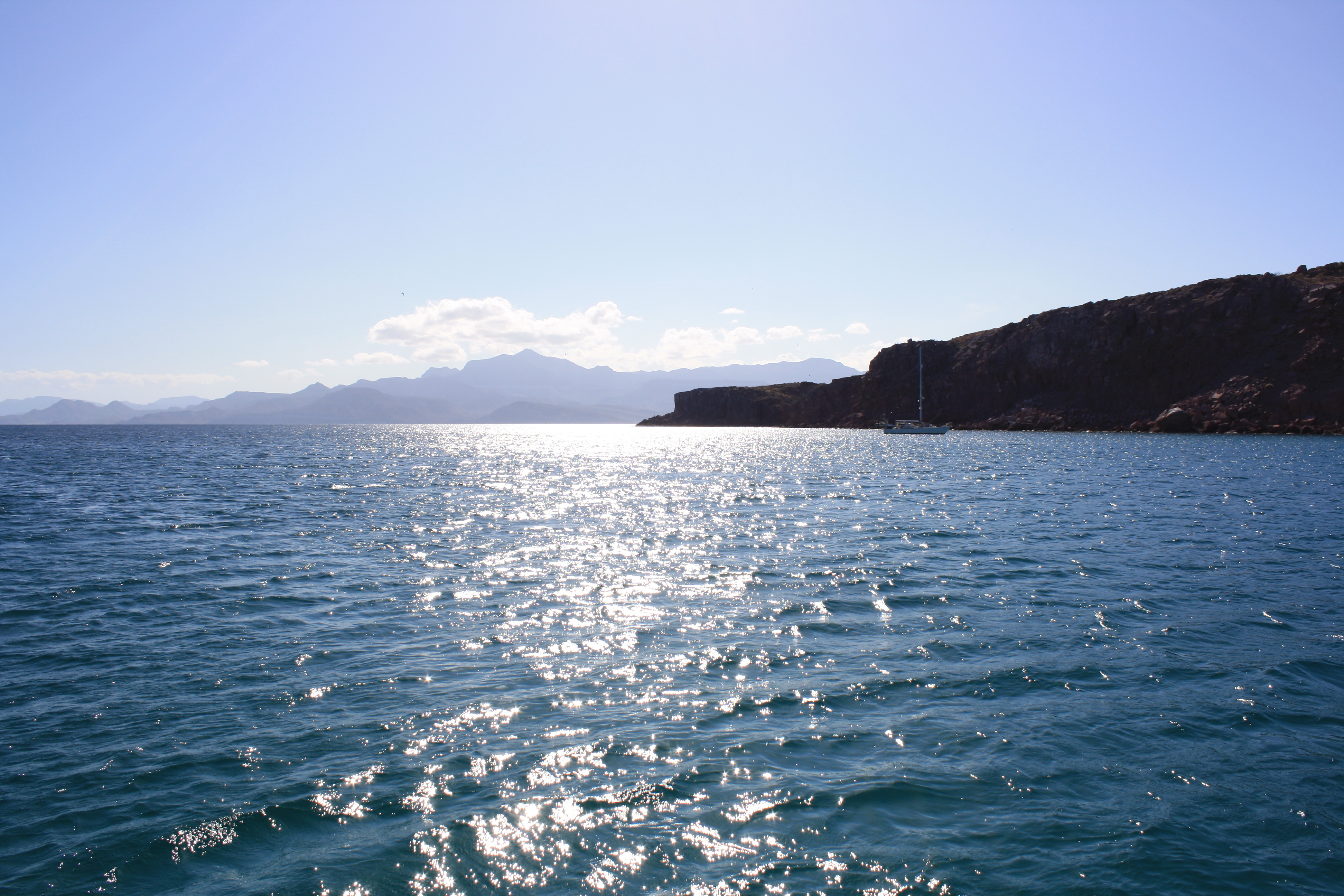
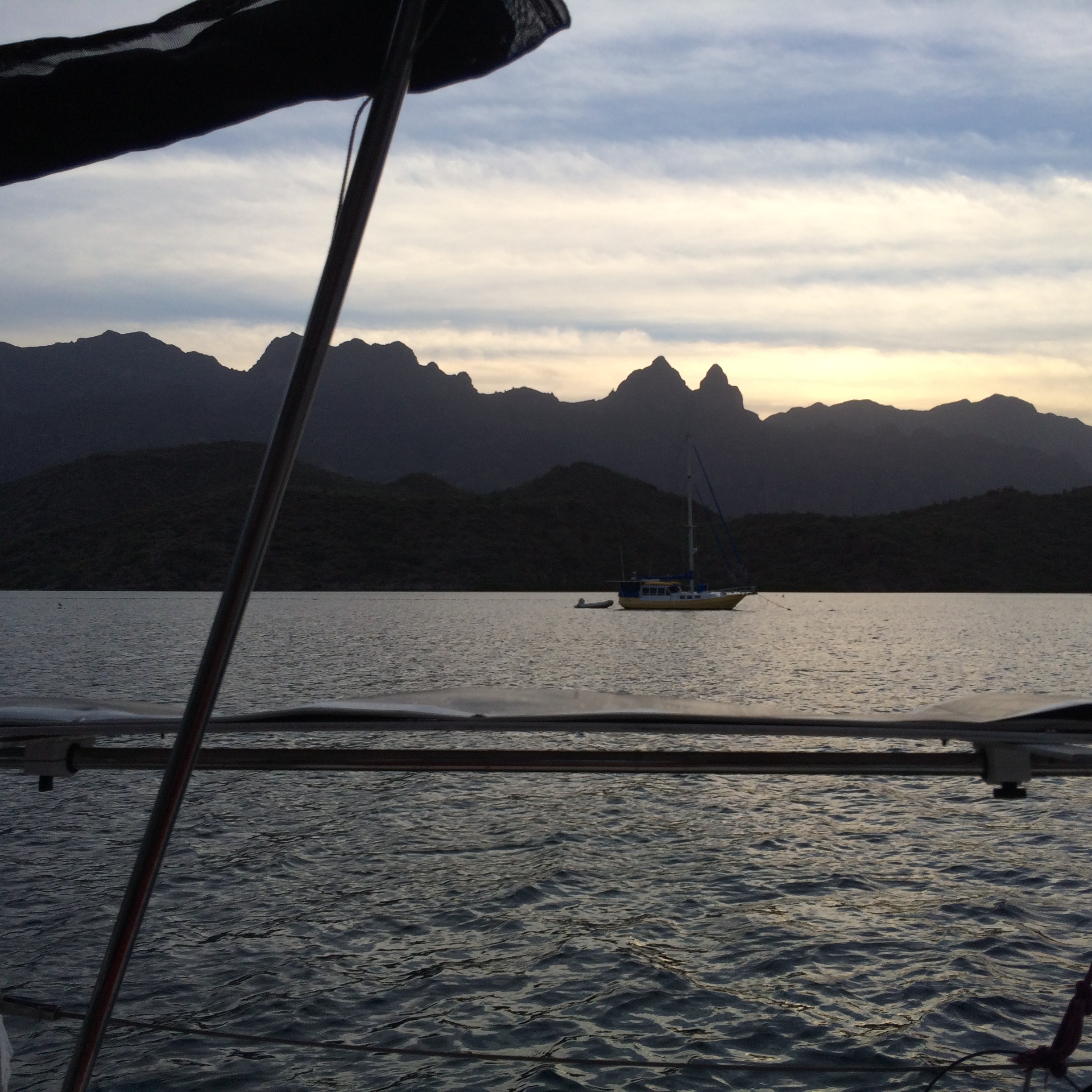
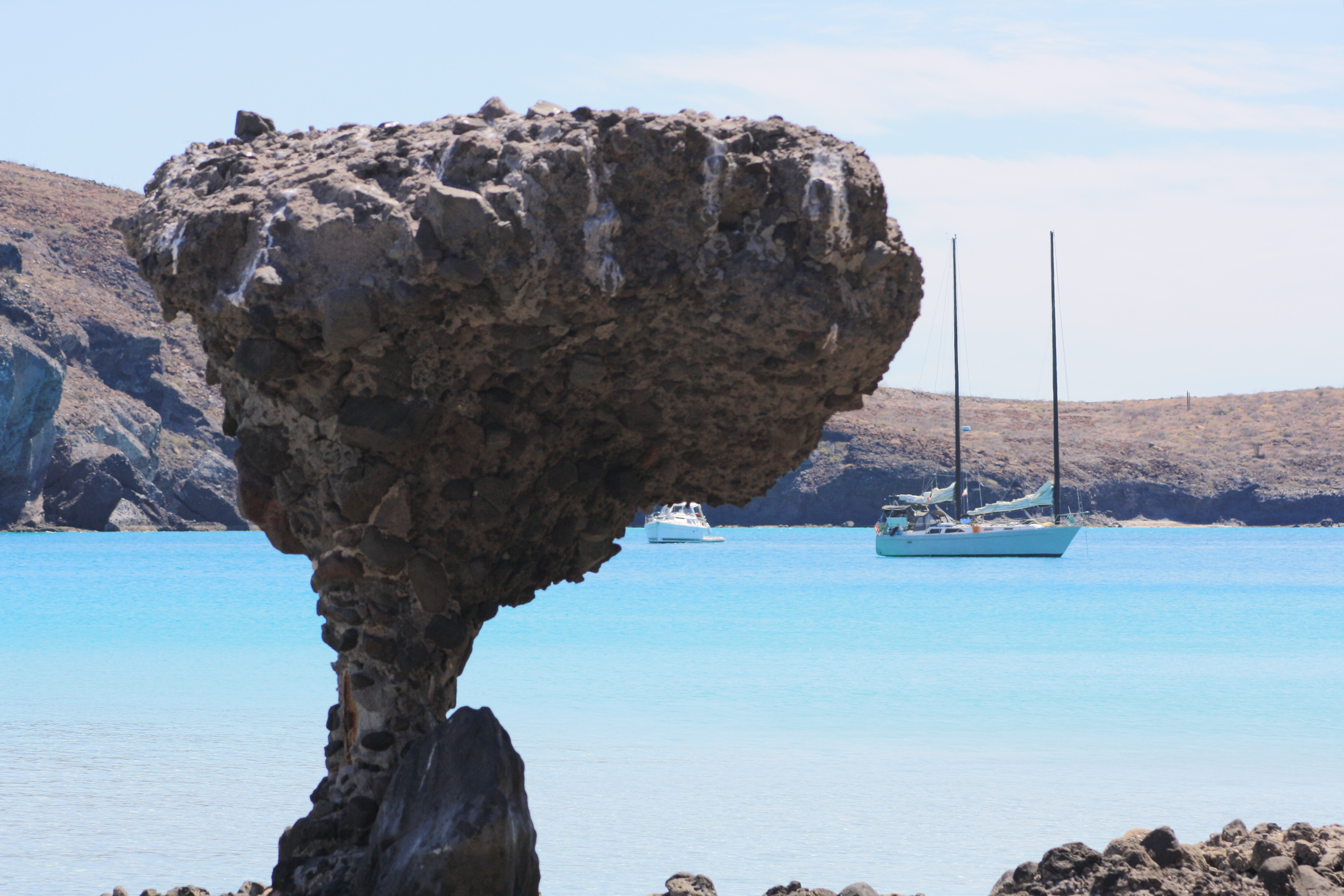
After a warm afternoon at Bahia Balandro, admiring the famous mushroom rock and less famous sandy beach, we sail toward our final mooring in La Paz. Tom Uno is retracing his previous route.
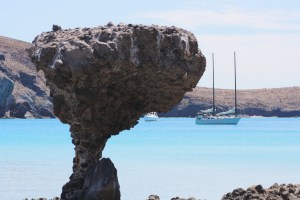
 

IMG_4420


“I’m following my breadcrumbs,” he points to his GPS navigation device. “The red line is where we sailed coming north to Loreto. Now we follow it going back south.”

Or, you could – – –
 

IMG_0103


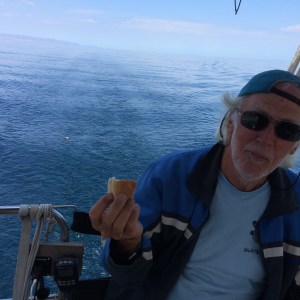
“Look!” Tom Dos points behind us. Our wake dissolves back into the sea’s surface after 50 yards; a few hundred yards from our transom, we see white, disturbed water. Then, up from the surface like a nose-first submarine, a humpback spears the air, twists 180 degrees, spreads his flippers, and crashes back.

The foaming splash, like a monstrous water lily, spreads its tsunami petals to all compass points and rises on the horizon higher than our mast. Then a second whale breeches, twists, and crashes back with an explosion of water.

A dozen times over five to ten minutes, the two repeat the anticipatory breeching and monumental splashes.

“Why do they do that?” I muse aloud. Just in case one of the Toms has the answer. Mr. Google is unavailable.

“It’s always either food or sex,” Tom Uno philosophizes.


Sounds ridiculous to me. I take a breath, preparing to rebut. My mind races thru several species – including our own – looking for the debate points to negate his axiom. I end up having to exhale, wordless.

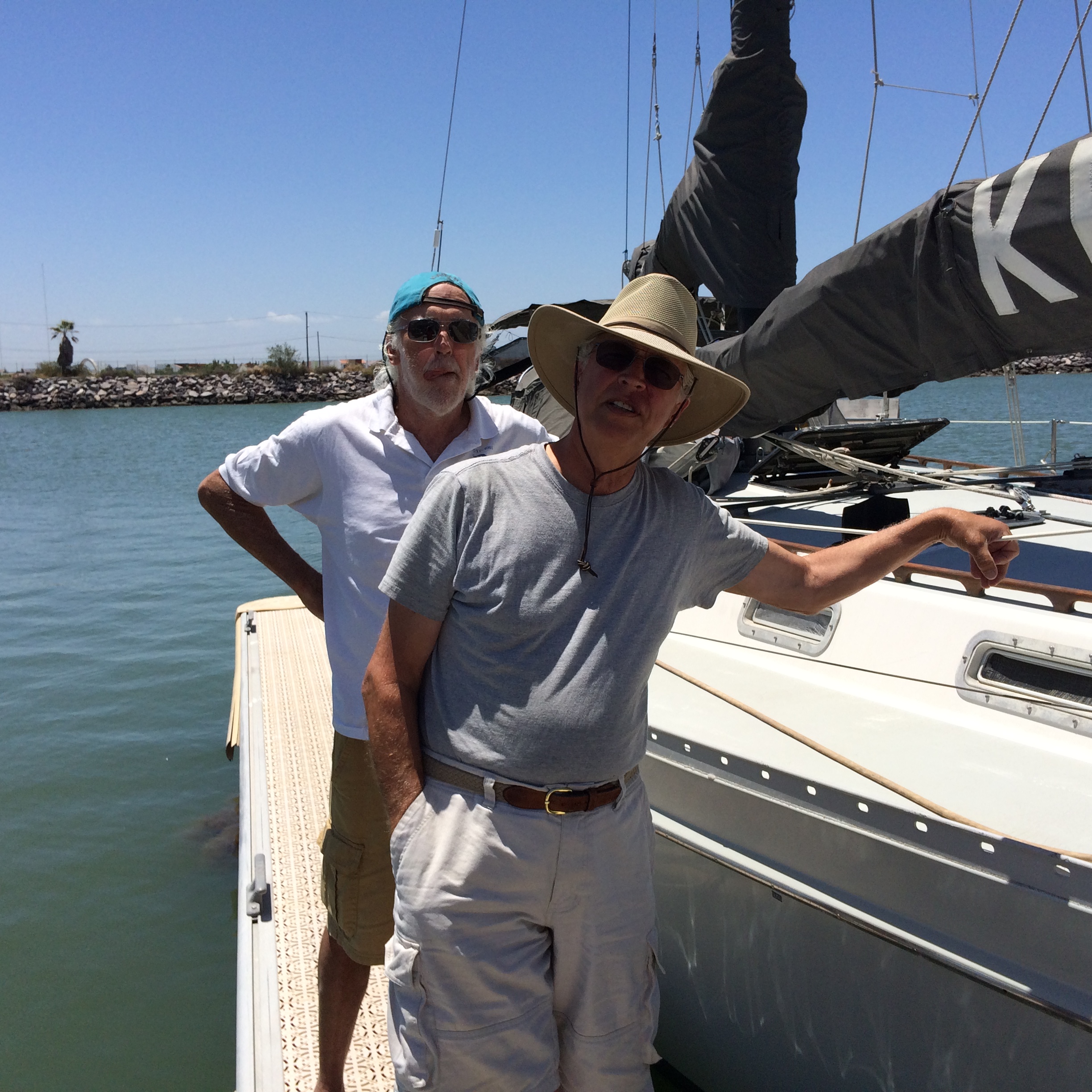
Once in the slip, Tom Uno assesses the wounds inflicted on Ketch 22 by its nine years of sailing. Like the skin of a mariner’s face – tanned to leather by sea salt, cracked by the sun, wrinkled by work and cold rain – his boat wears the evidence. (The Catch: The only way to keep your sailboat pristine is to not sail it.) The pump on the head doesn’t work (see BLOG # 2), the zipper on his dodger is so corroded it snaps in half, but most annoyingly, his wind vane atop the mast is broken.

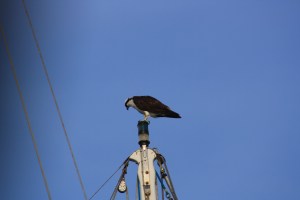
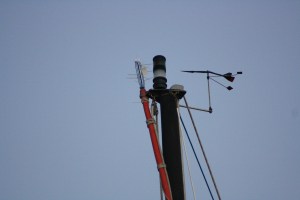
“That damned osprey did it,” Tom Uno shakes his mop of salt-impregnated hair. “Let’s fix that.”
 

IMG_4423


And he rigs a paint roller with plastic spikes, which we hoist on a broom handle. Goal is to make it uncomfortable for the bird to perch on – and break – the wind direction vane while looking for food.
 

IMG_4427


Or sex.

I need a new belt. Not so easy to find one with quality and without gaudy spangles. We wander many blocks, beyond the tourist zone, to a neighborhood where we find dozens – maybe hundreds – of sidewalk kiosks. Belts, of soft leather un-adorned, hang in one kiosk. A young girl staffs the place. She jumps up, and is quite helpful. At her feet I glimpse a cradle and infant. I look at her again. She is, maybe, sixteen. Already, most of life’s doors have been slammed and locked to her.

I buy the belt. No haggling to reduce the price, as Gringos like to do. She’ll need every penny. I grit my teeth as we walk away, sad, and a bit angry, thinking of her abbreviated childhood.


Birth control !


“Anybody hungry?” asks a Tom. “Best restaurant in town is Tres Vírgenes.

“There are three of us,” someone retorts sophomorically, “so – perfect choice.”

My surgically manipulated knee, still swollen, and inflamed by the walking, proposes that we take a taxi.

“Let’s go by the cathedral,” Tom Dos requests, clutching his i-phone like a camera.

You can take the boy off the altar, I think about all three of us, but you can’t eradicate the Altar Boy.

The cab driver rolls us, low-rider like, slowly past the old Spanish Mission style cathedral.

“You know,” Tom Dos philosophizes, “the Vatican needs to make Judas a saint.”

Is this flippancy, hypoglycemia, or a well-thought-out Heresy? I wonder. “Interesting statement. Explain.”

“Without Judas, there is no final, dramatic climax to Jesus’ story,” Tom Dos discloses his logic, “and the myth would probably not have persisted through today. Can you imagine Judas saying ‘no way, God. I’m not doing that to my friend?’ No crucifixion; Jesus becomes just another of many prophets, lost in history. But, thanks to Judas, God’s script played out perfectly.”

I’m impressed with his Borges-like thinking. And I recall, again, the short story which I consider the most brilliant of any I’ve ever read:


Three Versions


So now there are Four Versions of Judas.


As we drink in the architecture of the cathedral, a young girl, 14 maybe, walks past, carrying books, on her way to somewhere. As she transects that magical and invisible line which, we were taught, extends from the tabernacle, out thru the closed doors, and deep into the world, she crosses herself. She does it so reflexively, that you know Catholicism is deeply imbued within her. In spite of the books.

Recalling the girl of the kiosk, my brain wants to warn her:


Birth Control !!


The restaurant has arisen from an old Spanish style interior patio. The house was once a series of rooms, now converted to bar and kitchens, that surround the patio on all four sides.

The menu is in English. Maitre ‘de is fluently bilingual. This is, initially, disappointing to me as I prefer, when in Latin America, to use Spanish and avoid Gringos. But that’s impossible in this town and this restaurant. For a long time now, I’ve considered myself to be a citizen, not of any single country, but of Everywhere.

Borges said it better, as he always does:

“As I think of the many myths, there is one that is very harmful, and that is the myth of countries.”

“So,” I embark, feeling a need for resolution at this end of ten days on the water and 70 years on the planet, “what is the Meaning of Life? Quick! Before civilization fucks up our brains again.”

“Don’t know,” one of the Toms throws it back at me. “What do you think?”

Do I go Serious or Smart-ass? They want me to set the tone.

“Maybe it’s the Meaning of Your Life. Each of us with his own. So, for me – – – it’s getting to the place, finally, where I’m comfortable with who I am.”

“Take long, did it?”

“Shit, Man.”


Post-prandial stroll along the Malecón. The sea on our left, tiled promenade underfoot, undulating palm trees above, incessant parade of fat grandmothers, little girls blowing bubbles, skateboarders, geriatric sailors, hand-in-hand lovers and Saturday evening primped-up flirters.

Tres Vírgenes. Kiosk girl. Catholic Schoolgirl. I’m watching for number three.

The Toms walk (and I limp) toward the marina and bed, taking in the show. “Taxi,” says one of the Toms. “Let’s give your knee a break.”

Our flagged-down taxi does a u-turn across the busy street, pulling in from of the Hotel Perla. Five girls stand around in front in their nicest dresses, excited for Saturday night.

Chica bonita!” the elderly taxi driver nods toward them.

Four of the five are victims of their own bodies: skinny, gangly girls in their almost-but-not-quite-yet-grown-into-their-women’s figures stage. They’ve done their Latin American best with their hair, eye makeup, and dresses. They teeter on high heels like kids trying out stilts for the first time.

It’s lovely to see – teen similarity world-wide. The only way to know how it is to be an adult is to practice, after all.

But the fifth girl is that one in every High School who provokes envy and distain from the other girls, and incites uncontrollable erections from the boys. She, too, wears make-up which attempts to add years to her face. For her, it succeeds at bit more than it did with her friends. But it’s the genetics and hormones of her body that have sprinted her far ahead of her buddies. She has poured all her curves into an exceedingly tight skirt which ends at mid-thigh. She poses atop her high heels with the balance and ease of Venus standing on her half-shell.

“Babies,” the driver says in English.

I inquire in Spanish if he meant they are in danger of getting pregnant.

“No,” he clarifies. “They are ‘babes.’ ”

I glance again at Virgin number three.


BIRTH CONTROL !!!


IMG_0193


(photos by me and Tom Marlow; see also http://ketch-22.com/ )

June 5, 2015

BLOG from the Sea of Cortez – 6

Filed under: Uncategorized — cbmosher @ 5:18 am

ECHOES


April, 2015 Isla San Francisco


Overhead the Frigate Bird hangs motionless upon the air
And deep beneath the rolling waves in labyrinths of coral caves – – –


Tom Uno left the U.S. nine years ago. He and Ketch 22 sailed from San Francisco down Baja, up the Sea to ports along the Mexican mainland, his twin sails, like the wings of a biplane, slicing the air of our world to navigate the liquid of another world, beneath the reeling and cawing of scavenging sea birds.


IMG_4311


As the horizon of water eclipsed the greed-and-murder filled world of Bush, sailor and boat drove south: Guatemala, Honduras, Nicaragua, El Salvador, Costa Rica, Panama. Then east: the Canal, Cuba, Florida, Georgia, South Carolina, Roatan, Isla Mujeres.


No one showed us to the land
No one knows the Wheres and Whys – – –


“I had my music,” Tom Uno says, answering a question I was entertaining without voicing.

“Put on Pink Floyd,” Tom Dos requests as we approach another Margarita sunset.

Good call, Tom Dos. I’m impressed.

Tom Uno plays the music that makes his soul dance. Tom Dos and I release our souls to join in the choreography.

“I have a friend,” Tom Uno smiles, “a lot younger than us. Likes my music. He says ‘your generation had it made: Sex, Drugs, and Rock and Roll. You left us with AIDS, Crack cocaine and Rap.’

I know I have all the important songs too, as much a 60’s and 70’s music freak as the Toms appear to be.

But I don’t.

I thought I’d compiled all the soundtracks of my joyously chaotic and chemically enhanced memories, but Tom Uno has one I’m shocked I’d forgotten.

“Play it,” I ask Tom Uno, almost whispering. Almost worshipping.

It’s psychologically brilliant. Inspired by a schizophrenic genius, completed by minds that dared to explore what lay just beyond the Doors of Perception.

Executed by mere kids – still too undamaged by society to self-censor, too honest not to reveal their hearts and souls.

Technically, it’s brilliant for the times. Way back in the early 70’s, they orchestrated human voice with synthesized sounds, then used the slow, gradual crescendo to tantalize. Most Rock musicians are too impatient for this.

Could I do that? Or am I too over-trained by society? Is access to and the sharing of that depth, that honesty, perhaps only possible when you’re still young enough to be naïve?


The echo of a distant tide
Comes willowing across the sand – – –


The sand between my toes, scalding beneath the hydrogen bomb that powers our lives, rasped my skin 40 years ago on a beach outside San Felipe, far to the north of this Margarita sunset, echoing across the distance and time to when we waded into the water, seeking respite, just as the Northern Baja tide began its flood, surrounding our skin in its slow trickle of jewels, glittering, sparkling crystalline – I had to squint – we rolled onto our backs and floated, hallucinating who and what swam beneath us in the warm Sea as the tide flooded into a current, creeping higher up the receding beach and carrying us now, floating and drifting, in what had become a river of diamonds, as we saw the land and our van float away, away, because the tides here are dramatic and where we had waded in on sand was now far, far below where our feet could reach and we were being swept to wherever it was that we were supposed to be.

We took it on faith.

Or some chemical likeness thereof.


But something stirs and something tries
And starts to climb toward the light – – –


IMG_4328


A ray breaks the surface of the diamond-dancing sea. He leaves a trail of suspended jewels in the air my Margarita and I inhabit, and splashes back to invisibility.

The world I am condemned to inhabit is scorched by the hydrogen bomb above and burned to dirt and rock. A world adequate for the occasional cactus, wounded, holes drilled into it by desperate birds, half dried into a skeleton yet clinging, clinging.

A world swirling with nocturnal winds that shift directions through the night to swing us dizzy on the anchor chain.

And right up the center of this world, filling the wound where The Giantess broke the land in half, the Sea of Rays has flooded in. Beneath the dark blue that colors the sky with its reflection, is another world I have only glimpsed from its upper 60 feet, requiring contraptions strapped to my back. A world that tempts me to dreams of darting fish like songbirds on wing, of sleek silver warriors in broad ranks with teeth like vipers, of undulating kelp forests, home to fat golden swimmers like Indonesian Birds of Paradise and scampering brittle stars who lie upon the forest floor, of vast reefs of hard exteriored animals who coalesce into protective societies of red and blue and gold and green – all colors hidden from our terrestrial eyes.

Somewhere in that world live a King and Queen, commandingly large, wise, gentle. Humpbacks. With summer castles of ice far to the north, who rule this Sea during the Mexican winter. A royal family capable of both breeching the surface and exploring 1000 feet down.

And the magic of such a world so close, so almost accessible – except for that air problem that almost killed me off La Bufadora – the beauty of such a place, forces me yet again to ask the god-question my human brain of logic had long ago answered in the negative. Then in floods the guilt of the pre-pubescent Altar Boy. In floods the Baltimore Catechism warning me not to enjoy this beauty lest I rot in Hell for Eternity.

And in floods the rage at being manipulated, yet again, to spoil my own joy.

The Gnostics had it right, I think. There is beauty everywhere, a product of the Great Flame which created the Universe. Except for us humans. We -poor wriggling worms – are defective from birth, self-destructive, greedy, homicidal. Every one of us imperfect. And fully aware of it.


IMG_0122_2


We humans could not be products of The Flame. The perfect Beauty of everything around me – except each other – seems completely alien.

And, most cruelly, we know it. I know it.

The way I know it, the Gnostics teach, is that there is a tiny something within me – a mere Spark of The Flame – that creates an unrelenting drive to re-unite with the origin of that Spark. To re-unite with The Flame.

All my efforts from birth to death, have been and will be chaotic, inadequate efforts toward that reunion.

But meanwhile, I get glimpses. There are worlds other than ours, right here within reach. Most often, I don’t have the – what? Courage? Imagination? Vision? Faith? to do more than glance at their surfaces. Thing is, once, among the echoes of a distant time, I glimpsed what was beyond the Doors.

I put on mask and snorkel, jump in, and am immediately stricken by terror: Sharks! Sting Rays! Drowning! Death! Damnation!

And then, almost within reach of my hand, while above me a ray breaks the surface of the diamond-dancing sea, leaving a trail of suspended jewels in the air of the world I just left, a shell made of rainbowed electricity swims past in the shape of a dolphin.

And I am again stricken. This time, by Beauty.


IMG_4345


(photos by Tom Marlow; see also http://ketch-22.com/ )
June 2, 2015

BLOG from the Sea of Cortez 5

Filed under: Uncategorized — cbmosher @ 11:20 am

It Doesn’t Pay to be a Fish

A narrow opening to the west brings us into the cove. To the north and south, Caleta Partida is steep cliffs of volcanic rock and clinging cactus plunging straight into the sea. A narrow little beach sparkles at the western side.

IMG_4383

Mexican fishermen have created a fish camp on a strip up against the sheer rock walls. Their panga sits near the narrow beach, awaiting launch at 4 A.M.

IMG_3879

“Sometimes, in the dark,” Tom Uno tells us, “the pangas turn the sea neon in their wake.”

“Phosphorescence,” I nod. I’ve seen it.

The sea turns electric when disturbed by prop or hull. Crossing the Pacific in my brother’s sailboat, our wake glowed with an iridescent green. In the Southern Ocean, our icebreaker ignited the water into a thousand July 4th sparklers. The red tide in Malibu was a psychedelic light show orchestrated by our legs.

“And sometimes,” Tom Uno adds, “when a dolphin swims past at night, its entire body glows with the colors of that phosphorescence. In the blackness,” – his voice drops to a whisper as if in church – “this glowing form swims by, like a shell of moving electricity with a black, empty shape inside – the perfectly shaped form of the invisible dolphin.”

Anchored within 100 yards of the northern wall, we do dinner and margaritas as the sun and horizon team up to put on such a magnificent display that we put down our drinks and applaud. Pink Floyd provides the soundtrack from below deck.

IMG_4386

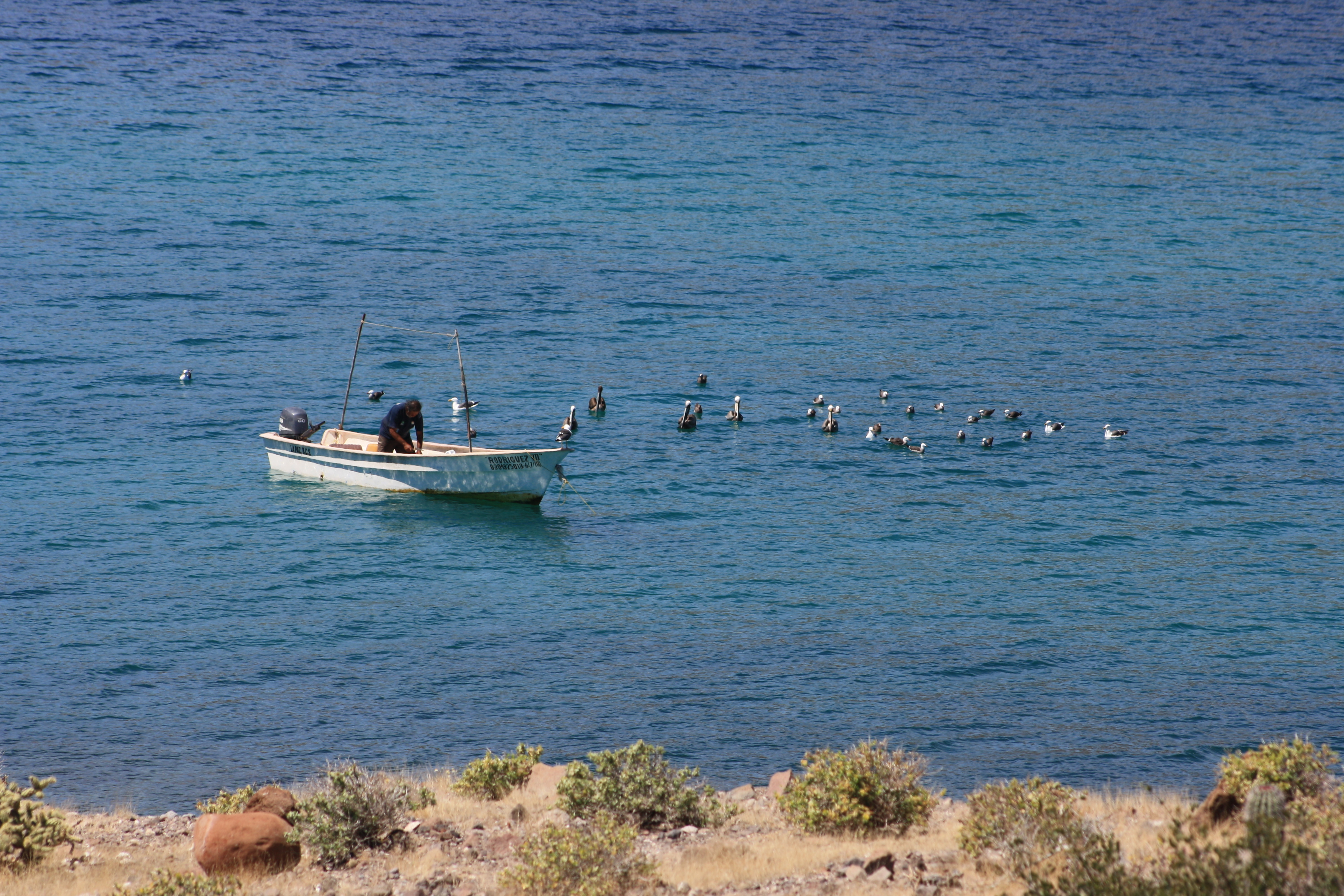
As dusk deepens to where our eyes can’t separate the black volcanic rock from the water, there’s a loud splash. Then, quickly, another. Three more. And then, it’s serial dive-bombing.

“Tough on the fish,” Tom Uno observes.

Then he follows up with his axiom.

He points toward the uniform darkness where the wall and water should be separate. White flashes of foam, like briefly blooming flowers, appear within the blackness, then settle back onto the invisible surface. A flower follows every splash, throughout the strafing.

Splash! Splash ! Splash !

“How do the birds see fish in this darkness?” One of us wonders aloud.

I try to squeeze myself into a pelican’s brain.

I look down at the sea below me as I circle it, hungry, but knowing, somehow, where the fish will be at dusk.

I know also where the surface between air and water is: the Interface. I can feel the pressure on my wings as I approach it. I have learned how to use that pressure to glide over the water, almost touching it.

My meals never swim above that Interface. But this time of day, they congregate just beneath it. I see them as clearly as I see my fellow birds, but the silly little fish, hunting for insects on the surface of that thin Interface, must believe themselves invisible. Not to us superior beings who fly above them, living in three dimensions.

When I was younger, watching the fish teem like this, I got tempted to just plunge my bill in at a random spot – there’s bound to be fish wherever I hit, I figured. But repeated dives and an empty beak taught me that I’d have to focus on just one, and make a precise dive for it.

One like – – – that one.

My eyes lock onto it. I point down and plummet. The pressure against my body rises as I dive. My eyes follow the swimming, meandering meal. My wings adjust my trajectory. When the pressure tells me that I’m approaching the Interface, I fold my wings back, open my beak and plunge through.

In the world where the fish live, I can’t fly, but my feet steer me. The water slows my dive. I stop, then pop up to the air side of Interface. My meal flaps inside my beak.

It’s good to be a pelican.

IMG_4179   It just doesn’t pay to be a fish.

May 28, 2015

BLOG from the Sea of Cortez 4 – Antarctica

Filed under: Uncategorized — cbmosher @ 12:53 pm

Baja California  –  A Different Antarctica

North: The leading edge of the North American Plate scrapes up the sea floor of the Pacific Plate. Mantle rocks, metamorphed, crumple to the surface. The volcanoes of Baja vent the energy. Pink pyroclastic flow welds to the mantle’s serpentine, and gray mud flows down the flanks of the Three Virgins volcanoes to create plains.

IMG_0074

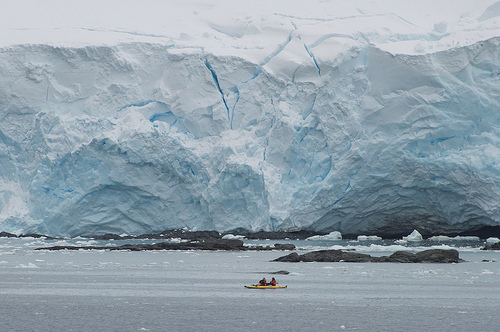
South: Beneath the ice dome – 13,000 feet thick in some places – the rock continent of Antarctica has also spawned living volcanoes. Mount Erebus on Greater Antarctica is still active and steaming, and more recently, an active volcano has been discovered beneath the ice.

DSC_0398

North: Scraggly succulents cling to the rock and sand of Baja – a landscape predominantly barren. There are rare oases of pine in deep valleys where seasonal rains briefly collect. Salt-tolerant mangroves line estuaries where the water evaporates, increasing its salt content. A few animals can survive here: scorpions, snakes, coyotes, the rare mountain lion.

South: This continent, one and a half times the size of the U.S., is all rock. Some of it so laden with minerals that its dust is sterile – not even appropriately called “soil.” On the slightly richer land of the Peninsula, algae, lichen and mosses compose most of the life. There are only two species of vascular plants, neither taller than 1.5 inches.

Animals? Tiny insects only.

North: The roads of Baja, piercing the sand and rock, occasionally cross surprisingly long bridges. No water flows beneath them, but wide swaths of violent erosion snaking down from the Sierra, slithering beneath the bridge, and out into the Sea are evidence of seasonal flash flooding.

IMG_4245

South: The rivers of Antarctica follow a different time frame – they are always present, always flowing, always frozen, always eroding.

12954081914_03620e5cc7

North: Baja, of course, is a desert. Annual rainfall just 8.5 inches at LaPaz.

South: Falling onto the great dome of ice which contains 70 % of the entire fresh water supply of Earth, is less than 5 inches of water a year. As snow, of course. A drier desert than Baja.

Both places are famous for their hostile weather. Katabatic winds sweep down on the Sea of Cortez from between the peaks of the Sierra like the Hashishans of Afghanistan. They attack in the night, blowing hard and swirling, confusing sailors who must pick a protected anchorage. Often, the wind will shift 180o at night, frustrating such attempts.

The katabatic winds of Antarctica, gaining velocity as cold, dense air sinks down from mountain peaks buried by ice to a height of 13,860 feet, can reach 150 m.p.h. by the time they scour the glaciers. These dry, cold hurricane-force winds have stripped entire valleys of their snow, ice and soil.

The most dreaded of Mexican weather – hurricanes (aka Tropical Cyclones) – have never achieved such velocities, but are powerful enough to have shredded marinas and cities – most recently the resort cities of Cabo San Lucas and La Paz.

IMG_0190_2

The hostility of these lands to Life is a dramatic contrast to what teems beneath their water.

North: The Sea of Cortez – dubbed by Costeau as “The World’s Aquarium” has over 5000 species of micro-invertebrates which feed starfish, oysters, crabs, lobsters and those edible “locusts of the sea,” shrimp.

Working up the food chain, 900 species of fish prey on the invertebrates, then become prey in turn to hundreds species of larger fish and sea mammals.

Whales are numerous, including the small Minke, bigger-than-dinosaurs Blue, Moby-Dick Sperm, and acrobatic Humpback.

South: A similar, but much simpler food chain teems within the ocean of highest bio-productivity on the planet. The Southern Ocean is just one twentieth of the world’s seawater, but produces one fifth of all oceans’ carbon life forms. Blooms of phytoplankton feed dense explosions of krill. Not a shrimp, we’re told, but sure looks like that crustacean. It feeds fish, squid, penguins, albatross, petrals, seals and even the Humpback whale. One Humpback may swallow up to a ton of krill a day. In this Ocean, such a level of feeding is sustainable.

The whales of Antarctica includes some species familiar to the Sea of Cortez: Sperm, Minke, Blue, Humpback.

12953887153_ff7cef6dfe

On the frigid seafloor live urchins, stars, worms, and other colorful invertebrates. Different species, but similar life forms to the warm Sea thousands of miles north.

Predators: the Sea of Cortez (aka Gulf of California or the Vermillion Sea) hosts several species of shark, including the Hammerhead. Eight hundred pound Sea lions prowl.

The Southern Ocean is stalking grounds of the Leopard Seal, similar in weight to the Sea Lion. He’s a no-nonsense hunter whose only match is the Killer Whale.

12859663114_059c995f0b

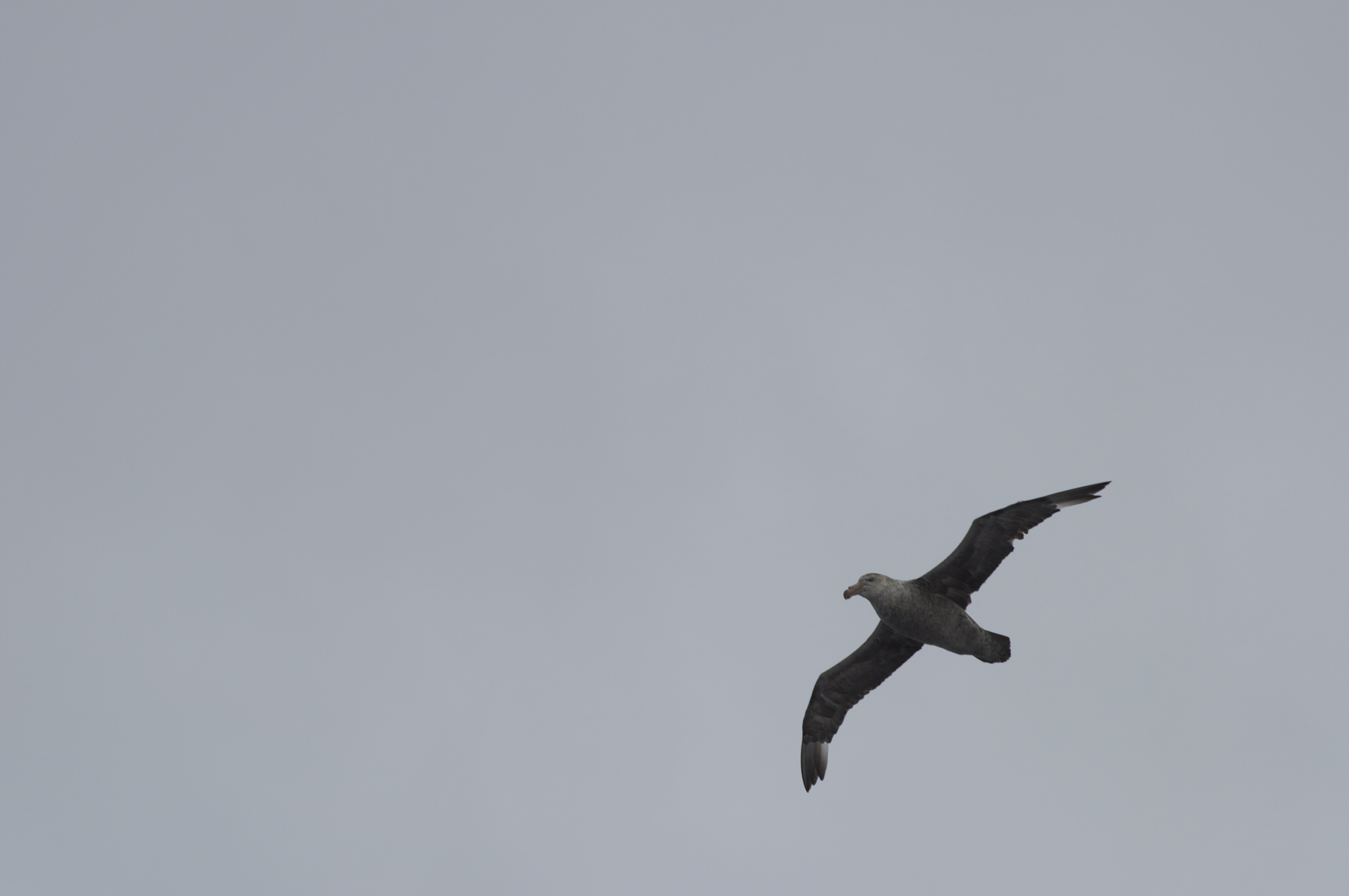
South: Of the Southern Ocean birds, the penguin is best known. Appealingly clumsy and anthropomorphic, it reminds us of one year old children learning to walk. But when it hits the water, it’s a well equipped torpedo. Above, albatross with ten foot wingspans (largest of all birds) and heads the size of a man’s drift and hunt. They are airborne most of their lives, seldom flapping their glider wings

DSC_0259

North: No albatross here, but the pelagic piscivore in this ecological niche is the Frigate Bird. Similar in shape, nearly as large as the albatross, he also soars over open water, seldom flapping his wings and never landing on water.

IMG_3877

Pelicans, though not torpedoes like penguins, may well appear to be a water-going missile – for an instant anyway – to a fish too close to the surface.

These two seas, so different from each other in obvious ways and so distant geographically, are nonetheless both crucial to the planet and intimately connected with each other.

The Aquarium of the World, with its deep underwater canyons plunging to almost two miles, is one of the world’s richest fisheries. It can feed a large portion of the people living near it, if we use it wisely, or it can collapse if we continue to abuse it.

The Southern Ocean, and the massive Ice Dome of the continent the ocean surrounds (ironically shaped like a Sea of Cortez stingray), maintain both the planet’s balance of heat and the circulation of all the oceans, including Baja’s Sea.

The albedo of the Ice Dome reflects back 80% of solar radiation, preventing uncontrolled heating, while the very cold, very dense Antarctic Bottom Water, plummeting to the sea floor, drives the circulation of the ocean currents as if it were the planet’s heart.

The Southern Ocean, unlike the Sea of Cortez, is the most pristine of all seas. Protecting its 10,000 species and its role in circulation of the oceans may depend on how well we learn the lessons from the warm Sea to the north.

(photos by me, Sarah Mosher, and Tom Marlow; see also http://ketch-22.com/ )
« Newer PostsOlder Posts »

Blog at WordPress.com.