Sex, Drugs, and Public Health

June 2, 2015

BLOG from the Sea of Cortez 5

Filed under: Uncategorized — cbmosher @ 11:20 am

It Doesn’t Pay to be a Fish

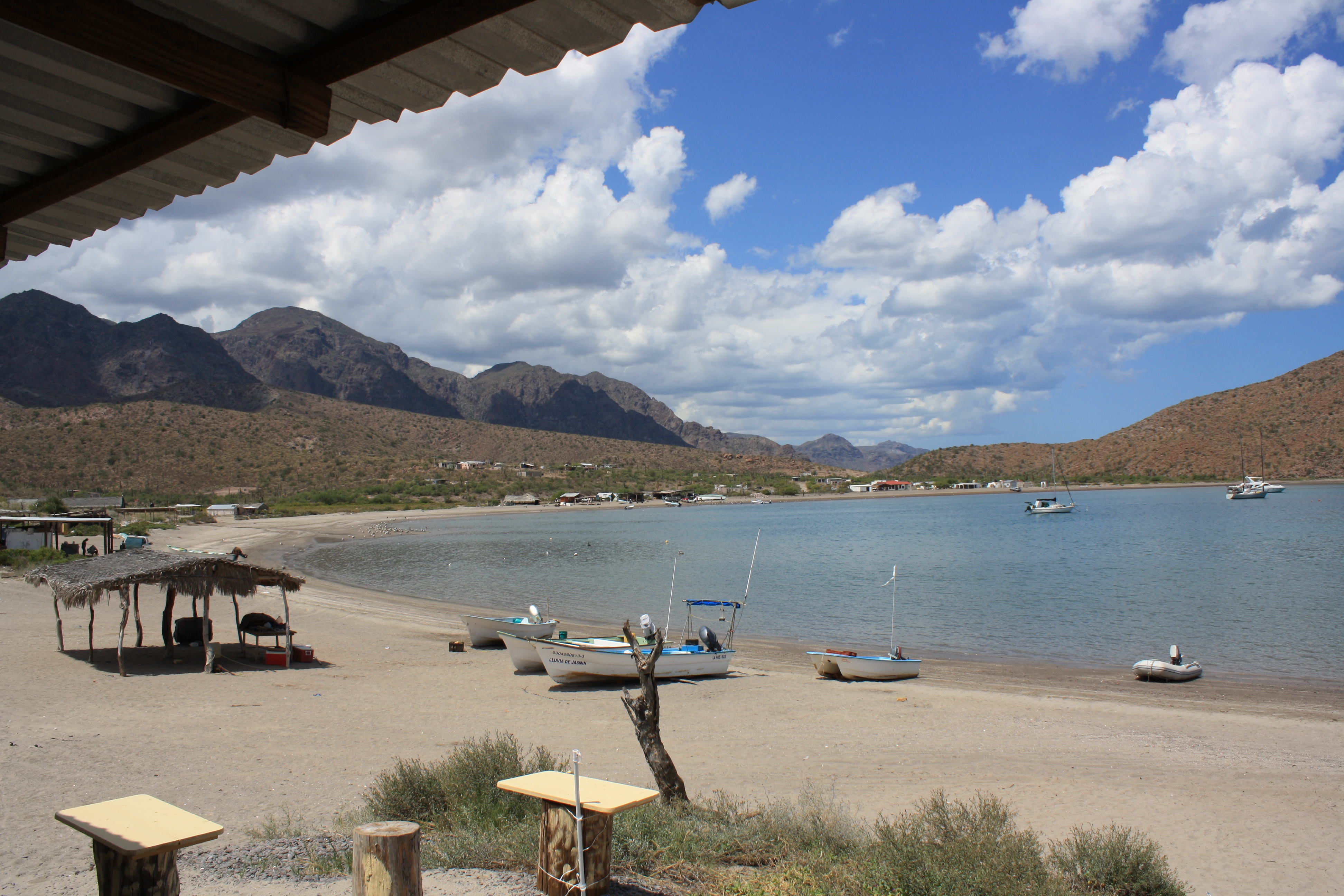
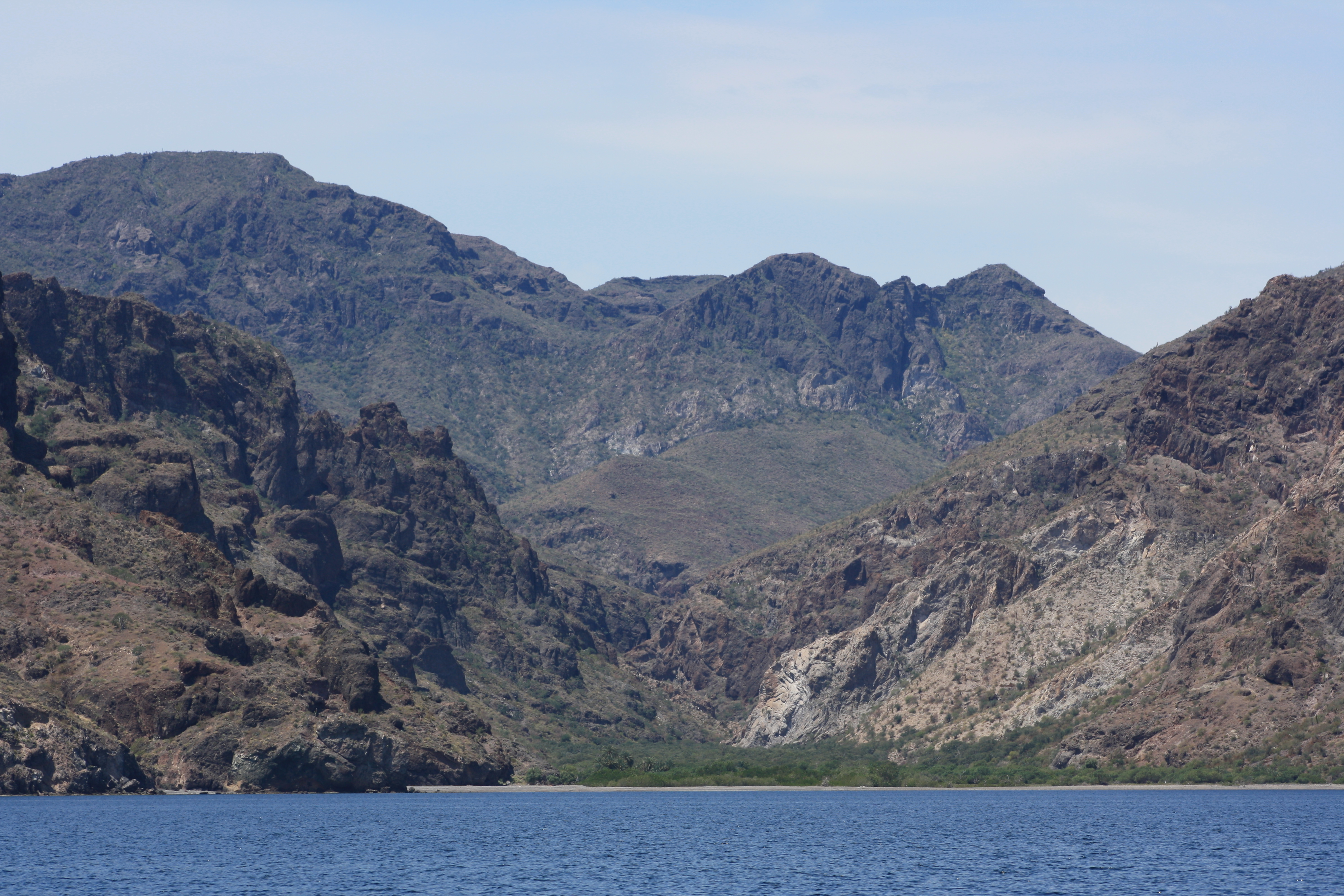
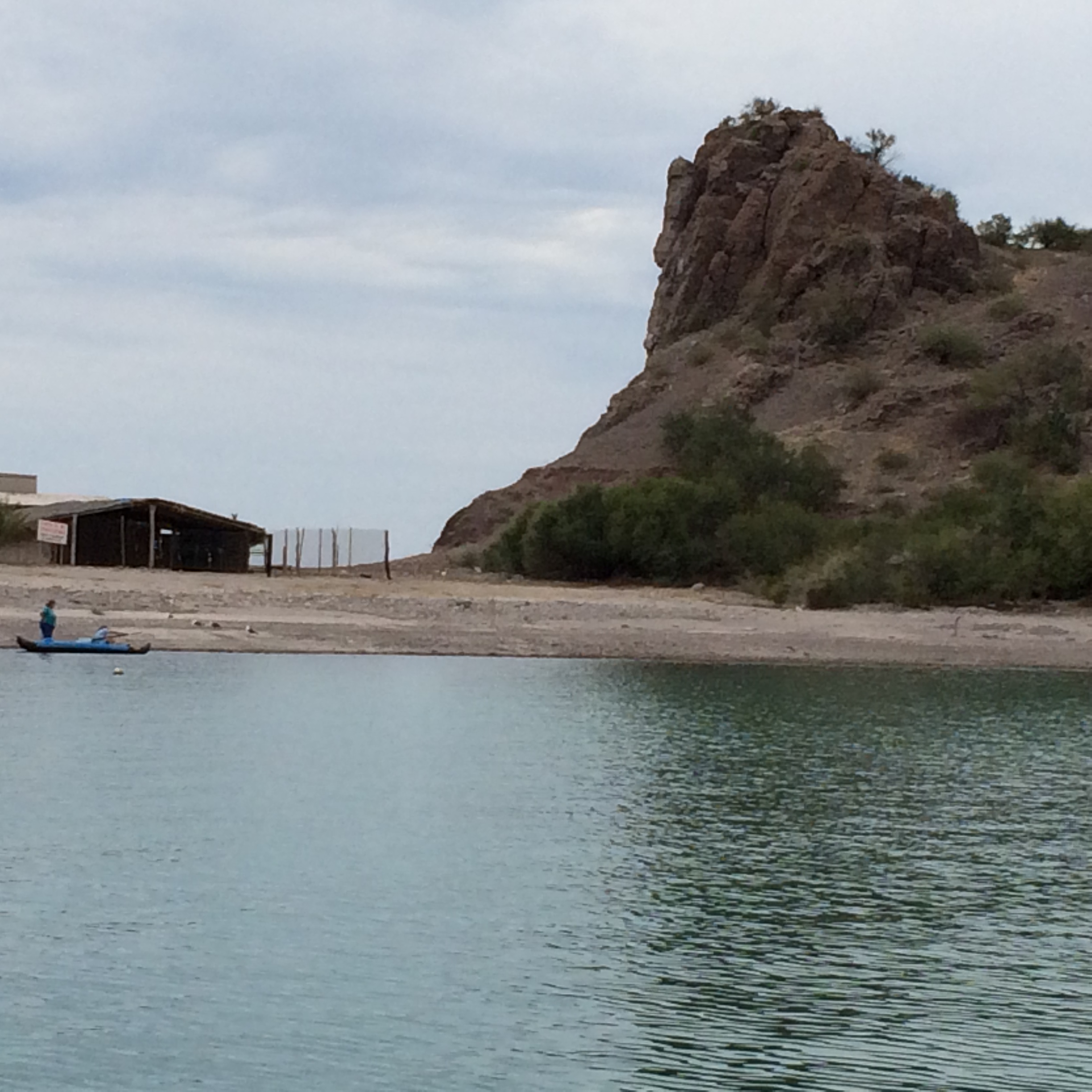
A narrow opening to the west brings us into the cove. To the north and south, Caleta Partida is steep cliffs of volcanic rock and clinging cactus plunging straight into the sea. A narrow little beach sparkles at the western side.

IMG_4383

Mexican fishermen have created a fish camp on a strip up against the sheer rock walls. Their panga sits near the narrow beach, awaiting launch at 4 A.M.
IMG_3879

“Sometimes, in the dark,” Tom Uno tells us, “the pangas turn the sea neon in their wake.”

“Phosphorescence,” I nod. I’ve seen it.

The sea turns electric when disturbed by prop or hull. Crossing the Pacific in my brother’s sailboat, our wake glowed with an iridescent green. In the Southern Ocean, our icebreaker ignited the water into a thousand July 4th sparklers. The red tide in Malibu was a psychedelic light show orchestrated by our legs.

“And sometimes,” Tom Uno adds, “when a dolphin swims past at night, its entire body glows with the colors of that phosphorescence. In the blackness,” – his voice drops to a whisper as if in church – “this glowing form swims by, like a shell of moving electricity with a black, empty shape inside – the perfectly shaped form of the invisible dolphin.”

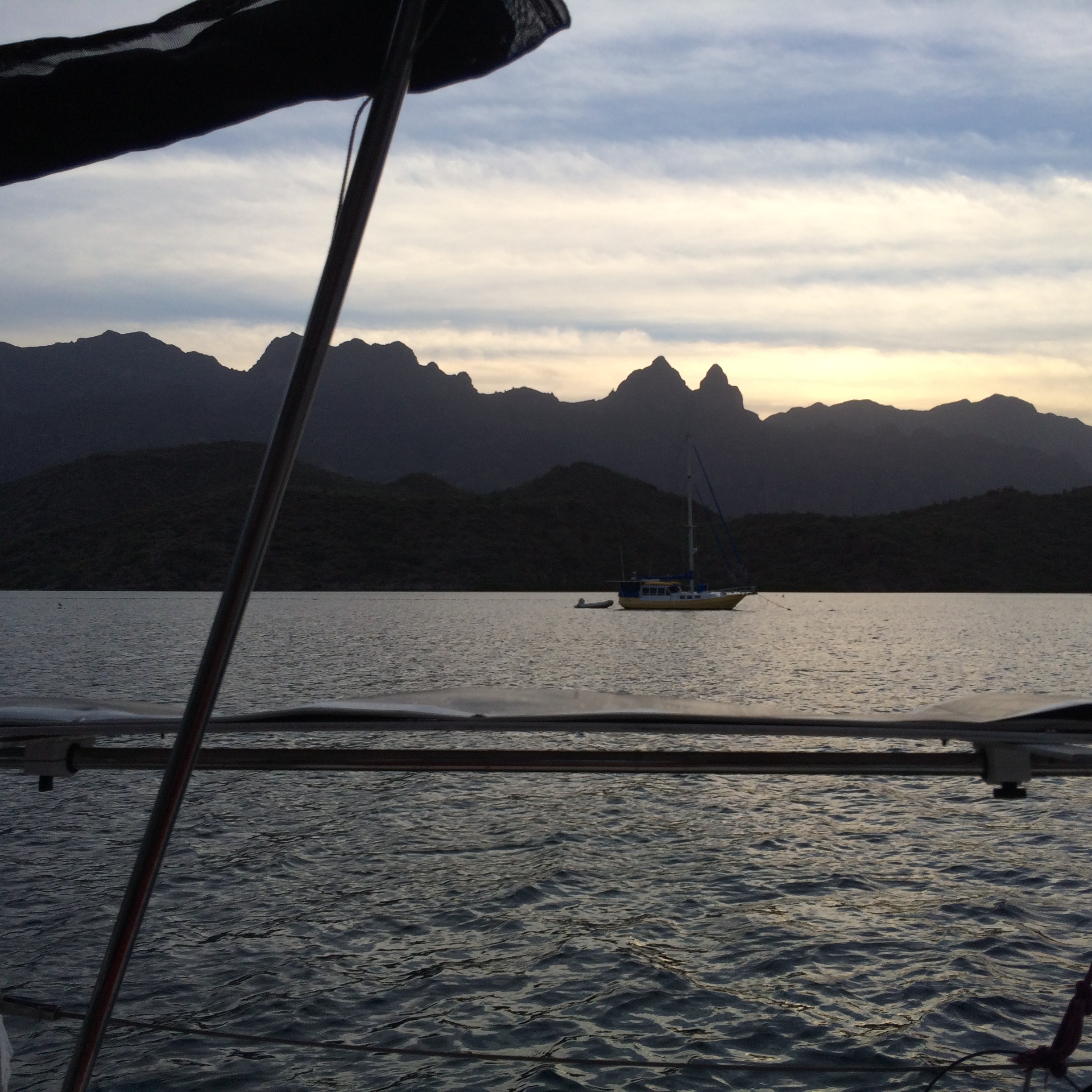
Anchored within 100 yards of the northern wall, we do dinner and margaritas as the sun and horizon team up to put on such a magnificent display that we put down our drinks and applaud. Pink Floyd provides the soundtrack from below deck.

IMG_4386

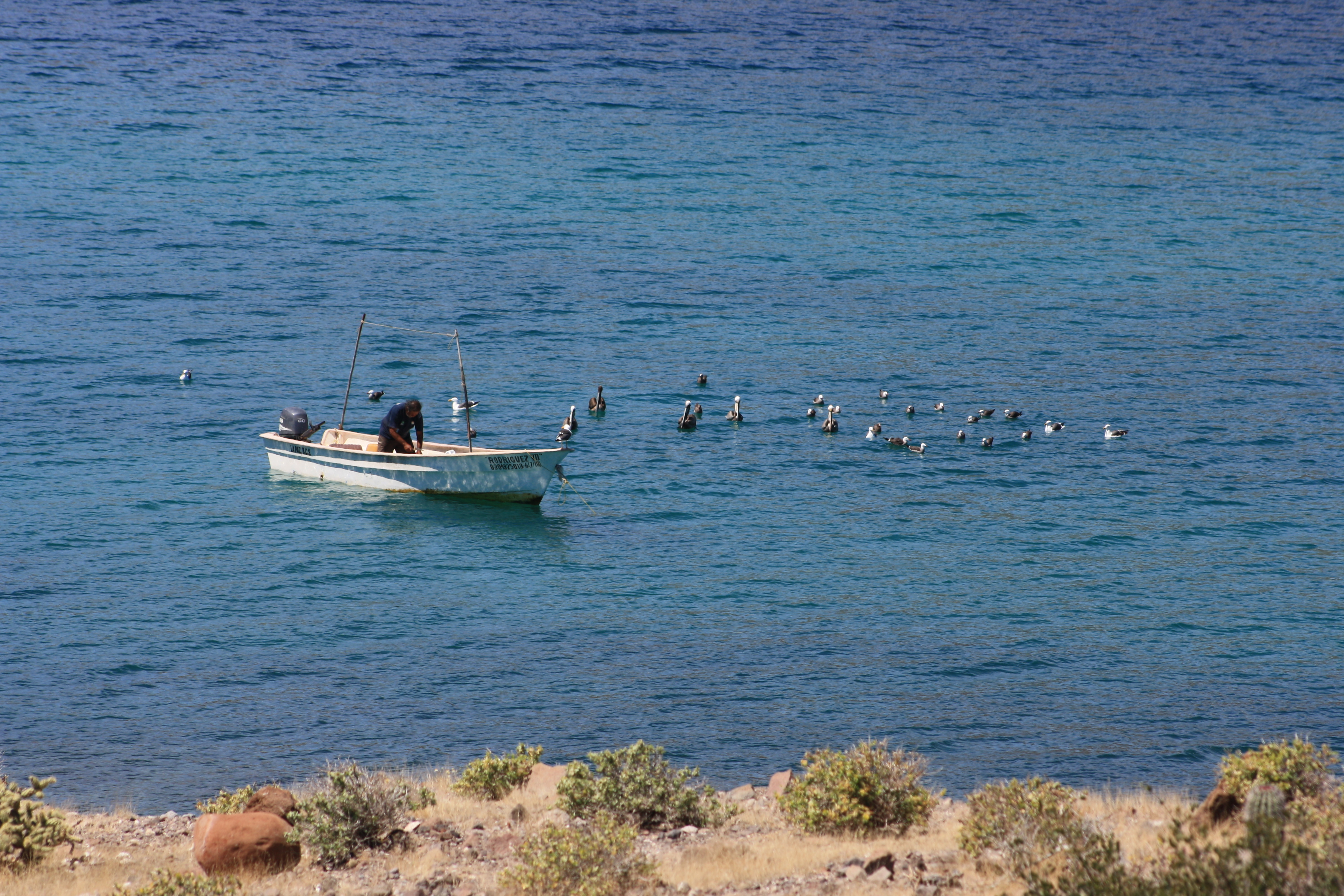
As dusk deepens to where our eyes can’t separate the black volcanic rock from the water, there’s a loud splash. Then, quickly, another. Three more. And then, it’s serial dive-bombing.

“Tough on the fish,” Tom Uno observes.

Then he follows up with his axiom.

He points toward the uniform darkness where the wall and water should be separate. White flashes of foam, like briefly blooming flowers, appear within the blackness, then settle back onto the invisible surface. A flower follows every splash, throughout the strafing.

Splash! Splash ! Splash !

“How do the birds see fish in this darkness?” One of us wonders aloud.

I try to squeeze myself into a pelican’s brain.

I look down at the sea below me as I circle it, hungry, but knowing, somehow, where the fish will be at dusk.

I know also where the surface between air and water is: the Interface. I can feel the pressure on my wings as I approach it. I have learned how to use that pressure to glide over the water, almost touching it.

My meals never swim above that Interface. But this time of day, they congregate just beneath it. I see them as clearly as I see my fellow birds, but the silly little fish, hunting for insects on the surface of that thin Interface, must believe themselves invisible. Not to us superior beings who fly above them, living in three dimensions.

When I was younger, watching the fish teem like this, I got tempted to just plunge my bill in at a random spot – there’s bound to be fish wherever I hit, I figured. But repeated dives and an empty beak taught me that I’d have to focus on just one, and make a precise dive for it.

One like – – – that one.

My eyes lock onto it. I point down and plummet. The pressure against my body rises as I dive. My eyes follow the swimming, meandering meal. My wings adjust my trajectory. When the pressure tells me that I’m approaching the Interface, I fold my wings back, open my beak and plunge through.

In the world where the fish live, I can’t fly, but my feet steer me. The water slows my dive. I stop, then pop up to the air side of Interface. My meal flaps inside my beak.

It’s good to be a pelican.

IMG_4179   It just doesn’t pay to be a fish.

May 28, 2015

BLOG from the Sea of Cortez 4 – Antarctica

Filed under: Uncategorized — cbmosher @ 12:53 pm

Baja California  –  A Different Antarctica

North: The leading edge of the North American Plate scrapes up the sea floor of the Pacific Plate. Mantle rocks, metamorphed, crumple to the surface. The volcanoes of Baja vent the energy. Pink pyroclastic flow welds to the mantle’s serpentine, and gray mud flows down the flanks of the Three Virgins volcanoes to create plains.

IMG_0074

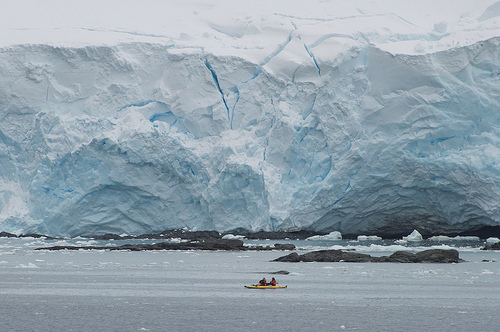
South: Beneath the ice dome – 13,000 feet thick in some places – the rock continent of Antarctica has also spawned living volcanoes. Mount Erebus on Greater Antarctica is still active and steaming, and more recently, an active volcano has been discovered beneath the ice.

DSC_0398

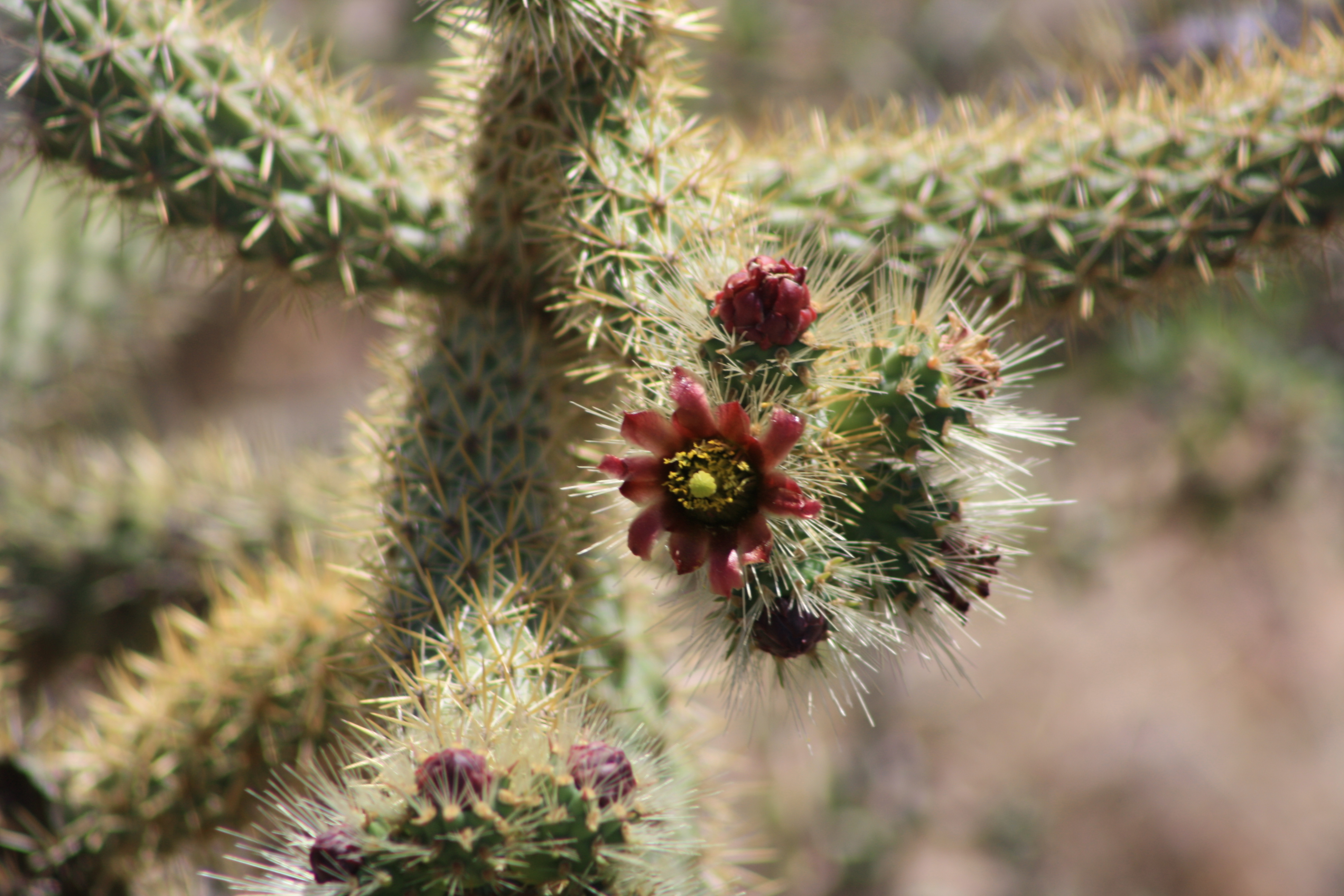
North: Scraggly succulents cling to the rock and sand of Baja – a landscape predominantly barren. There are rare oases of pine in deep valleys where seasonal rains briefly collect. Salt-tolerant mangroves line estuaries where the water evaporates, increasing its salt content. A few animals can survive here: scorpions, snakes, coyotes, the rare mountain lion.

South: This continent, one and a half times the size of the U.S., is all rock. Some of it so laden with minerals that its dust is sterile – not even appropriately called “soil.” On the slightly richer land of the Peninsula, algae, lichen and mosses compose most of the life. There are only two species of vascular plants, neither taller than 1.5 inches.

Animals? Tiny insects only.

North: The roads of Baja, piercing the sand and rock, occasionally cross surprisingly long bridges. No water flows beneath them, but wide swaths of violent erosion snaking down from the Sierra, slithering beneath the bridge, and out into the Sea are evidence of seasonal flash flooding.

IMG_4245

South: The rivers of Antarctica follow a different time frame – they are always present, always flowing, always frozen, always eroding.

12954081914_03620e5cc7

North: Baja, of course, is a desert. Annual rainfall just 8.5 inches at LaPaz.

South: Falling onto the great dome of ice which contains 70 % of the entire fresh water supply of Earth, is less than 5 inches of water a year. As snow, of course. A drier desert than Baja.

Both places are famous for their hostile weather. Katabatic winds sweep down on the Sea of Cortez from between the peaks of the Sierra like the Hashishans of Afghanistan. They attack in the night, blowing hard and swirling, confusing sailors who must pick a protected anchorage. Often, the wind will shift 180o at night, frustrating such attempts.

The katabatic winds of Antarctica, gaining velocity as cold, dense air sinks down from mountain peaks buried by ice to a height of 13,860 feet, can reach 150 m.p.h. by the time they scour the glaciers. These dry, cold hurricane-force winds have stripped entire valleys of their snow, ice and soil.

The most dreaded of Mexican weather – hurricanes (aka Tropical Cyclones) – have never achieved such velocities, but are powerful enough to have shredded marinas and cities – most recently the resort cities of Cabo San Lucas and La Paz.

IMG_0190_2

The hostility of these lands to Life is a dramatic contrast to what teems beneath their water.

North: The Sea of Cortez – dubbed by Costeau as “The World’s Aquarium” has over 5000 species of micro-invertebrates which feed starfish, oysters, crabs, lobsters and those edible “locusts of the sea,” shrimp.

Working up the food chain, 900 species of fish prey on the invertebrates, then become prey in turn to hundreds species of larger fish and sea mammals.

Whales are numerous, including the small Minke, bigger-than-dinosaurs Blue, Moby-Dick Sperm, and acrobatic Humpback.

South: A similar, but much simpler food chain teems within the ocean of highest bio-productivity on the planet. The Southern Ocean is just one twentieth of the world’s seawater, but produces one fifth of all oceans’ carbon life forms. Blooms of phytoplankton feed dense explosions of krill. Not a shrimp, we’re told, but sure looks like that crustacean. It feeds fish, squid, penguins, albatross, petrals, seals and even the Humpback whale. One Humpback may swallow up to a ton of krill a day. In this Ocean, such a level of feeding is sustainable.

The whales of Antarctica includes some species familiar to the Sea of Cortez: Sperm, Minke, Blue, Humpback.

12953887153_ff7cef6dfe

On the frigid seafloor live urchins, stars, worms, and other colorful invertebrates. Different species, but similar life forms to the warm Sea thousands of miles north.

Predators: the Sea of Cortez (aka Gulf of California or the Vermillion Sea) hosts several species of shark, including the Hammerhead. Eight hundred pound Sea lions prowl.

The Southern Ocean is stalking grounds of the Leopard Seal, similar in weight to the Sea Lion. He’s a no-nonsense hunter whose only match is the Killer Whale.

12859663114_059c995f0b

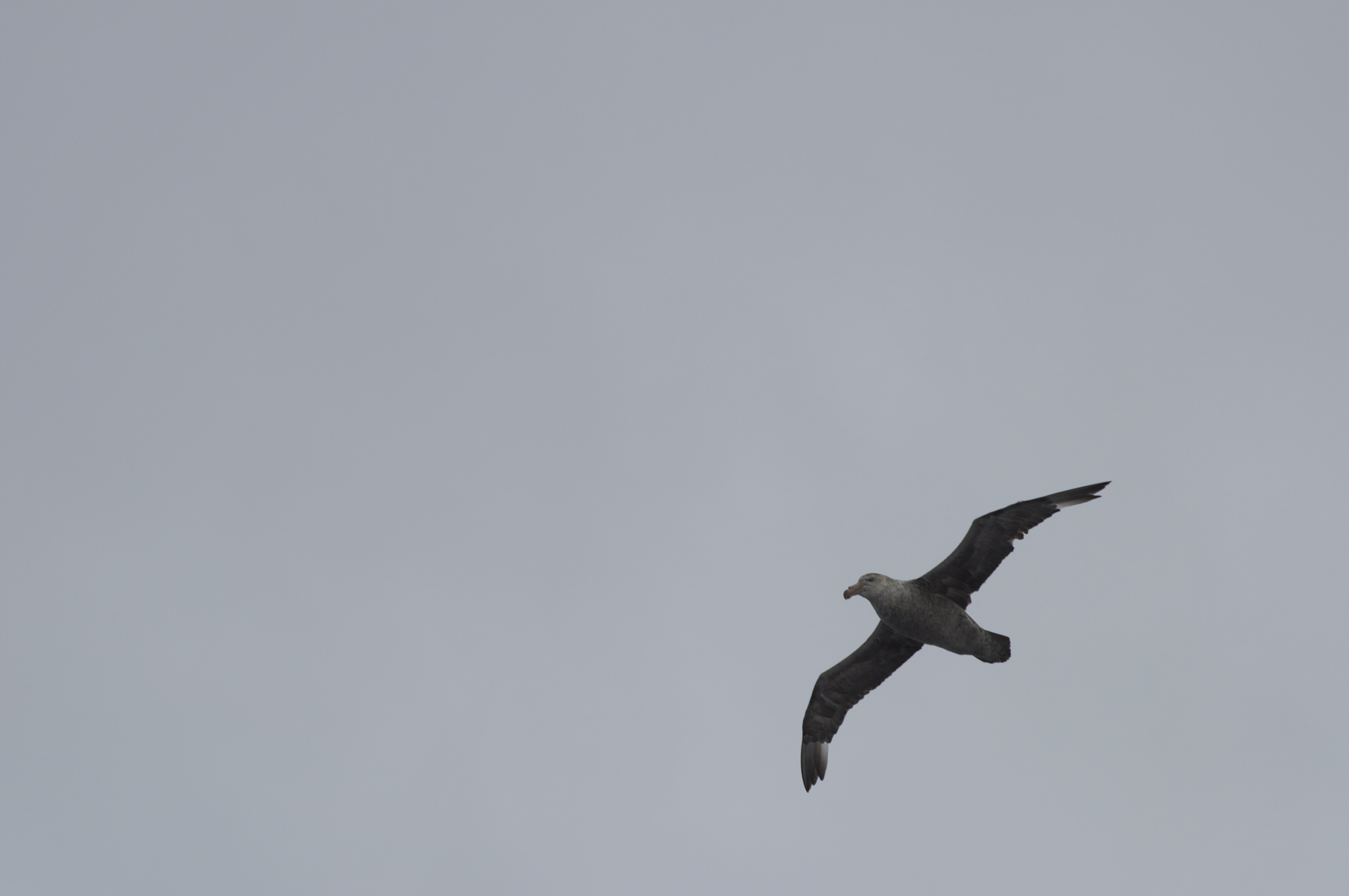
South: Of the Southern Ocean birds, the penguin is best known. Appealingly clumsy and anthropomorphic, it reminds us of one year old children learning to walk. But when it hits the water, it’s a well equipped torpedo. Above, albatross with ten foot wingspans (largest of all birds) and heads the size of a man’s drift and hunt. They are airborne most of their lives, seldom flapping their glider wings

DSC_0259

North: No albatross here, but the pelagic piscivore in this ecological niche is the Frigate Bird. Similar in shape, nearly as large as the albatross, he also soars over open water, seldom flapping his wings and never landing on water.

IMG_3877

Pelicans, though not torpedoes like penguins, may well appear to be a water-going missile – for an instant anyway – to a fish too close to the surface.

These two seas, so different from each other in obvious ways and so distant geographically, are nonetheless both crucial to the planet and intimately connected with each other.

The Aquarium of the World, with its deep underwater canyons plunging to almost two miles, is one of the world’s richest fisheries. It can feed a large portion of the people living near it, if we use it wisely, or it can collapse if we continue to abuse it.

The Southern Ocean, and the massive Ice Dome of the continent the ocean surrounds (ironically shaped like a Sea of Cortez stingray), maintain both the planet’s balance of heat and the circulation of all the oceans, including Baja’s Sea.

The albedo of the Ice Dome reflects back 80% of solar radiation, preventing uncontrolled heating, while the very cold, very dense Antarctic Bottom Water, plummeting to the sea floor, drives the circulation of the ocean currents as if it were the planet’s heart.

The Southern Ocean, unlike the Sea of Cortez, is the most pristine of all seas. Protecting its 10,000 species and its role in circulation of the oceans may depend on how well we learn the lessons from the warm Sea to the north.

(photos by me, Sarah Mosher, and Tom Marlow; see also http://ketch-22.com/ )

May 19, 2015

BLOG from the Sea of Cortez 3

Filed under: Uncategorized — cbmosher @ 7:58 pm

DEAD  SEA ?

“Aquarium of the World”: Jacques Cousteau’s term for this Sea.

For two days, as we sail south from Loreto to Agua Verde, to Timbabiche, now on toward Bahia Evaristo, Tom Uno has towed a fishing line and lure.

“I’ve never gone this long without catching a fish in this sea,” he laments.

I look at the water’s surface, but I envision the world beneath. 950 species of fish, 10% of which are found nowhere else in the world; the rays, who swim in geometrically magnificent schools and break the surface to fly over the water, wings outstretched,  raining diamonds; 120 species of sea mammals including multiple whale species, sea lions, dolphins and one smallish, unique creature – the Vaquita.

This latter, whose name means “little Cow,” is vanishing. They were rare to begin with – only about 500 in 1997, but are down to an estimated 150 individuals now. These accidental victims of the nets of large fishing trawlers are the marine canary in the mine that is the World’s Aquarium. Marine biologists tell us that 85% of those fish species are being harvested beyond sustainability, that several of the sea mammals are nearing extinction, that the turtles are nearly gone and sharks are dying in large numbers because of the soup which demands their fins. And Marlin still hang from thick-timbered gallows at the Cabo pier, the prize of “Sport” fisherman.

On the land we sail past, the vegetation is sparse, thorny, and dry.

“You’d think those plants would just give up and relinquish their space to the rocks,” I muse.

Tom Dos offers his favorite axiom:

“Natural systems will do whatever they can, for as long as they can, until they can’t do it anymore.”

“You mean, these cacti?”

“As long as they can survive and reproduce, they will. They’re a Natural system.”

IMG_3865
“Including the Pacific plate crunching itself up into the Mountains of the Giantess?” I test his axiom further.

“Nothing’s stopped it yet.”

I don’t care about the trawlers’ profits, but how, I wonder as we sail into Bahia Evaristo, are the 60,000 Mexicans who depend on the sea for their lives, going to make it?

Here, there are four or five other boats. We anchor, then dinghy over to snorkel.

It’s a wonderful flashback to visits I made to this Sea in 1972 and 1988 to sprawl out on the water, facedown, breathing thru a snorkel. I’d forgotten the continuous crackle and hiss of the ocean in your ears; the taste of salt in your mouth. Beneath you, flows the submerged shoreline of sedimentary rocks welded together by old lava flow.

But there are few fish. A translucent needle fish, maybe eight inches long and half inch thick; small schools of yellow and black striped three inchers; an occasional lonely clown-fish. Some of the rocks have pale corral attached in the shapes of an underwater cactus or a human brain.

In the late afternoon, our radio squawks: “Attention boats in Evaristo Bay. The best food is now fresh and waiting for you at Lupe Sierra’s restaurant.”

Her voice is as Gringo as they come.

The family structure at the restaurant mirrors that of Agua Verde: husband fishes; wife cooks; kids play.
IMG_3775

A blonde American woman drifts between the outdoor tables and the kitchen inside, mixing familiarly with the Mexican family.

The menu is in English, and apparently never changes.

IMG_3780
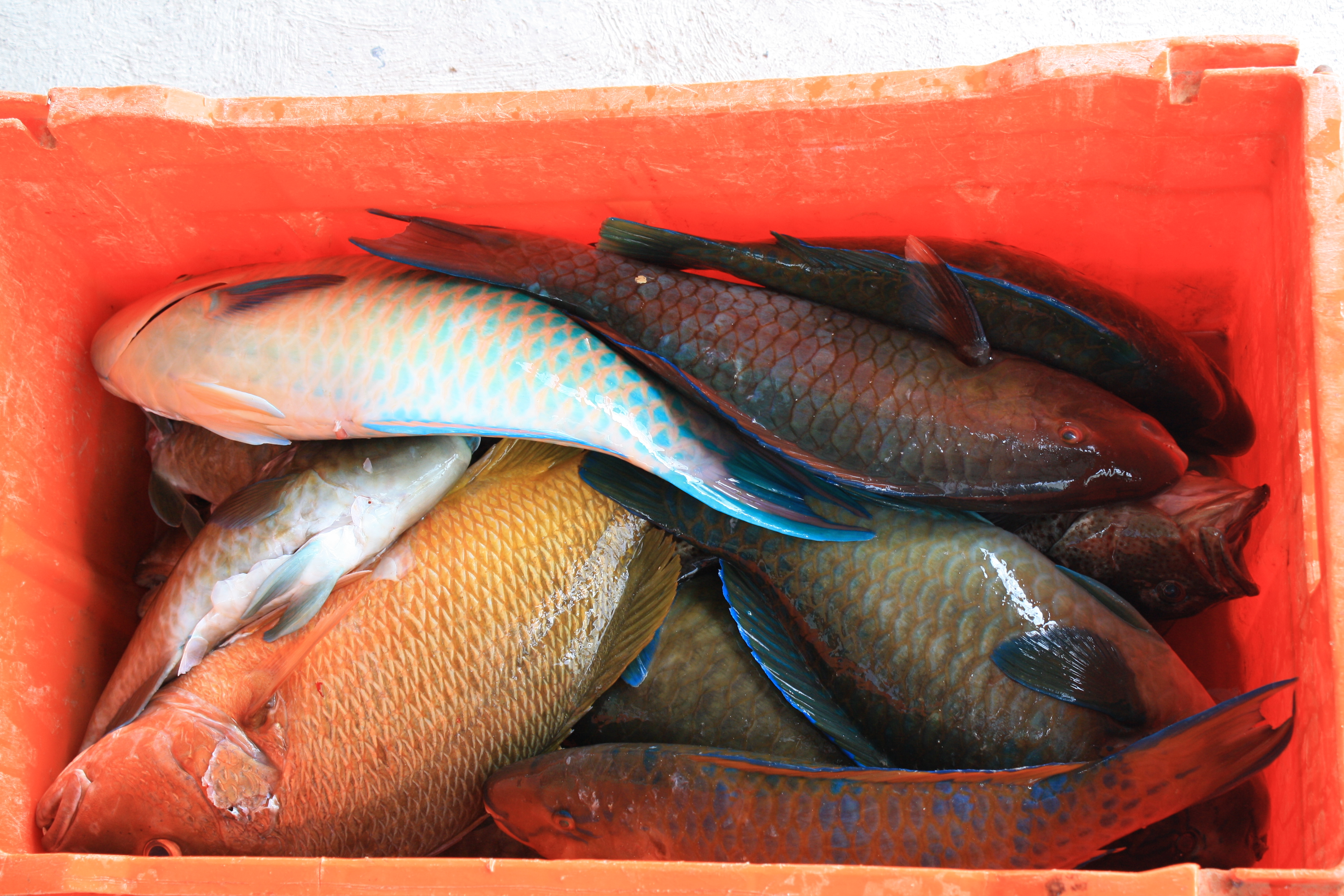
The fisherman tells me that, yes, fishing is harder than it was in years past. And catches are smaller. But, he assures us, he has fresh Pargo (snapper) and excuses himself to cook it.

His son, home from college in La Paz, tells us that he’s majoring in Eco-tourism, and plans to develop such a program here in Evaristo, with his girlfriend. No, he won’t become a fisherman.

The fish tacos are yummy, the view takes in the handful of sailboats and many panga fishing boats. We walk the beach, then the desert hills flanking the restaurant.
IMG_3770

We weave among the cacti, the myriad bleached bones of sea birds – hollow, delicate, gracefully curved – and the basura (garbage) to a point overlooking the sea, adjacent to the lighthouse.

“They’re fishing it to death,” one of us observes with sadness, looking at the turquoise jewel below the cliff.

“They know it, too. “If they left the sea alone for a while, it might recover.”

“They’ll do what they do until they can’t do it anymore.”

IMG_3782
There is a small de-salination plant across the bay. A gift from some international agency, maintained by Public Works from La Paz.

Fresh water, I recall my research on the deteriorating ecology of the Sea. The natural infusion of fresh water into the northern reach of the Sea no longer exists. The Colorado river dried up – somewhere to the north – in 1999.

“Tourism in place of fishing,” Tom Uno ruminates. “They tried that. Built a lot of hotels for the Gringo trade, including the sailboats. Then the Recession of 2008 hit. Lots of empty hotels, still. Not many Americans buying boats.”

“Then what?”

“Canadians. More and more boats from B.C. and other provinces came down.”

“Like an invasive species into an emptying sea?” I analogize.

The sailboat anchored closest to the beach is painted “Willful Simplicity.”

“Lots of rogue males live aboard their boats,” Tom Dos educates me. Not this one, however. The blonde woman of radio and restaurant fame lives there with her husband.

In the restaurant, we sit sipping fluids, allowing the family to enjoy their final meal of Semana Sancta together. Son and his novia will return to La Paz afterward, and Evaristo will sink back into the torpor of a small fishing village of a dozen or so homes.

The Gringo owner of the permanently moored sloop strikes up with us while his wife promotes the restaurant to all the boats listening on local net.

“We came down five years ago. Sold everything in the Bay Area, and we live here now.”

“What do you do?”

He takes another sip of beer. “Oh, sometimes we cruise. Occasionally, fish. Mostly relax.”

For five years? the three of us each think.

“How long do you figure to stay here?”

Another sip of beer. Around one of the ankles of his bare feet he wears a bracelet of woven strings, like the other around his wrist. His T-shirt reads “Old Guys Yacht Club”. Swim trunks finish what obviously, is his daily dress.

“Evaristo is our home,” he smiles.

My eyes shoot again to the desert surrounding us. To the left, a few crude houses and beached panga fishing boats. To the right, three more crude houses and two pangas. We sit on the porch of the only restaurant and store in Evaristo. The sea laps, oblivious to us.

“We just do what we do,” he clarifies, finishing his beer, then he rises from the chair to get another.

For as long as you can do it – – – I finish the axiom silently.

IMG_3842

(photos by Tom Marlow; see also http://ketch-22.com/ )

May 16, 2015

BLOG from the Sea of Cortez 2

Filed under: Uncategorized — cbmosher @ 12:50 pm

THE SAINT’S FAULT

I’m worried about our keel as we sail south, with the rocky coast of the Baja Peninsula no more than a few hundred yards off our starboard beam. Will some hidden rock tear out our bottom?

 
IMG_4301

 
“We’re sailing right over the San Andreas fault,” Tom Uno explains.

Then, looking at the mountain range – the Sierra de la Giganta – it’s clear how the leading edge of the Pacific Plate in crumpling up and over the subducting North American Plate of the Mexican mainland, 150 miles to the east. Peaks up to seven thousand feet loom to define the “Mountains of the Giantess,” then drop precipitously into a canyon, over which we float. I can visualize the rock above the water continuing its plunge to profound depths below us.

We troll a fishing line behind us, hoping for a non-spaghetti dinner, but nobody bites by the time we enter the bay known for the deserted “Casa Grande” of Timbabiche. The bay is an open crescent, exposed from the NNE to the SSE.

“Most winds come from the southwest,” Tom Uno explains. “Katabatic winds of cool Pacific air roaring down from the mountains. Coromuels, they’re called. We need to anchor where we’ll avoid the fetch and where, if we drag, the boat won’t hit a rock wall.”

As with Agua Verde, there’s plenty of rock wall flanking a small beach within this bay. Captain Tom chooses his location and depth, then Tom Dos and I control the gypsy windlass, letting out anchor chain. In fifteen feet of water, we let out 90 feet of steel chain as a breeze blows us back from the anchor. After it digs into the bottom, we sit a while, watching landmarks to be certain we aren’t dragging the anchor.

 
IMG_4077

Satisfied, we dinghy to the beach to explore it and the estuary behind it. Except for a paint-splattered, well worn fishing panga, beached on the sand, we’re the only ones there. Telltale fan-shaped disturbances on the sand at water’s edge reveal where blue-legged crabs have burrowed. Tom Dos digs one out for a photo. For a small animal, it makes a lot of noise, clacking its mouthparts in anger, flailing its pinchers in search of a piece of Tom.

IMG_4237

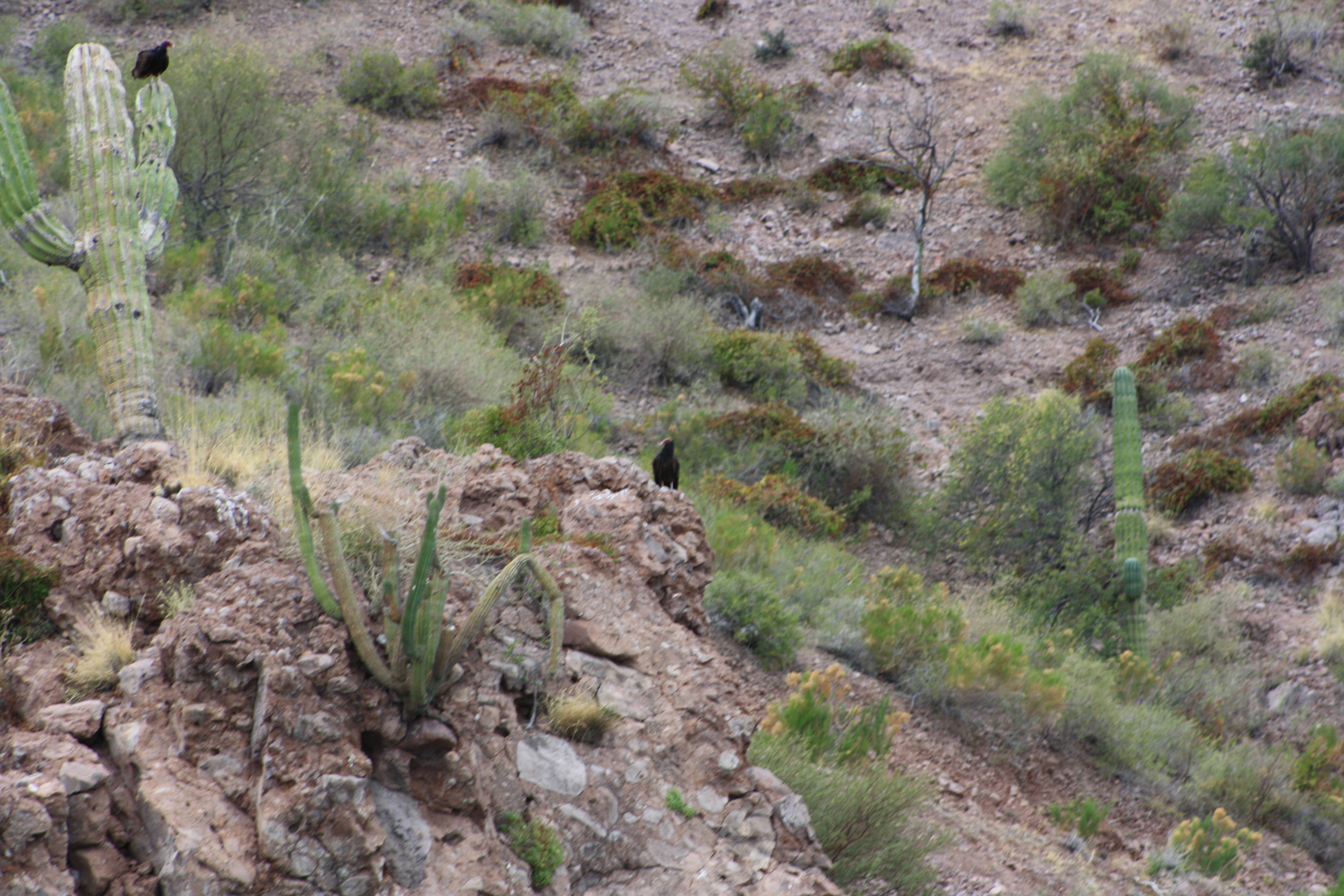
Beyond the beach, among the dry, twisted, thorny bushes, someone watches us from his perch.

IMG_4255

“He’s eyeing the crab, right?” I ask.

“Not ready to be recycled yet?” one of the Toms smirks. “When was your last confession?”

The strip of green flanking a brackish estuary provides food for a different bird.

 
IMG_4265

At dusk, the wind begins its skid down the Giantess’ peaks, as predicted. We eat, sip libations, and, as if mimicking the Coromuel’s action, slide into philosophical stuff:

“This reminds me of the sessions we’d have in college, debating the Meaning of Life.”

“I went to a Catholic college. We weren’t allowed to discuss such things unless the archbishop had approved the answer in advance.”

“We all went to Catholic colleges. Yours wasn’t a Jesuit college, obviously. But you were allowed to drink, I assume.”

“Oh, yeah. Drink. And drive.”

“Any accidents?”

And we all three recalled our near-fatals.

“Here’s a question: how did we survive those teen years?”

Then it’s time for a trip to the head. So I take the plastic bucket with a line attached, climb up the companionway, drop the bucket overboard to fill it, haul it back, then carry it down to the head so I can flush when finished. Repeat the process to supply the next flush.

My bunk is directly over the fuel tank, so I fall asleep inhaling diesel vapors. They must effect my dreams, because I hear Sirens wailing like gusting winds topside, homicidal mermaids plucking lines against the masts, and rabid seagulls regurgitating wet fish parts all over the deck.

Not hallucinations. The coromuel tears at our flags, violently slaps lines, and stretches the anchor chain into a rigid cable as the wind tries to rip us free. Rain splatters all over us for a couple of hours as the wind whips the boat in an arc around the buried anchor. Fearing “anchor drag,” Tom Uno sets the GPS to alarm if we move from our position beyond than the arc.
The waves, however, are minimal – not much fetch – so we don’t roll or pitch or yaw. Back to sleep.

In the morning, the drying of soaked cushions begun, the flushing by bucket finished, and the first coffee swallowed, we prepare to sail out over Saint Andreas’ canyon again.

“What did keep us alive thru those Altar Boy years?”

“Luck,” one of us figures. “Just luck.”

“So how do we pay back Society for that gift?”

“Well, we’re all 70, or nearly so in Tom Uno’s case. One of us must surely have discovered the Meaning of Life by now. Maybe we should share that with today’s college kids.”

“Something to think about,” Captain Tom Uno allows. “Time to weigh anchor.”

IMG_4303


(photos by Tom Marlow)

May 12, 2015

BLOG from the Sea of Cortez I

Filed under: Uncategorized — cbmosher @ 6:45 am


NAMES


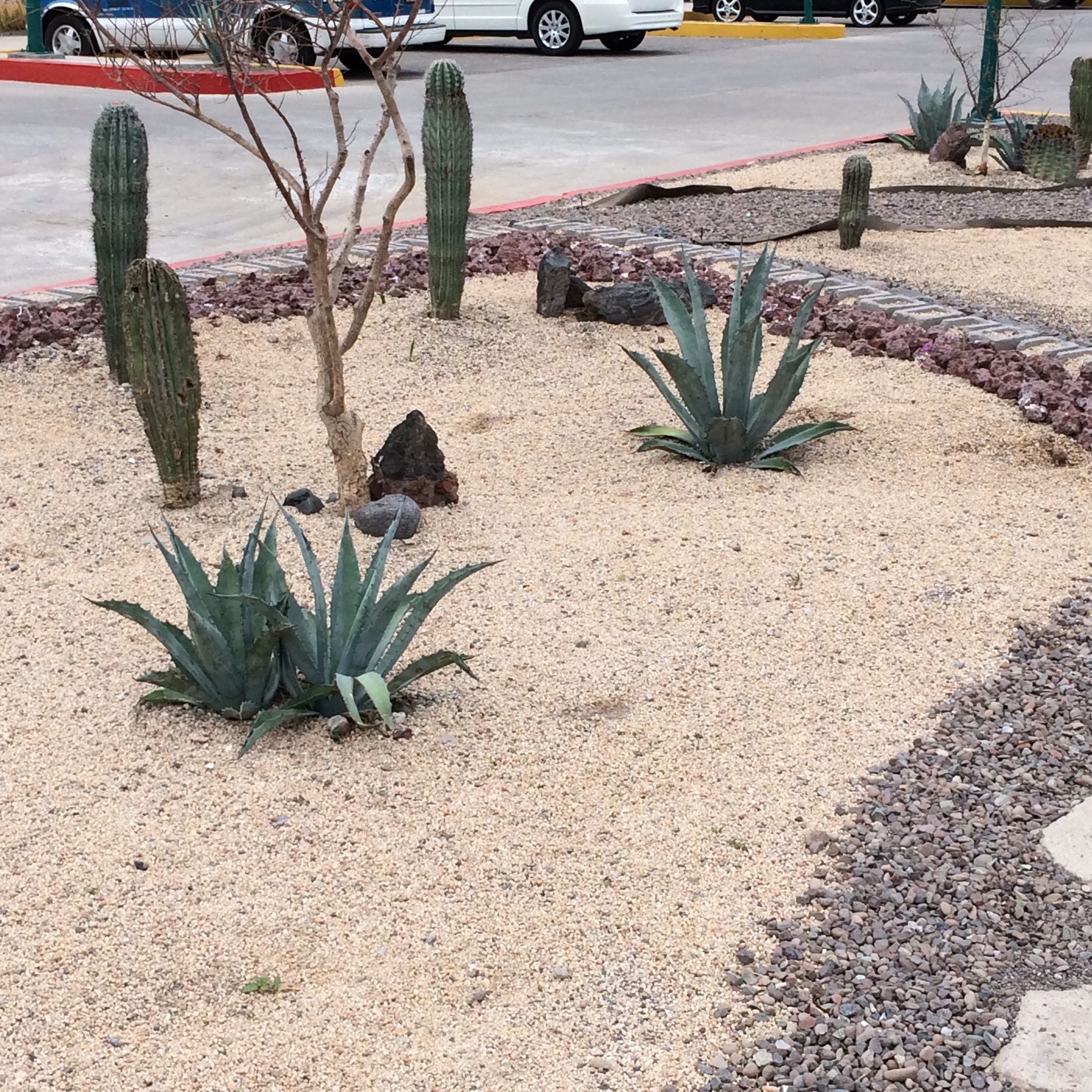
Begin in Loreto. There’s a small airport by the Sea. Just outside the terminal, the environment is immediately categorizable.

IMG_0083

After sailing from Loreto out of Puerto Escondido, we anchor the boat in a small bay of turquoise water, surrounded by rock walls on three sides with a small, empty-looking sand beach. Agua Verde, this bay is accurately named. We dinghy ashore to see if the “restaurant” is open.

IMG_4083

“Restaurant?” I don’t see a structure anywhere.

But, as we approach the beach, I see, where the sand gives way to the cactus and scrub beyond, a barely visible primitive structure.

IMG_4106

We wade ashore, shoes at first wet, then full of sand. There’s a grass roof on this structure, which looks to be just four posts protruding from the sand. As we approach, a small brown table of crude wood and four similarly constructed and colored chairs separate from the sand of the same color.

IMG_0085

Three women emerge from the shadows beneath the roof. They greet us, ask us if we wish to eat, bid us sit down.

We order beer – Ballenas – much touted by my two fellow mariners, and the only thing on the menu – fish tacos.

I’m a little concerned about sanitation, given my grumpy intestines which, ever since a brutal siege of dysentery acquired in Bolivia and enduring well thru graduation from Med School in New York, have rebelled every time I’ve gone to Mexico.

I need to pee. Their “bathroom” is a crude rectangle of blue plastic behind the restaurant. I push aside the plastic cutain of a door, then push my way thru a swarm of flies and dense vapors of excrement. The source of the vapors stares up at me from a hole in the sand. The head on the boat looks pretty good, now.

Back at the table, I see one woman cheerfully pour flour into a battered aluminum can (probably once held canned peaches). She then pours in some water. She plunges her fist into the can and begins to work it while the other two deep-fry their husbands’ catch of the day on a camp stove.

“What are your names?” the Dueña asks.

“Carlos,” I respond, comforted to think that the tortillas she is making will be fried to a temperature lethal to most bugs before we are served. “And this is Tomás,” I point to Tom. “And Tomás,” I point to the other Tom. “Easy to remember.”

She laughs, removes her dough-covered hand from the can, and points. “You are Tomás Uno and you,” she moves her finger, “are Tomás Dos.”

These guys are both so mellow that I know they won’t fight over it.

The fresh tortillas and fried fish are delicious. The beer is delicious. Our Mexican hosts are delightful. Agua Verde is paradise.

IMG_0193

(Photos by me and Tom Marlow)

« Newer PostsOlder Posts »

Blog at WordPress.com.